Processes of The Earth Crossword
This printable crossword puzzle on the topic of Plate Tectonics & Volcanoes has 20 clues. Answers range from 3 to 19 letters long. This crossword is also available to download as a Microsoft Word document or a PDF.
Description
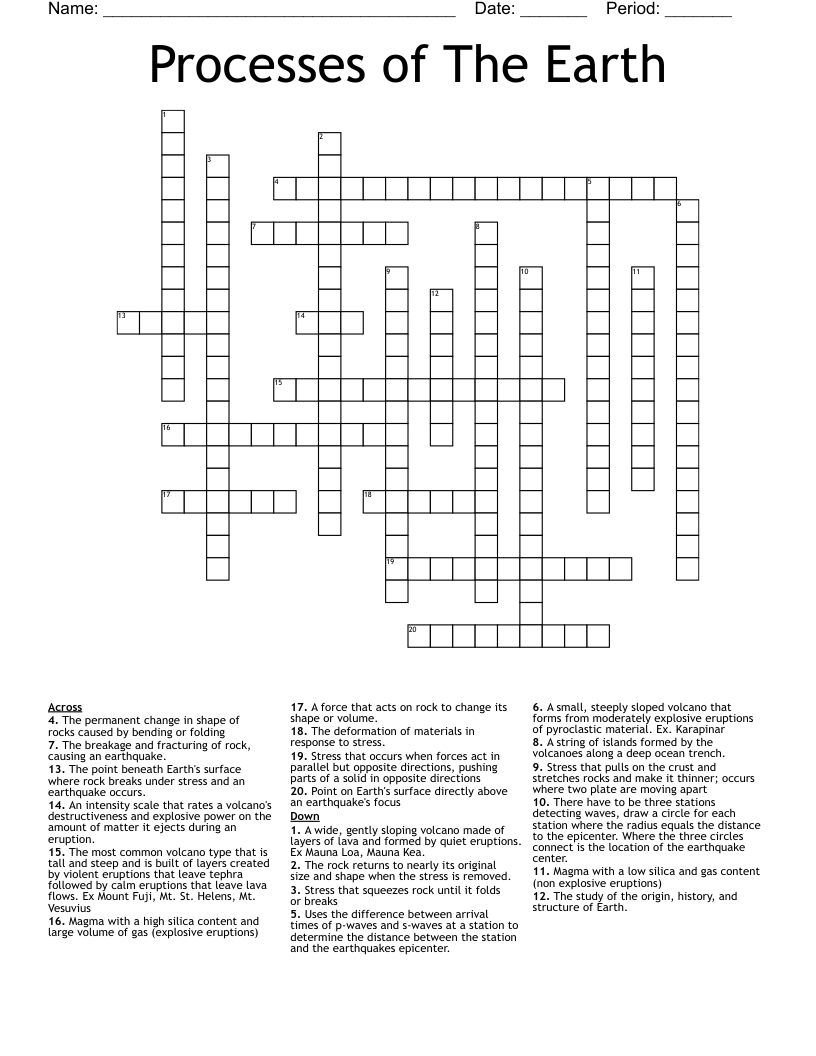
The study of the origin, history, and structure of Earth.
A string of islands formed by the volcanoes along a deep ocean trench.
A wide, gently sloping volcano made of layers of lava and formed by quiet eruptions. Ex Mauna Loa, Mauna Kea.
A small, steeply sloped volcano that forms from moderately explosive eruptions of pyroclastic material. Ex. Karapinar
The most common volcano type that is tall and steep and is built of layers created by violent eruptions that leave tephra followed by calm eruptions that leave lava flows. Ex Mount Fuji, Mt. St. Helens, Mt. Vesuvius
Magma with a low silica and gas content (non explosive eruptions)
Magma with a high silica content and large volume of gas (explosive eruptions)
An intensity scale that rates a volcano's destructiveness and explosive power on the amount of matter it ejects during an eruption.
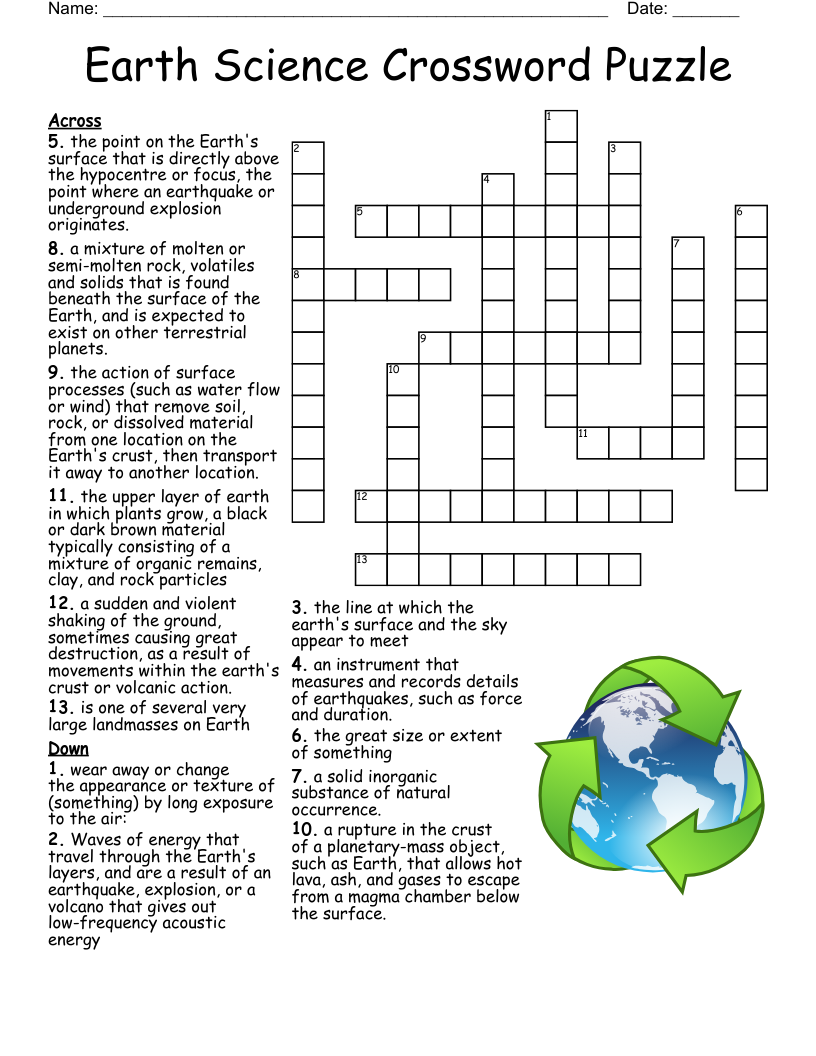
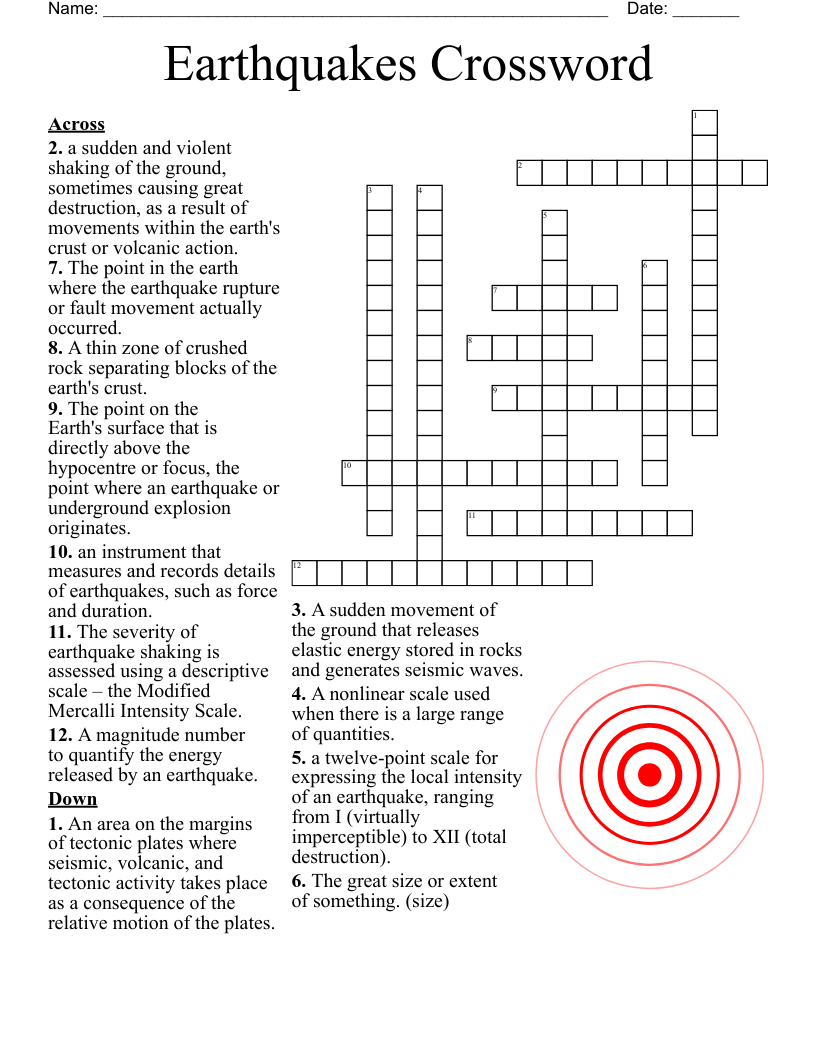
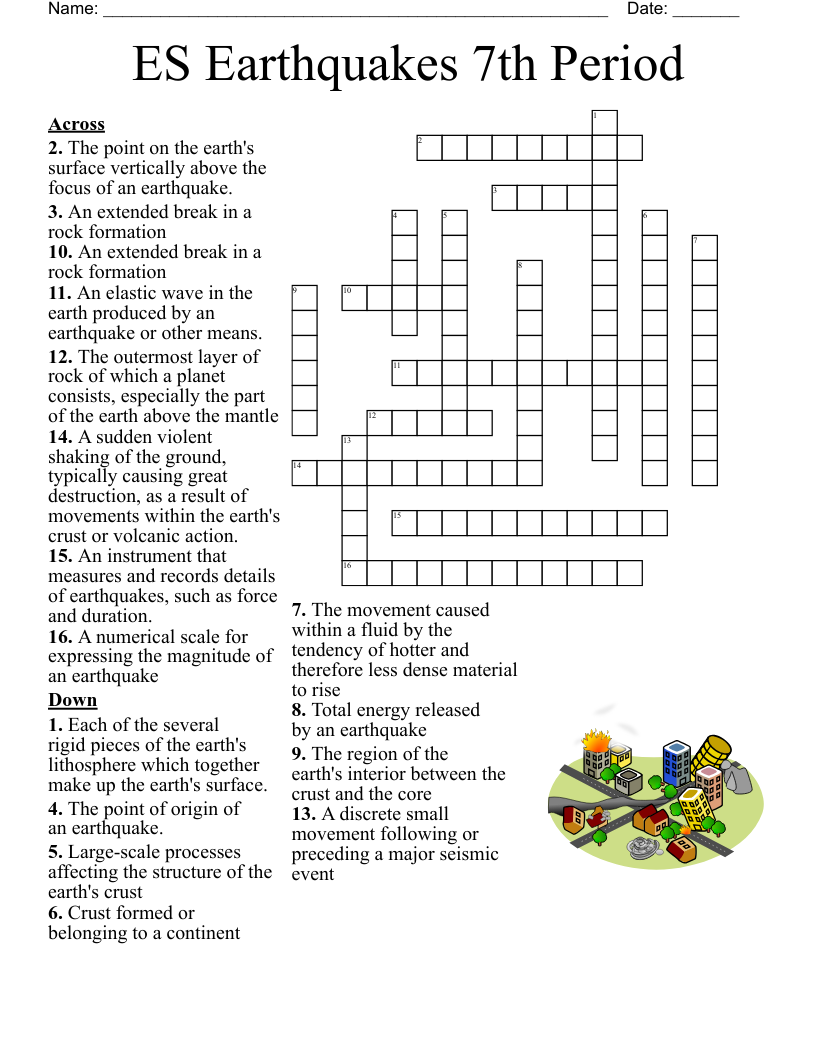
Point on Earth's surface directly above an earthquake's focus
The point beneath Earth's surface where rock breaks under stress and an earthquake occurs.
The deformation of materials in response to stress.
The rock returns to nearly its original size and shape when the stress is removed.
The permanent change in shape of rocks caused by bending or folding
The breakage and fracturing of rock, causing an earthquake.
A force that acts on rock to change its shape or volume.
Stress that squeezes rock until it folds or breaks
Stress that pulls on the crust and stretches rocks and make it thinner; occurs where two plate are moving apart
Stress that occurs when forces act in parallel but opposite directions, pushing parts of a solid in opposite directions
There have to be three stations detecting waves, draw a circle for each station where the radius equals the distance to the epicenter. Where the three circles connect is the location of the earthquake center.
Uses the difference between arrival times of p-waves and s-waves at a station to determine the distance between the station and the earthquakes epicenter.