Vocabulary words Crossword
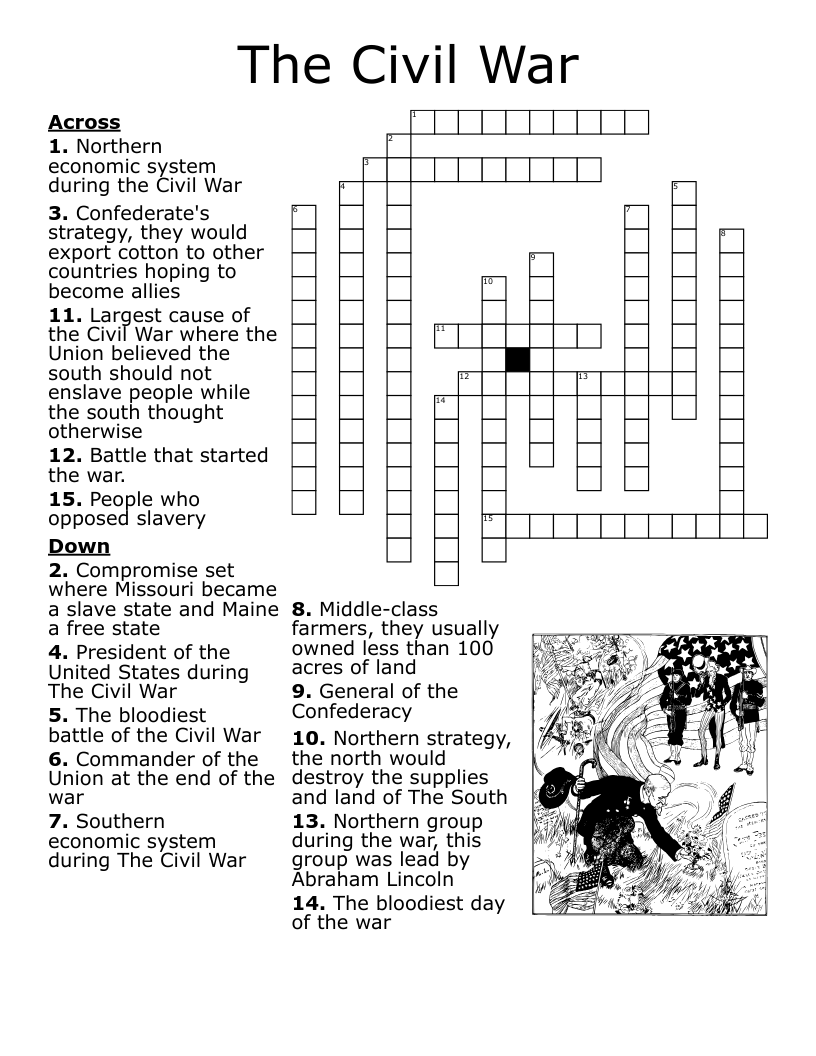
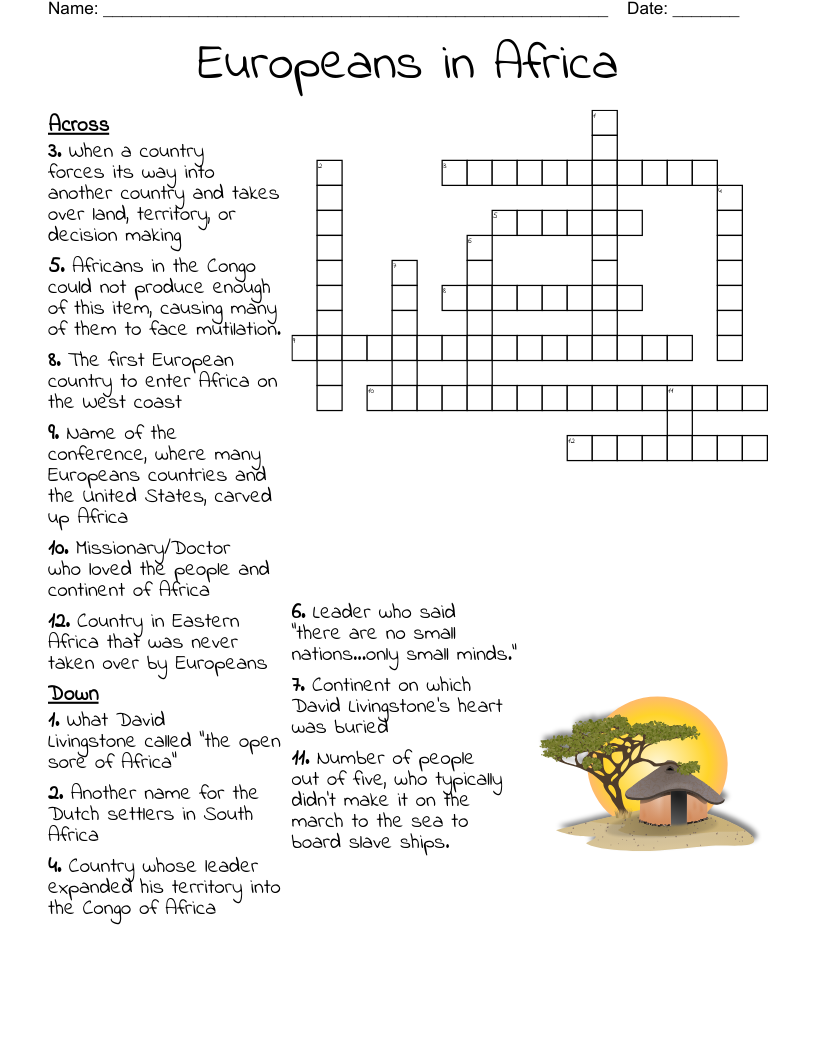
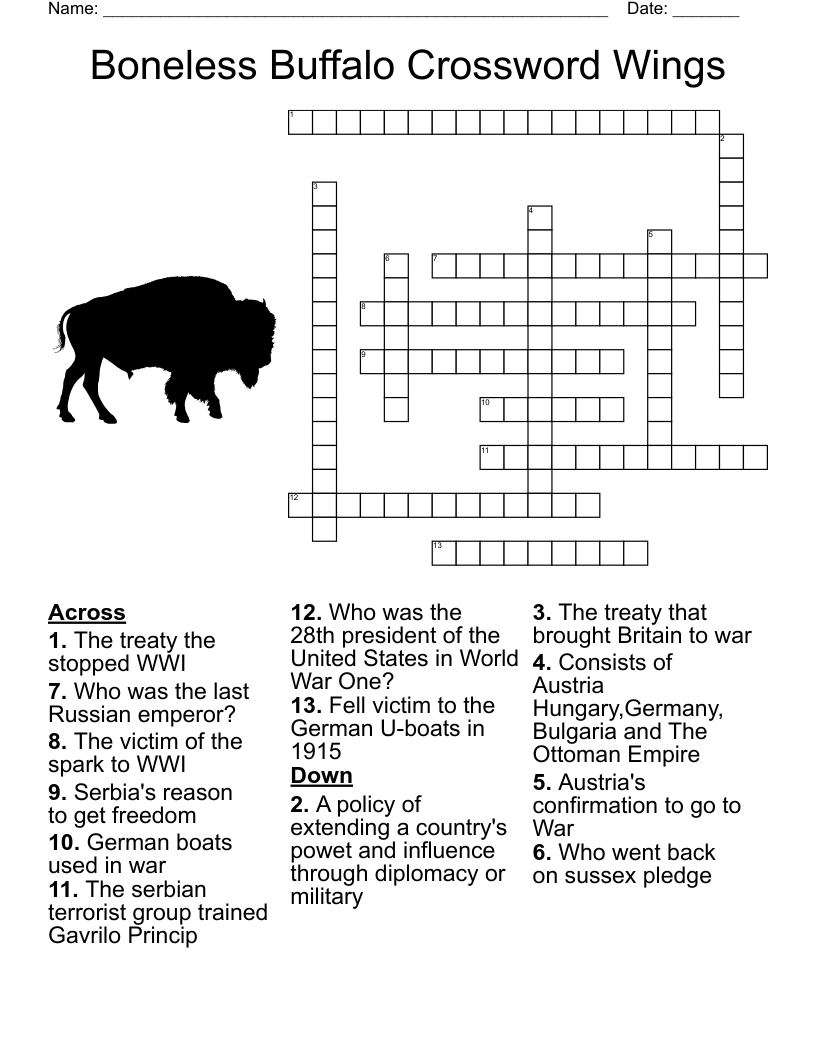
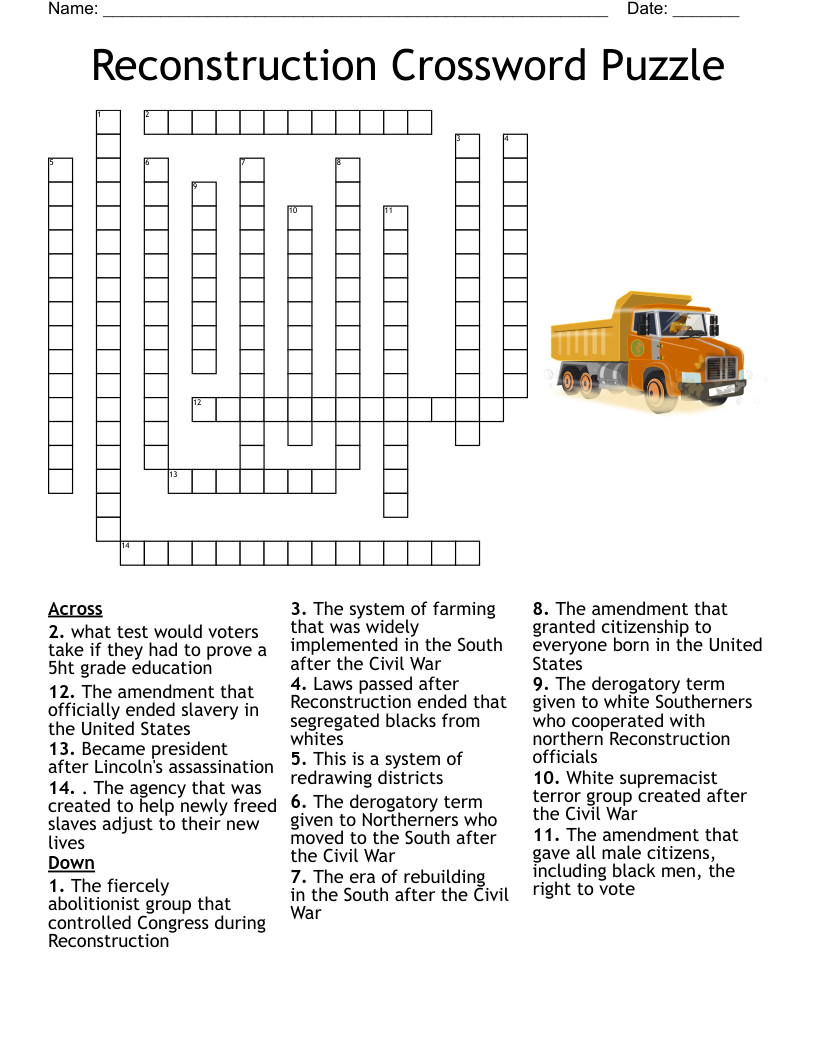
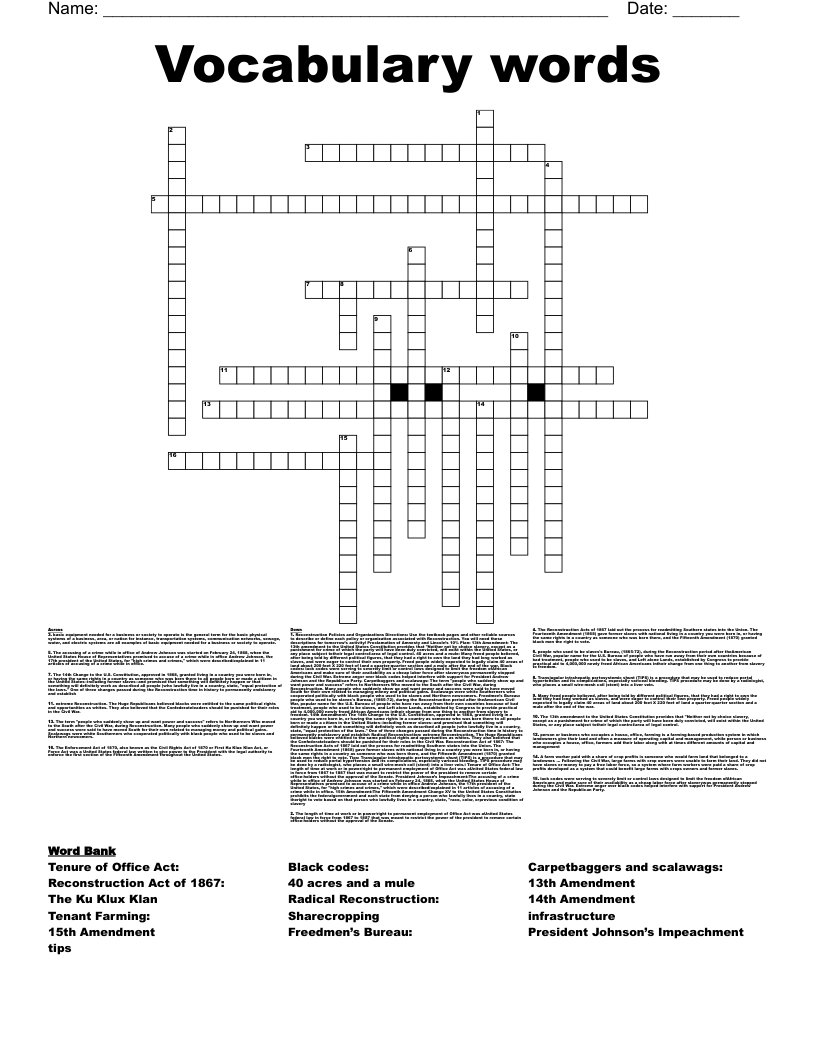
This printable crossword puzzle on the topic of US Civil War & Reconstruction has 16 clues. Answers range from 4 to 29 letters long. This crossword is also available to download as a Microsoft Word document or a PDF.
Description
The 13th amendment to the United States Constitution provides that "Neither not by choice slavery, except as a punishment for crime of which the party will have been duly convicted, will exist within the United States, or any place subject totheir legal control/area of legal control.
Many freed people believed, after being told by different political figures, that they had a right to own the land they had long worked as slaves, and were eager to control their own property. Freed people widely expected to legally claim 40 areas of land about 200 feet X 220 feet of land a quarter-quarter section and a mule after the end of the war.
lack codes were serving to severely limit or control laws designed to limit the freedom ofAfrican Americans and make sure of their availability as a cheap labor force after slaverywas permanently stopped during the Civil War. Extreme anger over black codes helped interfere with support for President Andrew Johnson and the Republican Party.
The term "people who suddenly show up and want power and success" refers to Northerners Who moved to the South after the Civil War, during Reconstruction. Many people who suddenly show up and want power and success were said to have moved South for their own related to managing money and political gains. Scalawags were white Southerners who cooperated politically with black people who used to be slaves and Northern newcomers.
people who used to be slaves's Bureau, (1865-72), during the Reconstruction period after theAmerican Civil War, popular name for the U.S. Bureau of people who have run away from their own countries because of bad treatment, people who used to be slaves, and Left alone Lands, established by Congress to provide practical aid to 4,000,000 newly freed African Americans intheir change from one thing to another from slavery to freedom.
The 14th Change to the U.S. Constitution, approved in 1868, granted living in a country you were born in, or having the same rights in a country as someone who was born there to all people born or made a citizen in the United States--including former slaves--and promised that something will definitely happen or that something will definitely work as described all people (who lawfully live in a country, state, "equal protection of the laws." One of three changes passed during the Reconstruction time in history to permanently endslavery and establish
extreme Reconstruction. The Huge Republicans believed blacks were entitled to the same political rights and opportunities as whites. They also believed that the Confederateleaders should be punished for their roles in the Civil War.
The Reconstruction Acts of 1867 laid out the process for readmitting Southern states into the Union. The Fourteenth Amendment (1868) gave former slaves with national living in a country you were born in, or having the same rights in a country as someone who was born there, and the Fifteenth Amendment (1870) granted black men the right to vote.
Transjugular intrahepatic portosystemic shunt (TIPS) is a procedure that may be used to reduce portal hypertension and its complications, especially variceal bleeding. TIPS procedure may be done by a radiologist, who places a small wire-mesh coil (stent) into a liver vein.
The length of time at work or in power/right to permanent employment of Office Act was aUnited States federal law in force from 1867 to 1887 that was meant to restrict the power of the president to remove certain office-holders without the approval of the Senate.
The accusing of a crime while in office of Andrew Johnson was started on February 24, 1868, when the United States House of Representatives promised to accuse of a crime while in office Andrew Johnson, the 17th president of the United States, for "high crimes and crimes," which were described/explained in 11 articles of accusing of a crime while in office.
Reconstruction Policies and Organizations Directions: Use the textbook pages and other reliable sources to describe or define each policy or organization associated with Reconstruction. You will need these descriptions for tomorrow’s activity! Proclamation of Amnesty and Lincoln’s 10% Plan: 13th Amendment: The 13th amendment to the United States Constitution provides that "Neither not by choice slavery, except as a punishment for crime of which the party will have been duly convicted, will exist within the United States, or any place subject totheir legal control/area of legal control. 40 acres and a mule: Many freed people believed, after being told by different political figures, that they had a right to own the land they had long worked as slaves, and were eager to control their own property. Freed people widely expected to legally claim 40 areas of land about 200 feet X 220 feet of land a quarter-quarter section and a mule after the end of the war. Black codes: lack codes were serving to severely limit or control laws designed to limit the freedom ofAfrican Americans and make sure of their availability as a cheap labor force after slaverywas permanently stopped during the Civil War. Extreme anger over black codes helped interfere with support for President Andrew Johnson and the Republican Party. Carpetbaggers and scalawags: The term "people who suddenly show up and want power and success" refers to Northerners Who moved to the South after the Civil War, during Reconstruction. Many people who suddenly show up and want power and success were said to have moved South for their own related to managing money and political gains. Scalawags were white Southerners who cooperated politically with black people who used to be slaves and Northern newcomers. Freedmen’s Bureau: people who used to be slaves's Bureau, (1865-72), during the Reconstruction period after theAmerican Civil War, popular name for the U.S. Bureau of people who have run away from their own countries because of bad treatment, people who used to be slaves, and Left alone Lands, established by Congress to provide practical aid to 4,000,000 newly freed African Americans intheir change from one thing to another from slavery to freedom. 14th Amendment: The 14th Change to the U.S. Constitution, approved in 1868, granted living in a country you were born in, or having the same rights in a country as someone who was born there to all people born or made a citizen in the United States--including former slaves--and promised that something will definitely happen or that something will definitely work as described all people (who lawfully live in a country, state, "equal protection of the laws." One of three changes passed during the Reconstruction time in history to permanently endslavery and establish Radical Reconstruction: extreme Reconstruction. The Huge Republicans believed blacks were entitled to the same political rights and opportunities as whites. They also believed that the Confederateleaders should be punished for their roles in the Civil War. Reconstruction Act of 1867: The Reconstruction Acts of 1867 laid out the process for readmitting Southern states into the Union. The Fourteenth Amendment (1868) gave former slaves with national living in a country you were born in, or having the same rights in a country as someone who was born there, and the Fifteenth Amendment (1870) granted black men the right to vote. Tips: Transjugular intrahepatic portosystemic shunt (TIPS) is a procedure that may be used to reduce portal hypertension and its complications, especially variceal bleeding. TIPS procedure may be done by a radiologist, who places a small wire-mesh coil (stent) into a liver vein.i Tenure of Office Act: The length of time at work or in power/right to permanent employment of Office Act was aUnited States federal law in force from 1867 to 1887 that was meant to restrict the power of the president to remove certain office-holders without the approval of the Senate. President Johnson’s Impeachment:The accusing of a crime while in office of Andrew Johnson was started on February 24, 1868, when the United States House of Representatives promised to accuse of a crime while in office Andrew Johnson, the 17th president of the United States, for "high crimes and crimes," which were described/explained in 11 articles of accusing of a crime while in office. 15th Amendment:The Fifteenth Amendment Change XV to the United States Constitution prohibits the federalgovernment and each state from denying a person who lawfully lives in a country, state theright to vote based on that person who lawfully lives in a country, state, "race, color, orprevious condition of slavery
The Enforcement Act of 1870, also known as the Civil Rights Act of 1870 or First Ku Klux Klan Act, or Force Act was a United States federal law written to give power to the President with the legal authority to enforce the first section of the Fifteenth Amendment throughout the United States.
basic equipment needed for a business or society to operate is the general term for the basic physical systems of a business, area, or nation for instance, transportation systems, communication networks, sewage, water, and electric systems are all examples of basic equipment needed for a business or society to operate.
A farm worker paid with a share of crop profits is someone who would farm land that belonged to a landowner. ... Following the Civil War, large farms with crop owners were unable to farm their land. They did not have slaves or money to pay a free labor force, so a system where farm workers were paid a share of crop profits developed as a system that could benefit large farms with crops owners and former slaves.
person or business who occupies a house, office, farming is a farming-based production system in which landowners give their land and often a measure of operating capital and management, while person or business who occupies a house, office, farmers add their labor along with at times different amounts of capital and management