Food Production Crossword
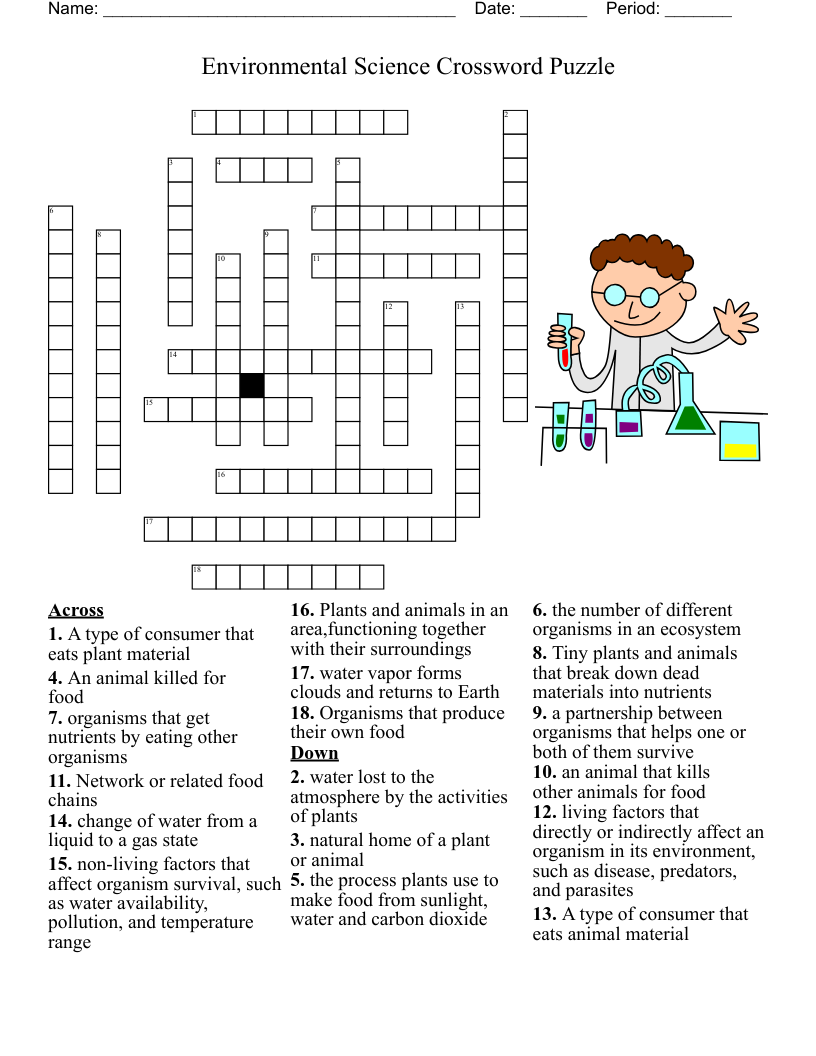
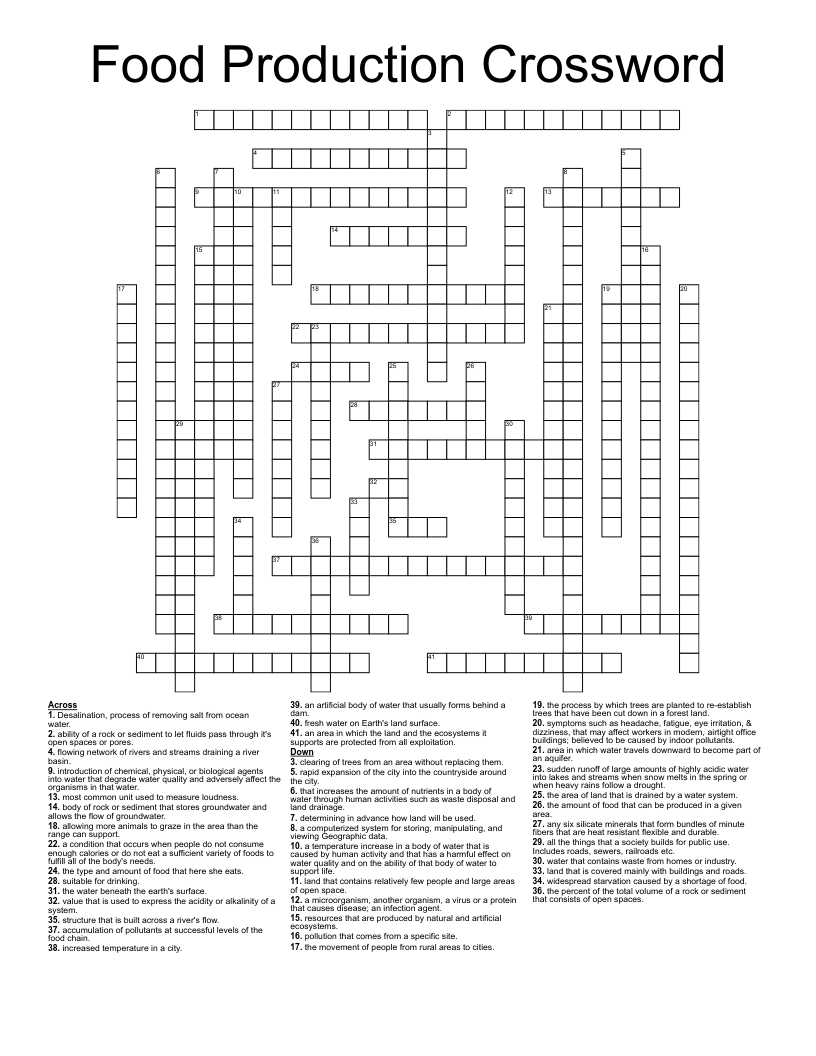
This printable crossword puzzle on the topic of Environmental Science has 41 clues. Answers range from 2 to 27 letters long. This crossword is also available to download as a Microsoft Word document or a PDF.
Description
land that is covered mainly with buildings and roads.
land that contains relatively few people and large areas of open space.
resources that are produced by natural and artificial ecosystems.
the movement of people from rural areas to cities.
all the things that a society builds for public use. Includes roads, sewers, railroads etc.
rapid expansion of the city into the countryside around the city.
increased temperature in a city.
determining in advance how land will be used.
a computerized system for storing, manipulating, and viewing Geographic data.
allowing more animals to graze in the area than the range can support.
clearing of trees from an area without replacing them.
the process by which trees are planted to re-establish trees that have been cut down in a forest land.
an area in which the land and the ecosystems it supports are protected from all exploitation.
widespread starvation caused by a shortage of food.
a condition that occurs when people do not consume enough calories or do not eat a sufficient variety of foods to fulfill all of the body's needs.
the type and amount of food that here she eats.
the amount of food that can be produced in a given area.
pollution that comes from a specific site.
introduction of chemical, physical, or biological agents into water that degrade water quality and adversely affect the organisms in that water.
accumulation of pollutants at successful levels of the food chain.
a temperature increase in a body of water that is caused by human activity and that has a harmful effect on water quality and on the ability of that body of water to support life.
that increases the amount of nutrients in a body of water through human activities such as waste disposal and land drainage.
water that contains waste from homes or industry.
Desalination, process of removing salt from ocean water.
an artificial body of water that usually forms behind a dam.
structure that is built across a river's flow.
a microorganism, another organism, a virus or a protein that causes disease; an infection agent.
suitable for drinking.
area in which water travels downward to become part of an aquifer.
ability of a rock or sediment to let fluids pass through it's open spaces or pores.
the percent of the total volume of a rock or sediment that consists of open spaces.
body of rock or sediment that stores groundwater and allows the flow of groundwater.
the water beneath the earth's surface.
the area of land that is drained by a water system.
flowing network of rivers and streams draining a river basin.
fresh water on Earth's land surface.
most common unit used to measure loudness.
any six silicate minerals that form bundles of minute fibers that are heat resistant flexible and durable.
symptoms such as headache, fatigue, eye irritation, & dizziness, that may affect workers in modern, airtight office buildings; believed to be caused by indoor pollutants.
value that is used to express the acidity or alkalinity of a system.
sudden runoff of large amounts of highly acidic water into lakes and streams when snow melts in the spring or when heavy rains follow a drought.