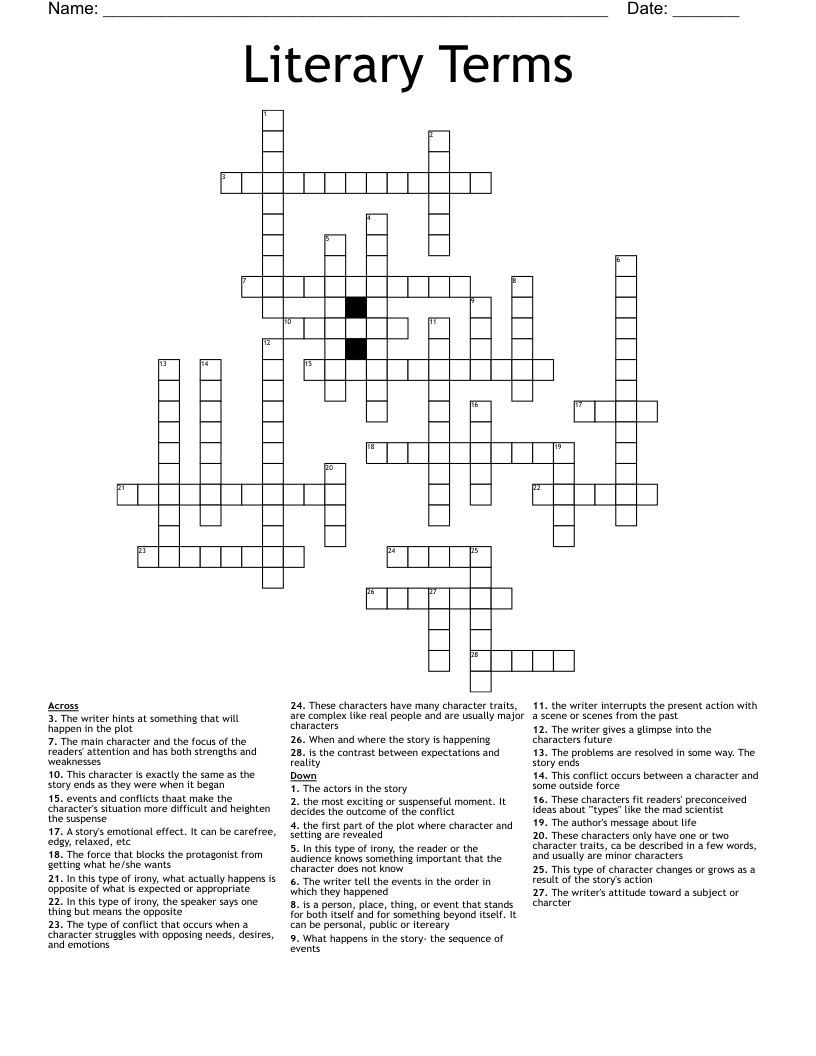
Literary Terms Crossword
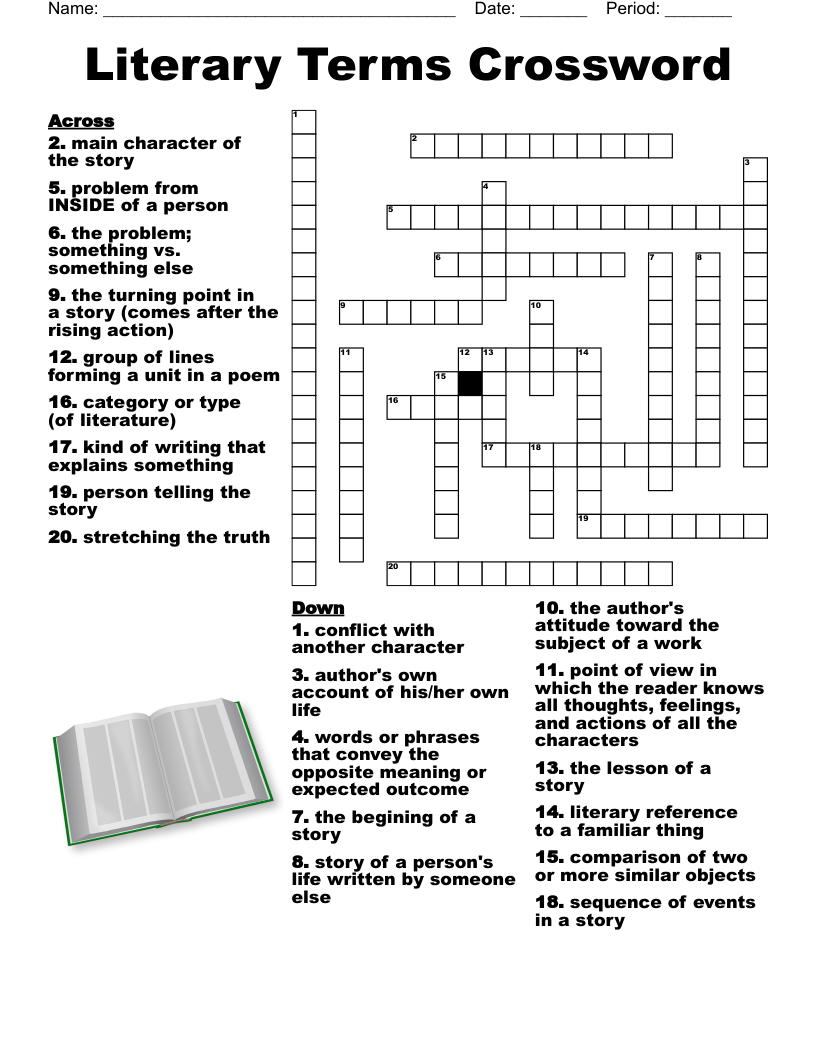
This printable crossword puzzle on the topic of Figurative Language & Literary Devices has 28 clues. Answers range from 4 to 13 letters long. This crossword is also available to download as a Microsoft Word document or a PDF.
Description
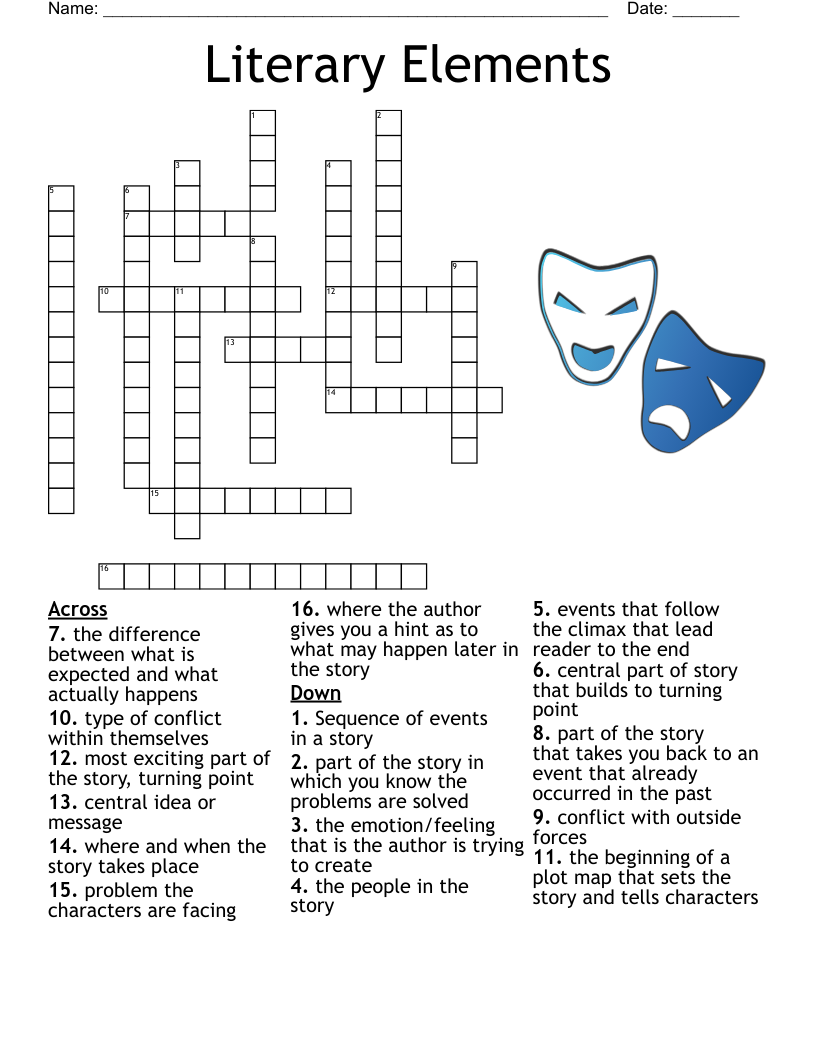
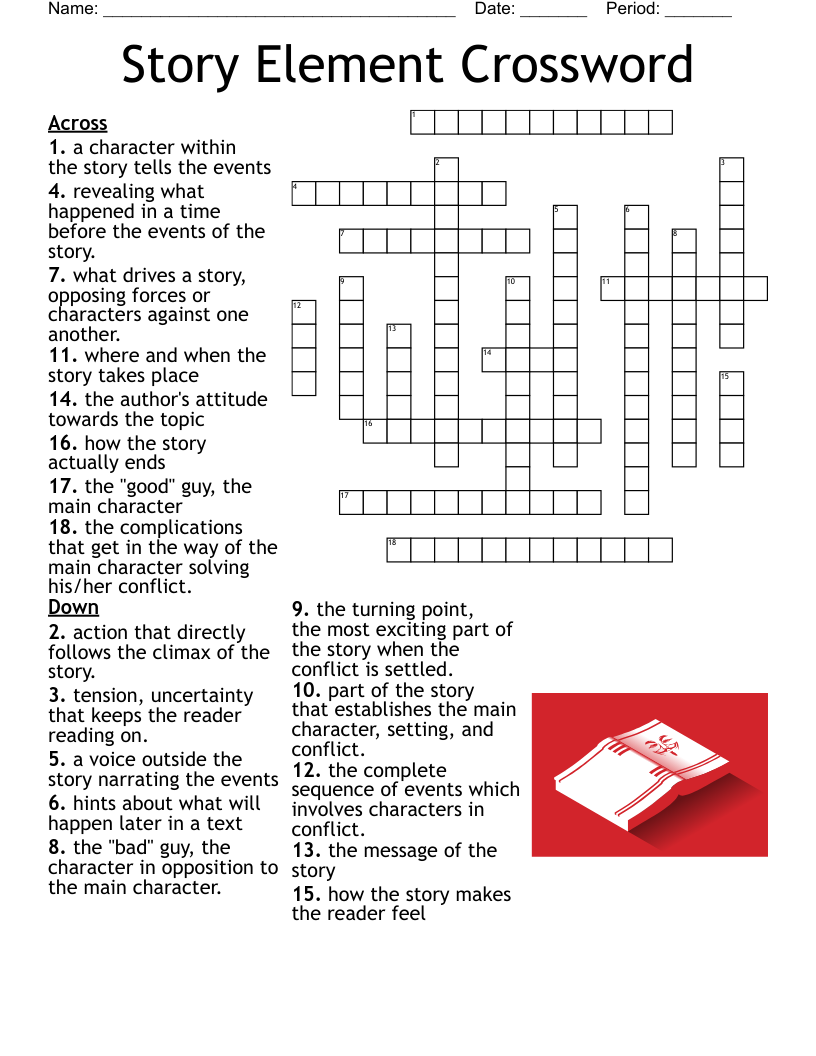
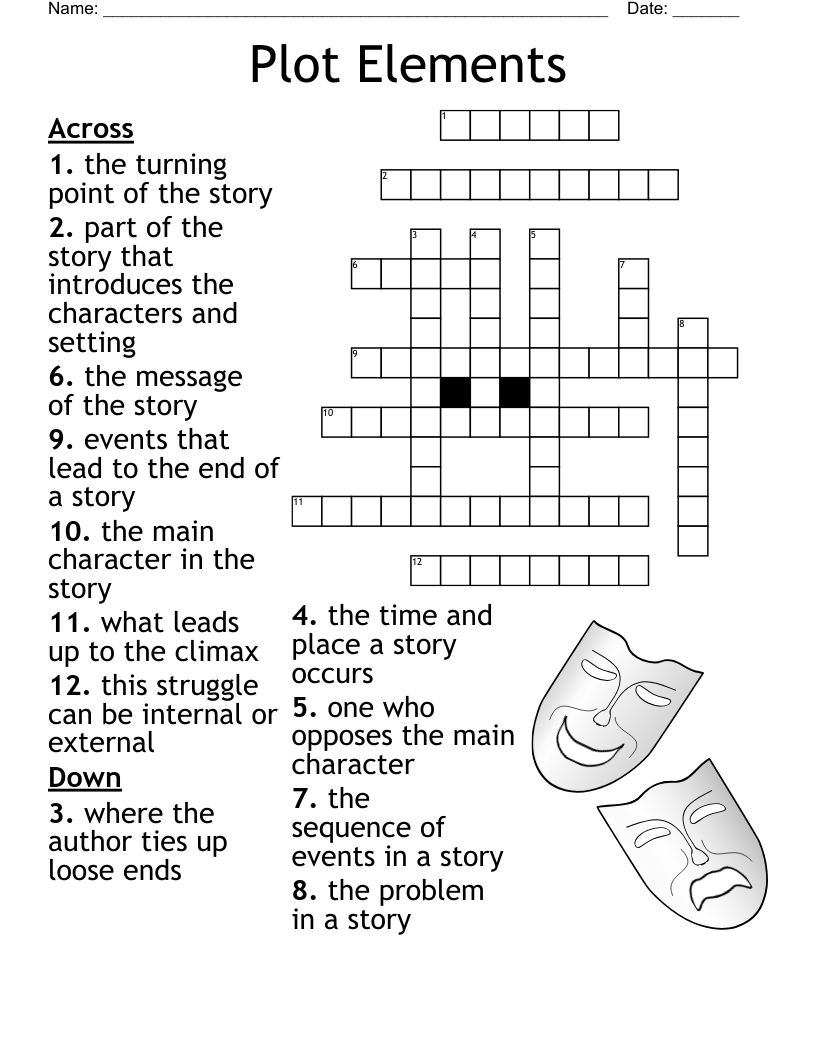
the first part of the plot where character and setting are revealed
What happens in the story- the sequence of events
events and conflicts thaat make the character's situation more difficult and heighten the suspense
the most exciting or suspenseful moment. It decides the outcome of the conflict
The problems are resolved in some way. The story ends
The writer tell the events in the order in which they happened
the writer interrupts the present action with a scene or scenes from the past
The writer gives a glimpse into the characters future
The writer hints at something that will happen in the plot
The actors in the story
These characters only have one or two character traits, ca be described in a few words, and usually are minor characters
These characters have many character traits, are complex like real people and are usually major characters
These characters fit readers' preconceived ideas about '"types" like the mad scientist
The main character and the focus of the readers' attention and has both strengths and weaknesses
The force that blocks the protagonist from getting what he/she wants
This conflict occurs between a character and some outside force
The type of conflict that occurs when a character struggles with opposing needs, desires, and emotions
This type of character changes or grows as a result of the story's action
This character is exactly the same as the story ends as they were when it began
is the contrast between expectations and reality
In this type of irony, the speaker says one thing but means the opposite
In this type of irony, what actually happens is opposite of what is expected or appropriate
In this type of irony, the reader or the audience knows something important that the character does not know
is a person, place, thing, or event that stands for both itself and for something beyond itself. It can be personal, public or itereary
When and where the story is happening
A story's emotional effect. It can be carefree, edgy, relaxed, etc
The writer's attitude toward a subject or charcter
The author's message about life