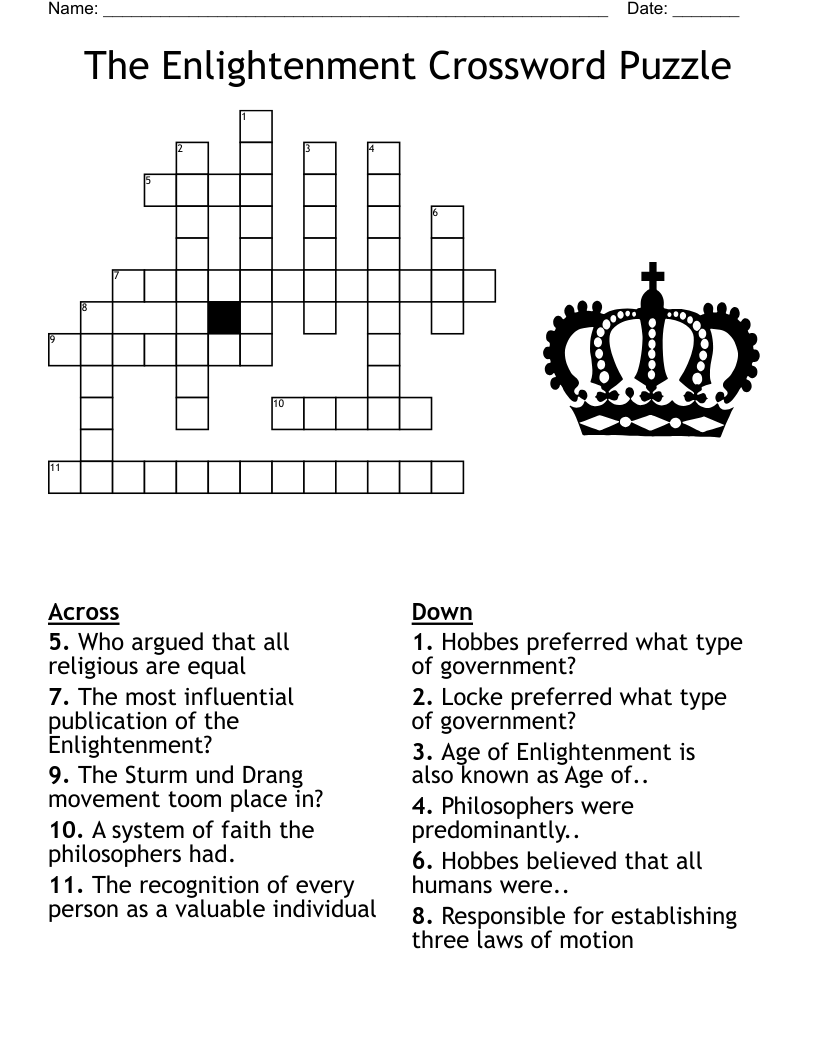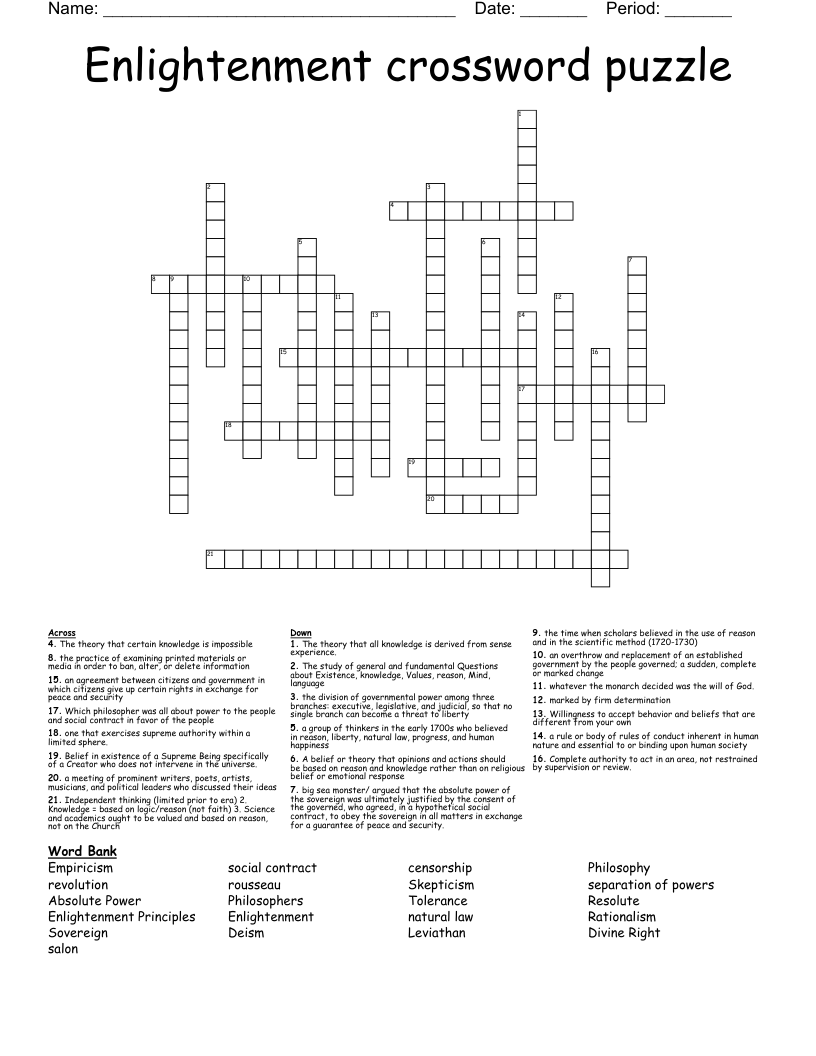
Enlightenment crossword puzzle
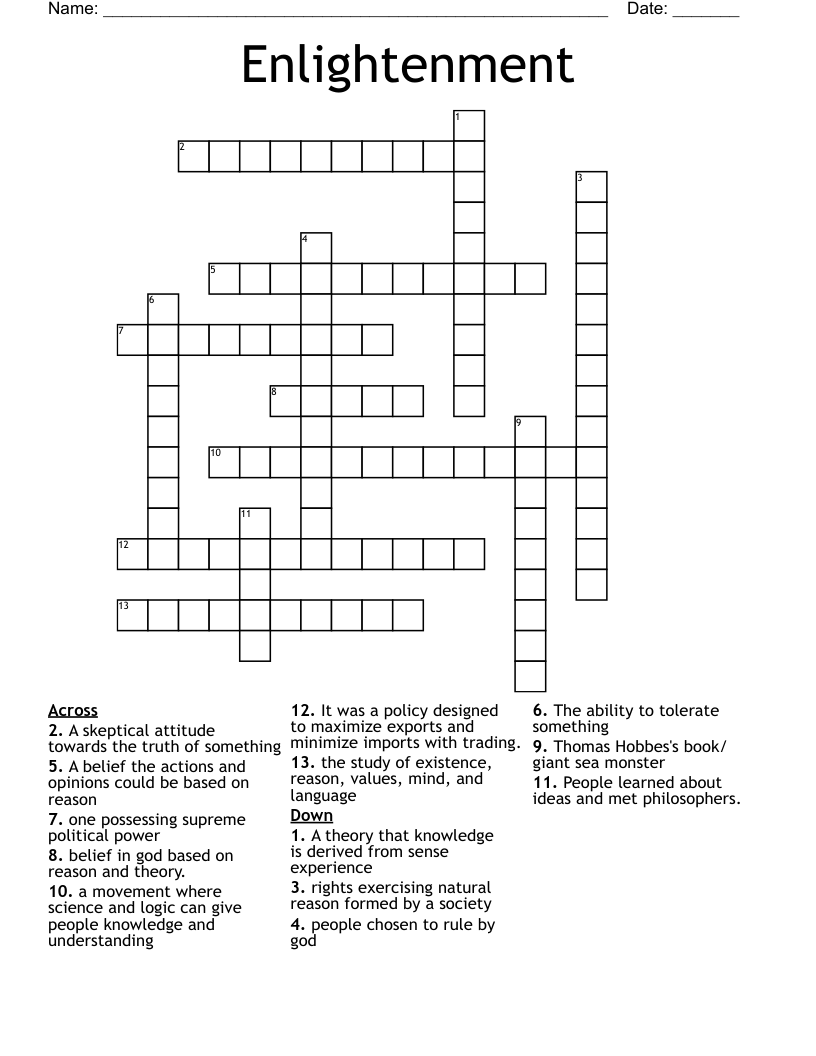
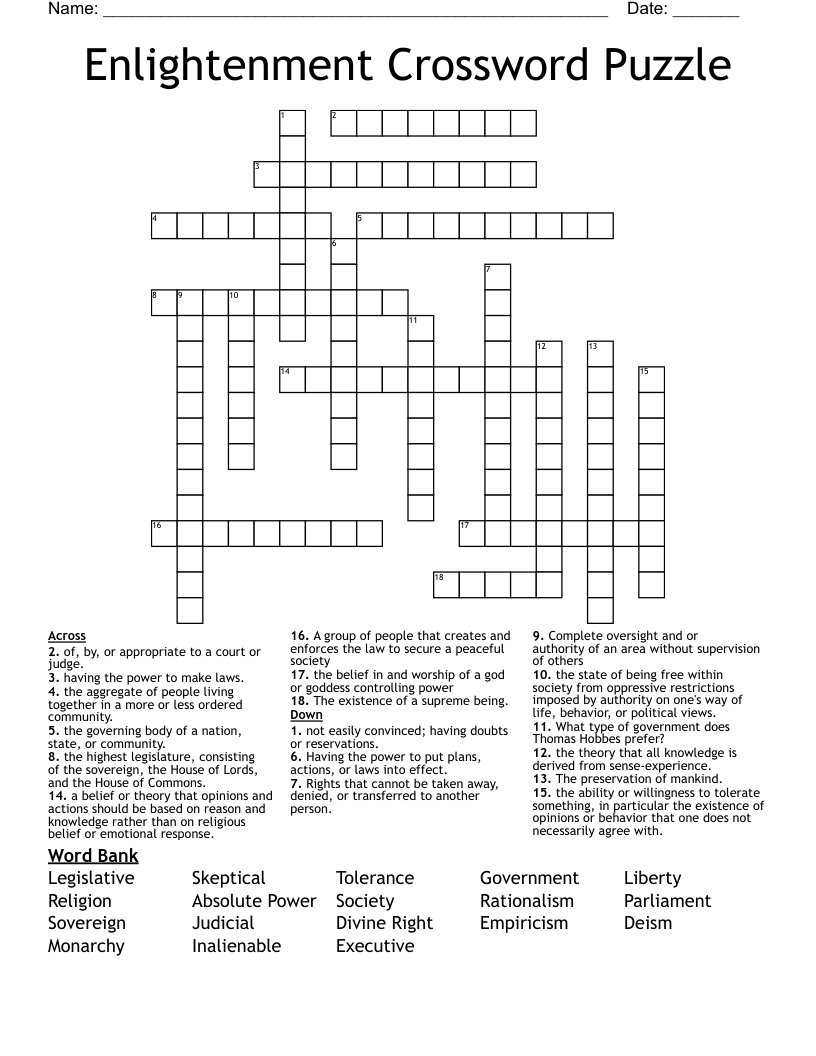
This printable crossword puzzle on the topic of World History (General) has 21 clues. Answers range from 5 to 23 letters long. This crossword is also available to download as a Microsoft Word document or a PDF.
Description
Which philosopher was all about power to the people and social contract in favor of the people
the time when scholars believed in the use of reason and in the scientific method (1720-1730)
The theory that all knowledge is derived from sense experience.
A belief or theory that opinions and actions should be based on reason and knowledge rather than on religious belief or emotional response
Willingness to accept behavior and beliefs that are different from your own
The theory that certain knowledge is impossible
Belief in existence of a Supreme Being specifically of a Creator who does not intervene in the universe.
whatever the monarch decided was the will of God.
The study of general and fundamental Questions about Existence, knowledge, Values, reason, Mind, language
Complete authority to act in an area, not restrained by supervision or review.
marked by firm determination
one that exercises supreme authority within a limited sphere.
big sea monster/ argued that the absolute power of the sovereign was ultimately justified by the consent of the governed, who agreed, in a hypothetical social contract, to obey the sovereign in all matters in exchange for a guarantee of peace and security.
Independent thinking (limited prior to era) 2. Knowledge = based on logic/reason (not faith) 3. Science and academics ought to be valued and based on reason, not on the Church
a rule or body of rules of conduct inherent in human nature and essential to or binding upon human society
an agreement between citizens and government in which citizens give up certain rights in exchange for peace and security
a group of thinkers in the early 1700s who believed in reason, liberty, natural law, progress, and human happiness
a meeting of prominent writers, poets, artists, musicians, and political leaders who discussed their ideas
an overthrow and replacement of an established government by the people governed; a sudden, complete or marked change
the division of governmental power among three branches: executive, legislative, and judicial, so that no single branch can become a threat to liberty
the practice of examining printed materials or media in order to ban, alter, or delete information