CAUSES AND EFFECTS OF CLIMATE CHANGE Crossword
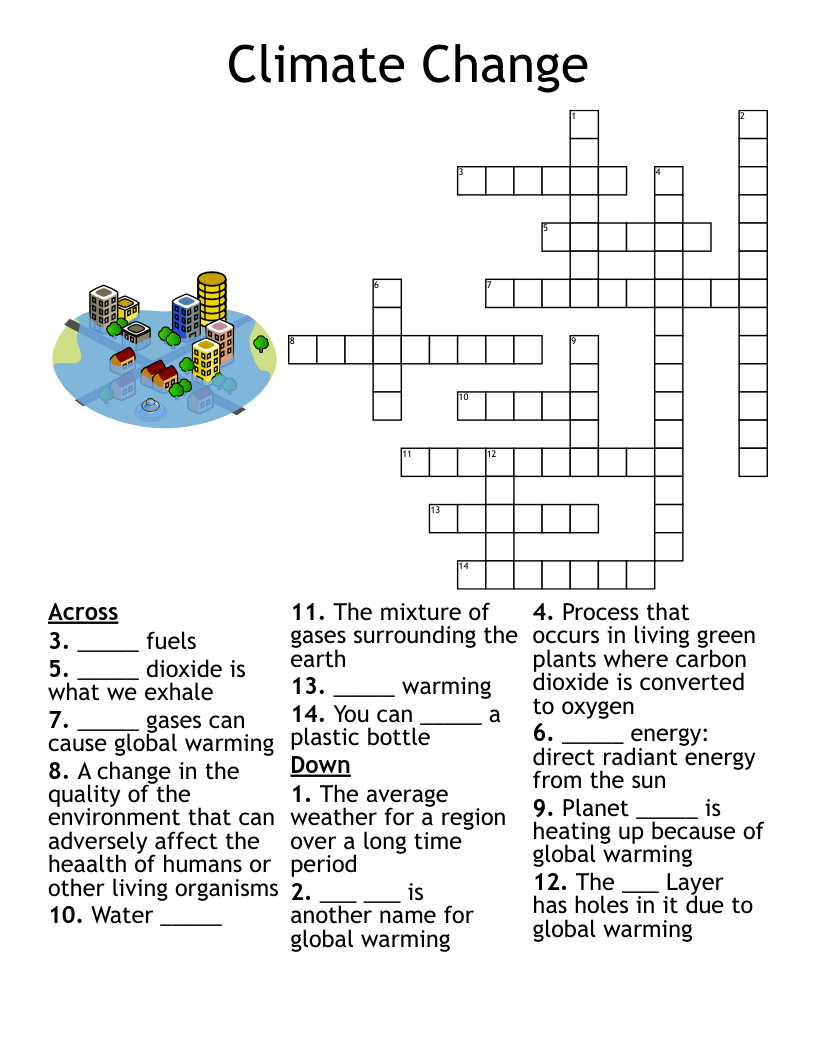
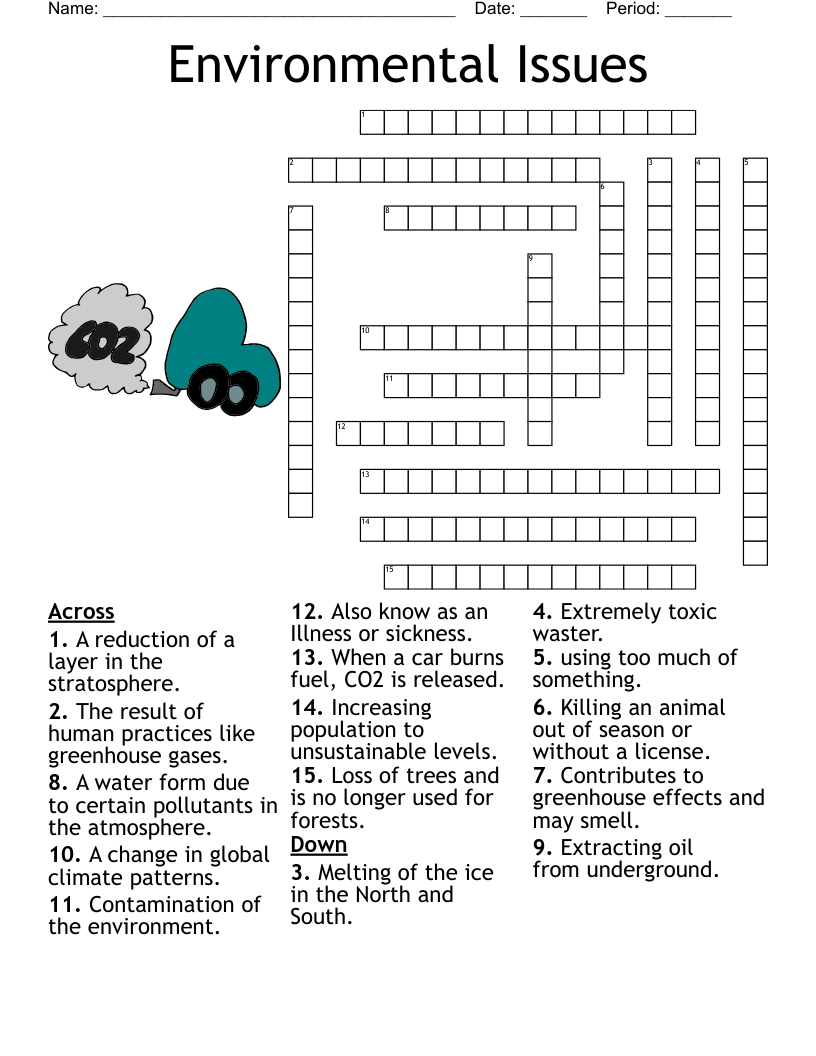
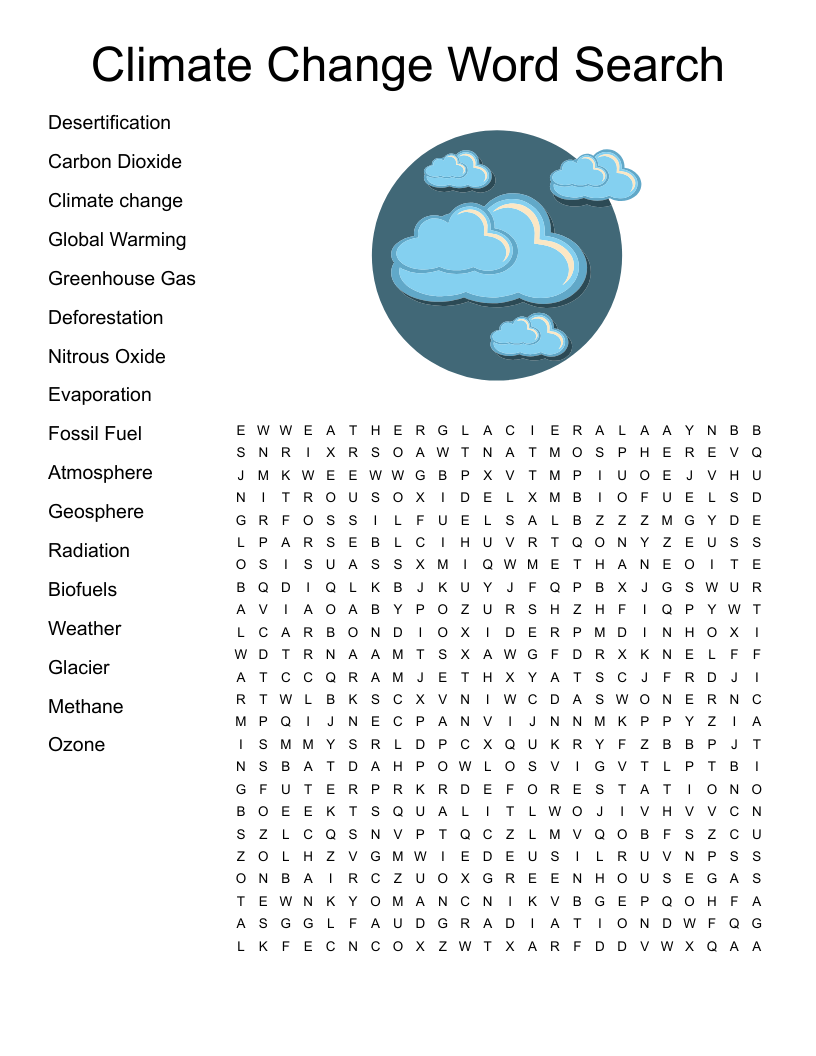
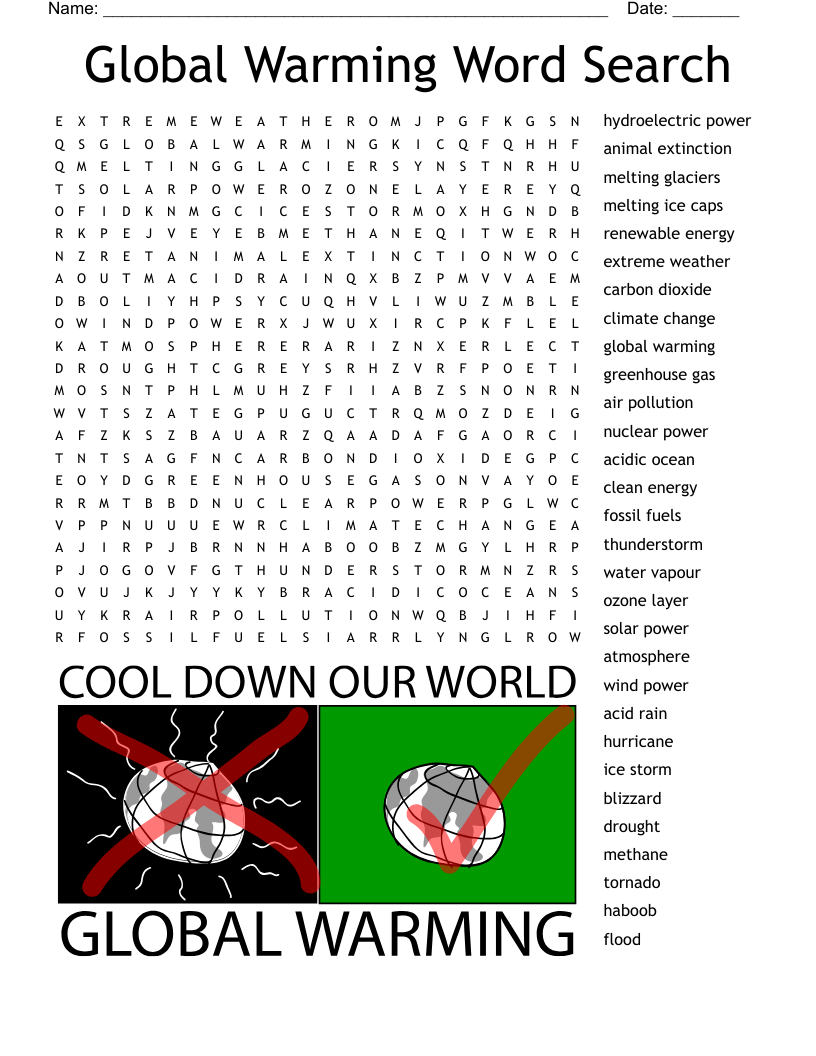
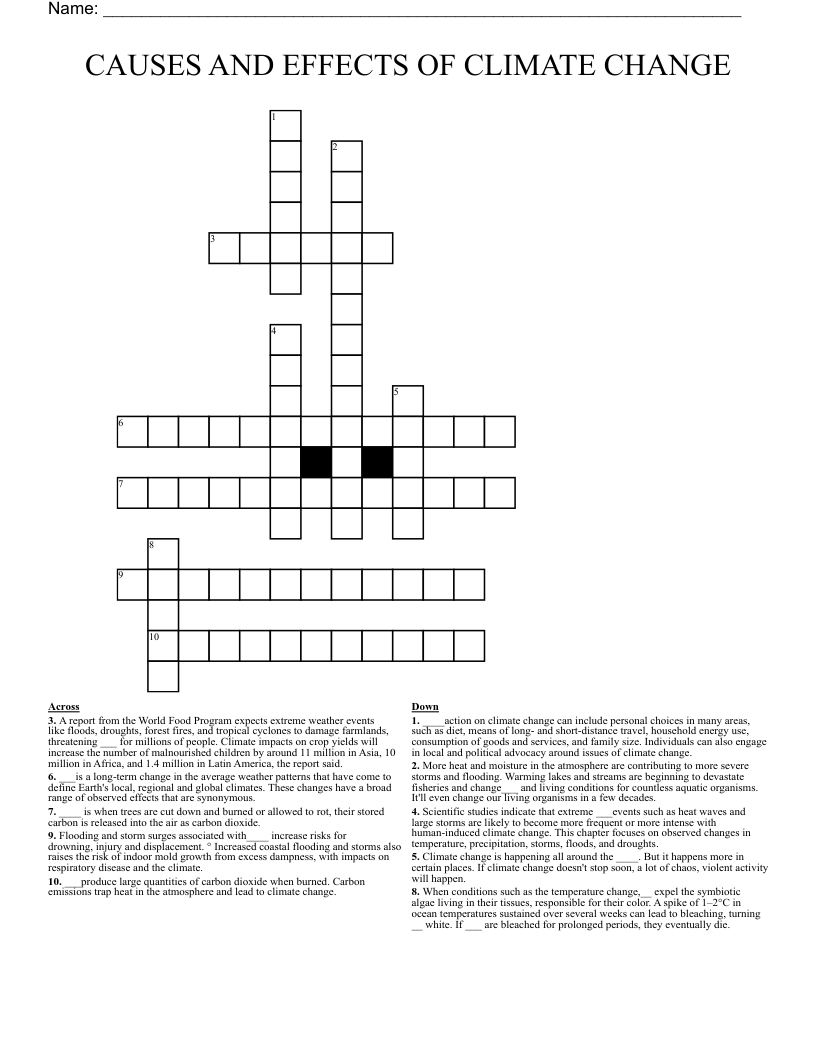
This printable crossword puzzle on the topic of Environmental Science has 10 clues. Answers range from 5 to 13 letters long. This crossword is also available to download as a Microsoft Word document or a PDF.
Description
____ is when trees are cut down and burned or allowed to rot, their stored carbon is released into the air as carbon dioxide.
Climate change is happening all around the ____. But it happens more in certain places. If climate change doesn't stop soon, a lot of chaos, violent activity will happen.
___is a long-term change in the average weather patterns that have come to define Earth's local, regional and global climates. These changes have a broad range of observed effects that are synonymous.
___produce large quantities of carbon dioxide when burned. Carbon emissions trap heat in the atmosphere and lead to climate change.
____action on climate change can include personal choices in many areas, such as diet, means of long- and short-distance travel, household energy use, consumption of goods and services, and family size. Individuals can also engage in local and political advocacy around issues of climate change.
Scientific studies indicate that extreme ___events such as heat waves and large storms are likely to become more frequent or more intense with human-induced climate change. This chapter focuses on observed changes in temperature, precipitation, storms, floods, and droughts.
More heat and moisture in the atmosphere are contributing to more severe storms and flooding. Warming lakes and streams are beginning to devastate fisheries and change___ and living conditions for countless aquatic organisms. It'll even change our living organisms in a few decades.
Flooding and storm surges associated with____ increase risks for drowning, injury and displacement. ° Increased coastal flooding and storms also raises the risk of indoor mold growth from excess dampness, with impacts on respiratory disease and the climate.
When conditions such as the temperature change,__ expel the symbiotic algae living in their tissues, responsible for their color. A spike of 1–2°C in ocean temperatures sustained over several weeks can lead to bleaching, turning __ white. If ___ are bleached for prolonged periods, they eventually die.
A report from the World Food Program expects extreme weather events like floods, droughts, forest fires, and tropical cyclones to damage farmlands, threatening ___ for millions of people. Climate impacts on crop yields will increase the number of malnourished children by around 11 million in Asia, 10 million in Africa, and 1.4 million in Latin America, the report said.