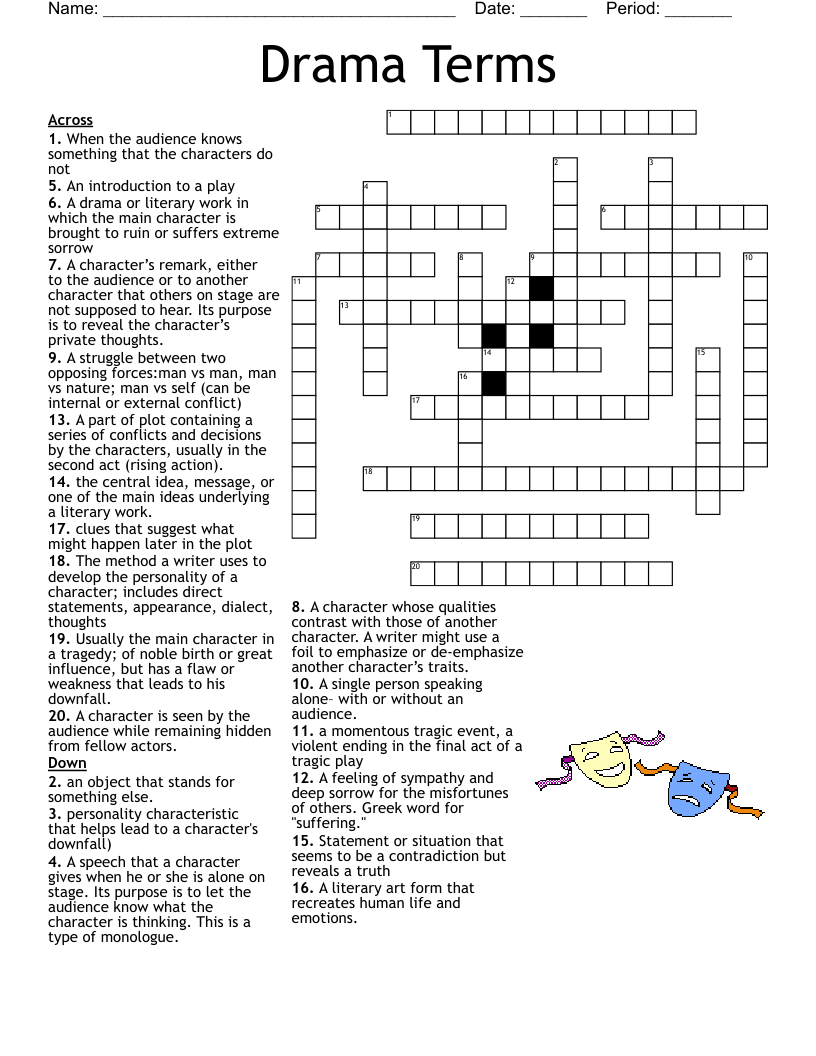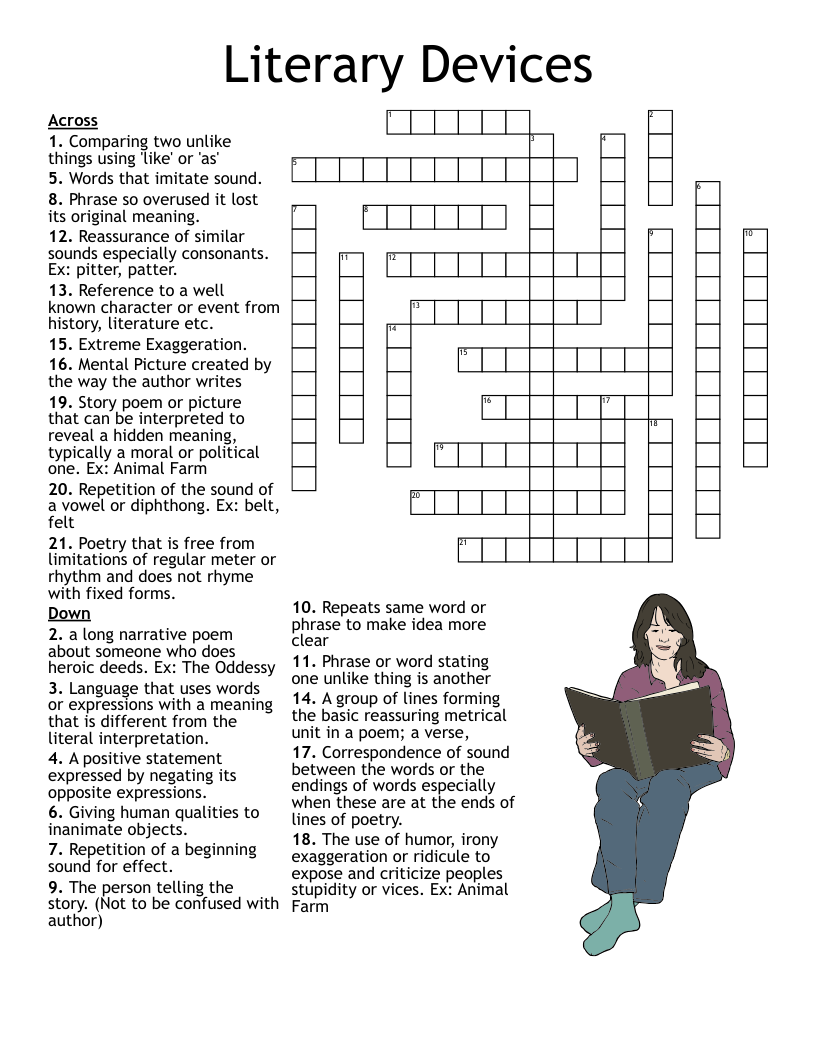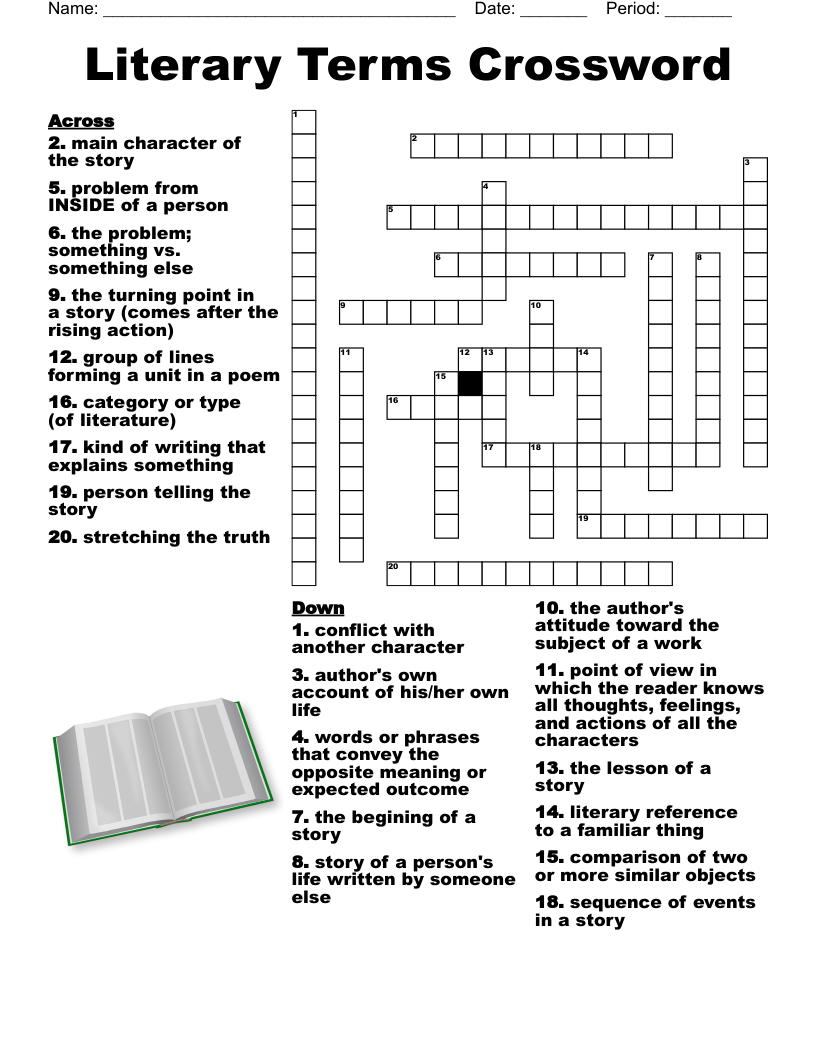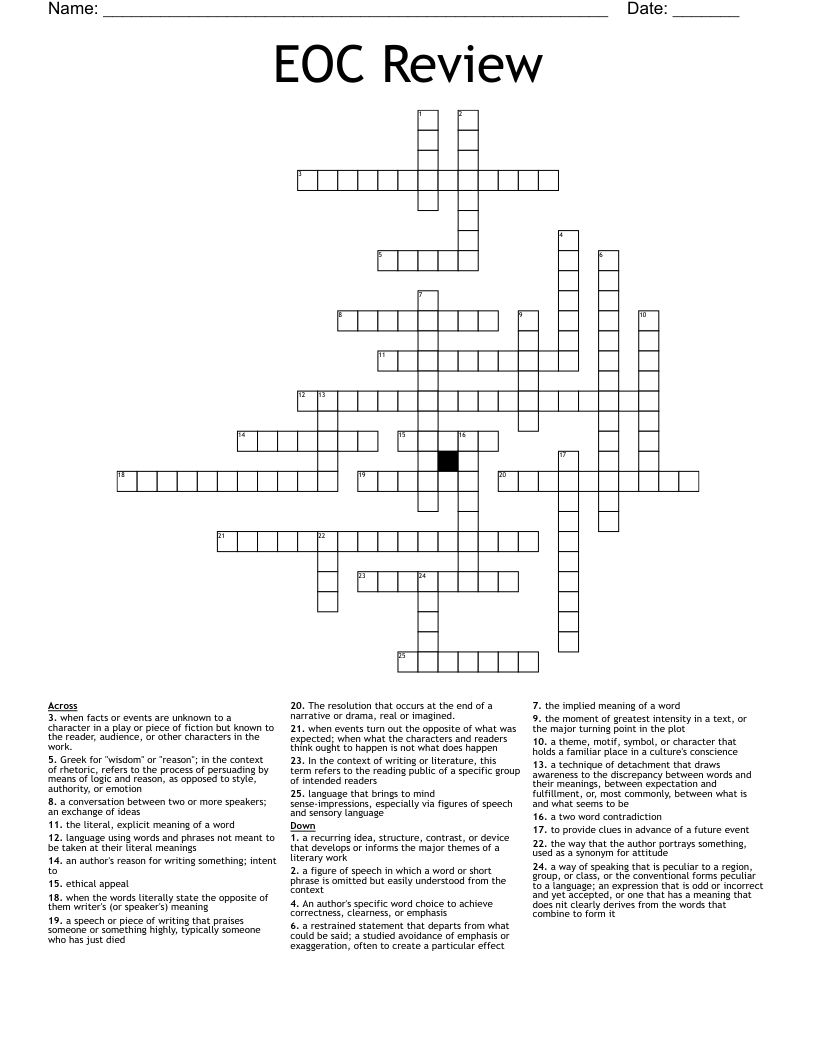
EOC Review Crossword
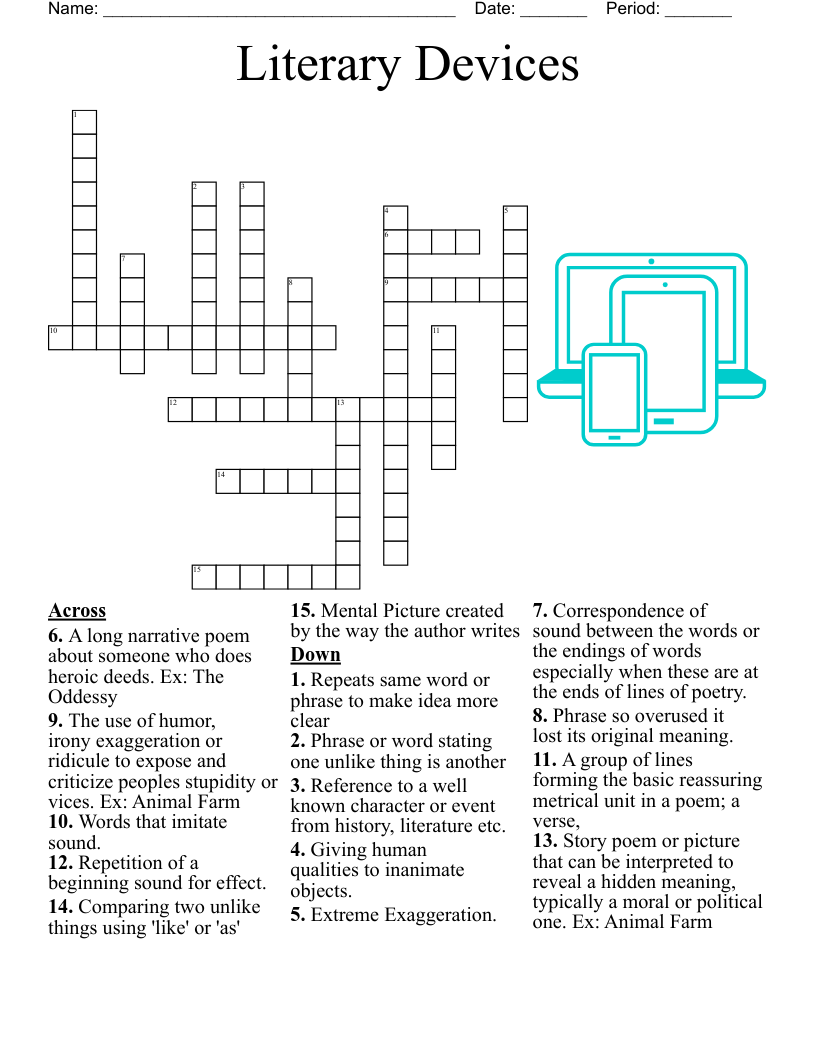
This printable crossword puzzle on the topic of Figurative Language & Literary Devices has 25 clues. Answers range from 4 to 18 letters long. This crossword is also available to download as a Microsoft Word document or a PDF.
Description
An author's specific word choice to achieve correctness, clearness, or emphasis
the implied meaning of a word
the literal, explicit meaning of a word
In the context of writing or literature, this term refers to the reading public of a specific group of intended readers
the moment of greatest intensity in a text, or the major turning point in the plot
a theme, motif, symbol, or character that holds a familiar place in a culture's conscience
a conversation between two or more speakers; an exchange of ideas
a figure of speech in which a word or short phrase is omitted but easily understood from the context
Greek for "wisdom" or "reason"; in the context of rhetoric, refers to the process of persuading by means of logic and reason, as opposed to style, authority, or emotion
language that brings to mind sense-impressions, especially via figures of speech and sensory language
a way of speaking that is peculiar to a region, group, or class, or the conventional forms peculiar to a language; an expression that is odd or incorrect and yet accepted, or one that has a meaning that does nit clearly derives from the words that combine to form it
a technique of detachment that draws awareness to the discrepancy between words and their meanings, between expectation and fulfillment, or, most commonly, between what is and what seems to be
a speech or piece of writing that praises someone or something highly, typically someone who has just died
to provide clues in advance of a future event
language using words and phrases not meant to be taken at their literal meanings
ethical appeal
a recurring idea, structure, contrast, or device that develops or informs the major themes of a literary work
when the words literally state the opposite of them writer's (or speaker's) meaning
when events turn out the opposite of what was expected; when what the characters and readers think ought to happen is not what does happen
when facts or events are unknown to a character in a play or piece of fiction but known to the reader, audience, or other characters in the work.
The resolution that occurs at the end of a narrative or drama, real or imagined.
a restrained statement that departs from what could be said; a studied avoidance of emphasis or exaggeration, often to create a particular effect
an author's reason for writing something; intent to
the way that the author portrays something, used as a synonym for attitude
a two word contradiction