Civics & Economics Unit 2 Crossword
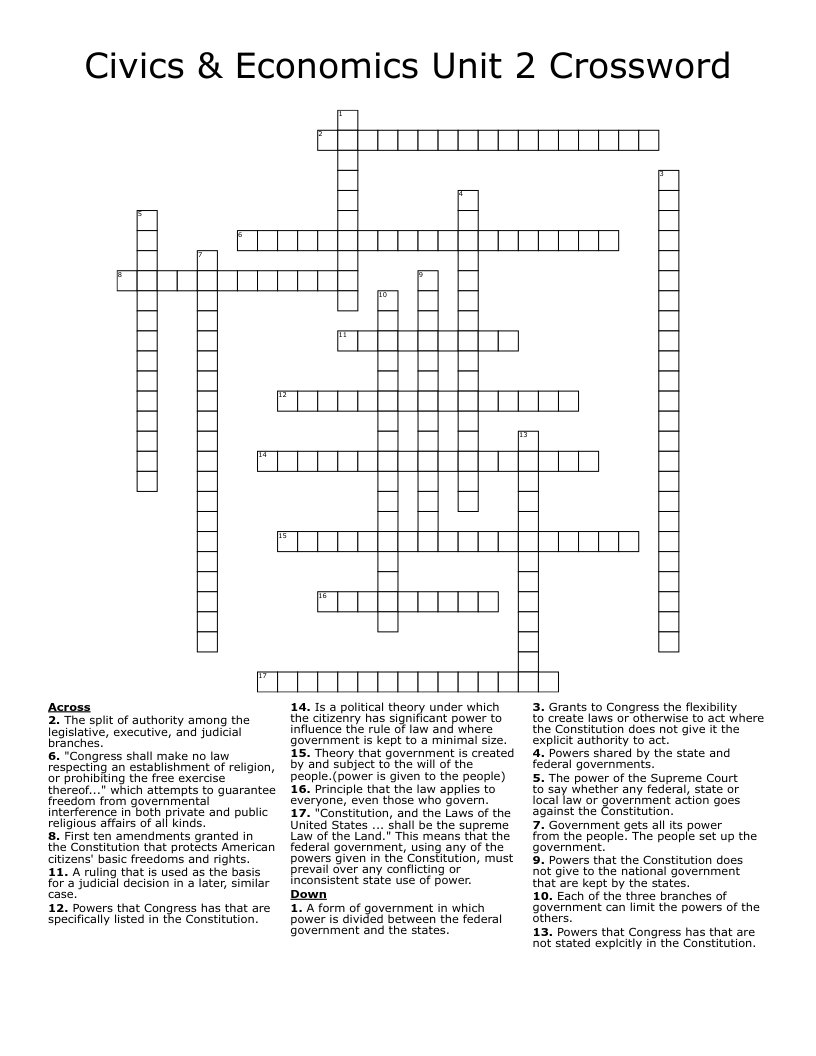
This printable crossword puzzle on the topic of US Government & Constitution has 17 clues. Answers range from 9 to 24 letters long. This crossword is also available to download as a Microsoft Word document or a PDF.
Description
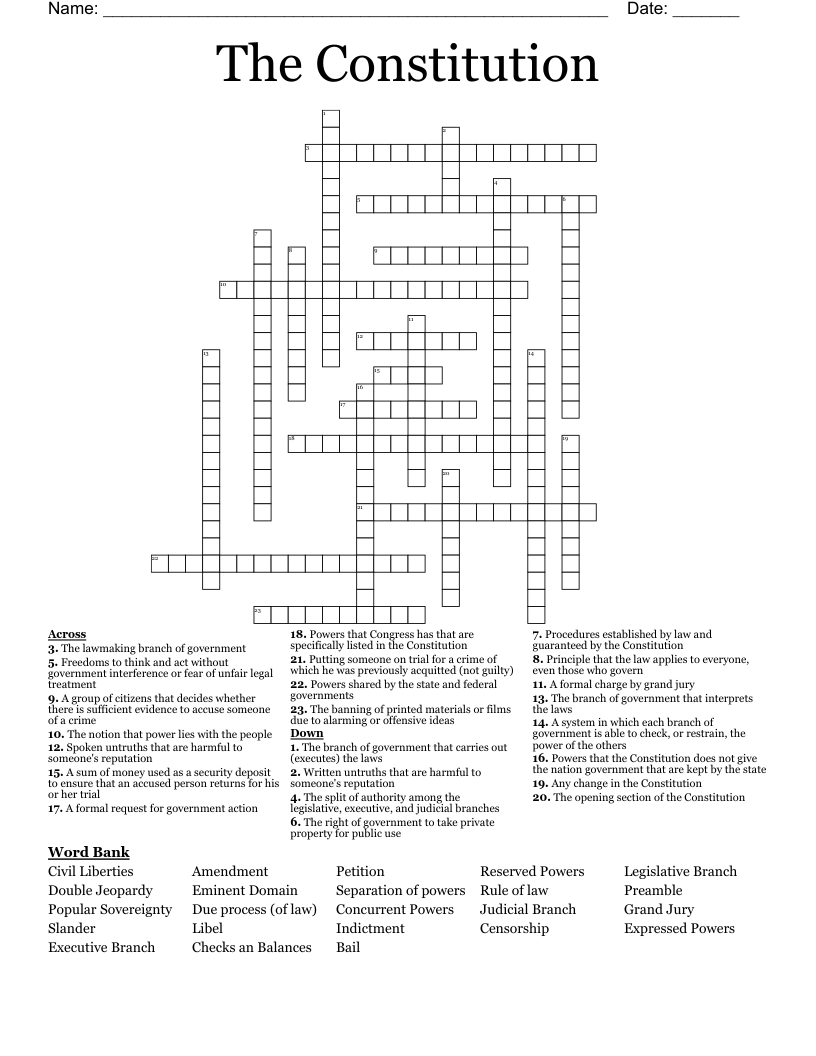
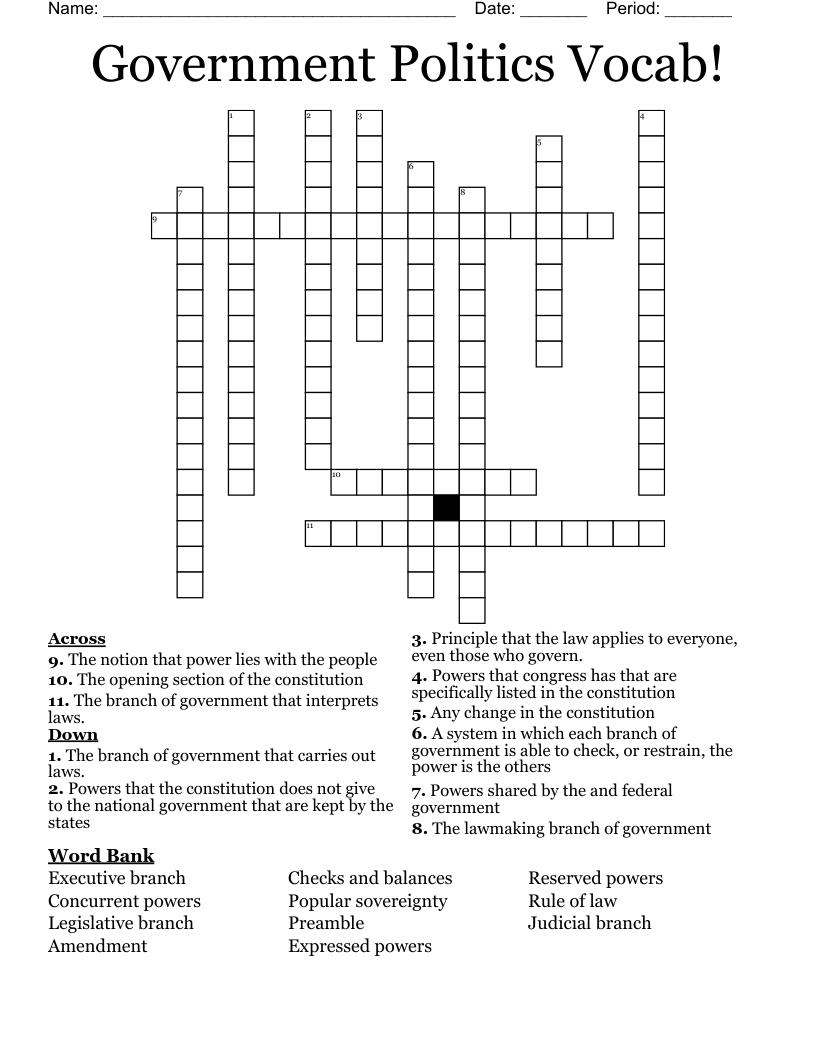
Each of the three branches of government can limit the powers of the others.
Principle that the law applies to everyone, even those who govern.
Government gets all its power from the people. The people set up the government.
Theory that government is created by and subject to the will of the people.(power is given to the people)
Is a political theory under which the citizenry has significant power to influence the rule of law and where government is kept to a minimal size.
A form of government in which power is divided between the federal government and the states.
The split of authority among the legislative, executive, and judicial branches.
A ruling that is used as the basis for a judicial decision in a later, similar case.
The power of the Supreme Court to say whether any federal, state or local law or government action goes against the Constitution.
"Constitution, and the Laws of the United States ... shall be the supreme Law of the Land." This means that the federal government, using any of the powers given in the Constitution, must prevail over any conflicting or inconsistent state use of power.
"Congress shall make no law respecting an establishment of religion, or prohibiting the free exercise thereof..." which attempts to guarantee freedom from governmental interference in both private and public religious affairs of all kinds.
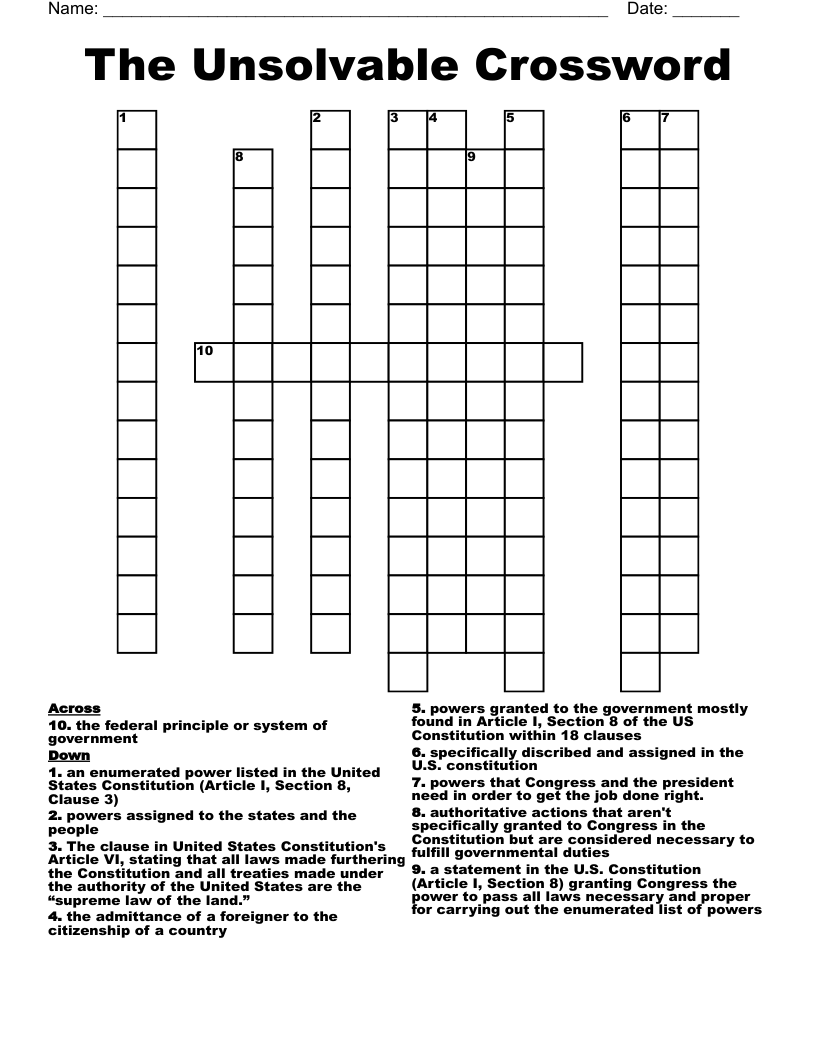
Grants to Congress the flexibility to create laws or otherwise to act where the Constitution does not give it the explicit authority to act.
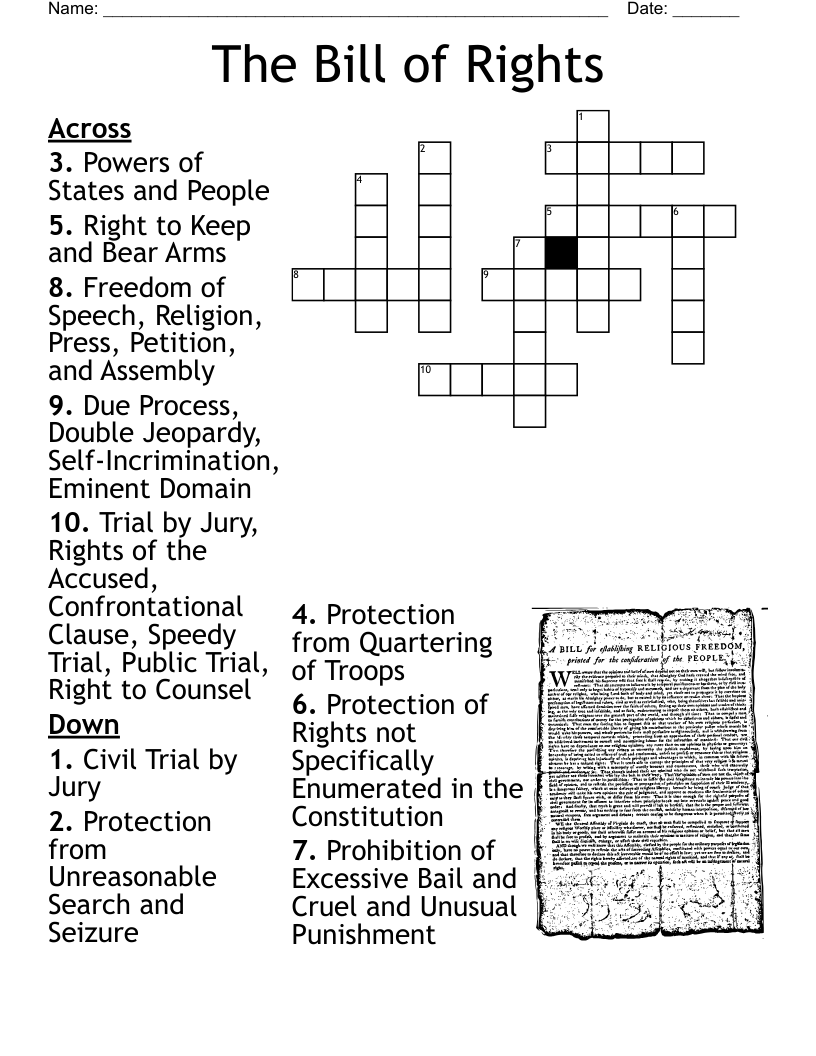
First ten amendments granted in the Constitution that protects American citizens' basic freedoms and rights.
Powers that Congress has that are specifically listed in the Constitution.
Powers that the Constitution does not give to the national government that are kept by the states.
Powers shared by the state and federal governments.
Powers that Congress has that are not stated explcitly in the Constitution.