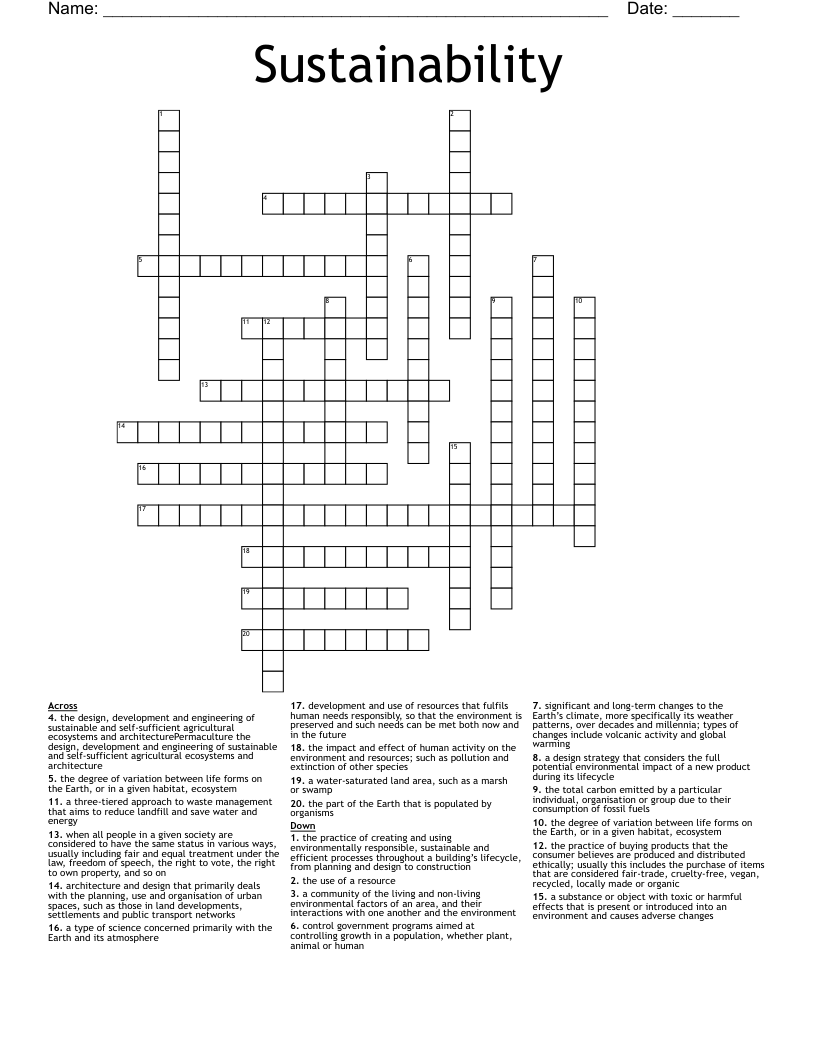
Sustainability Crossword
This printable crossword puzzle on the topic of Environmental Science has 20 clues. Answers range from 7 to 22 letters long. This crossword is also available to download as a Microsoft Word document or a PDF.
Description
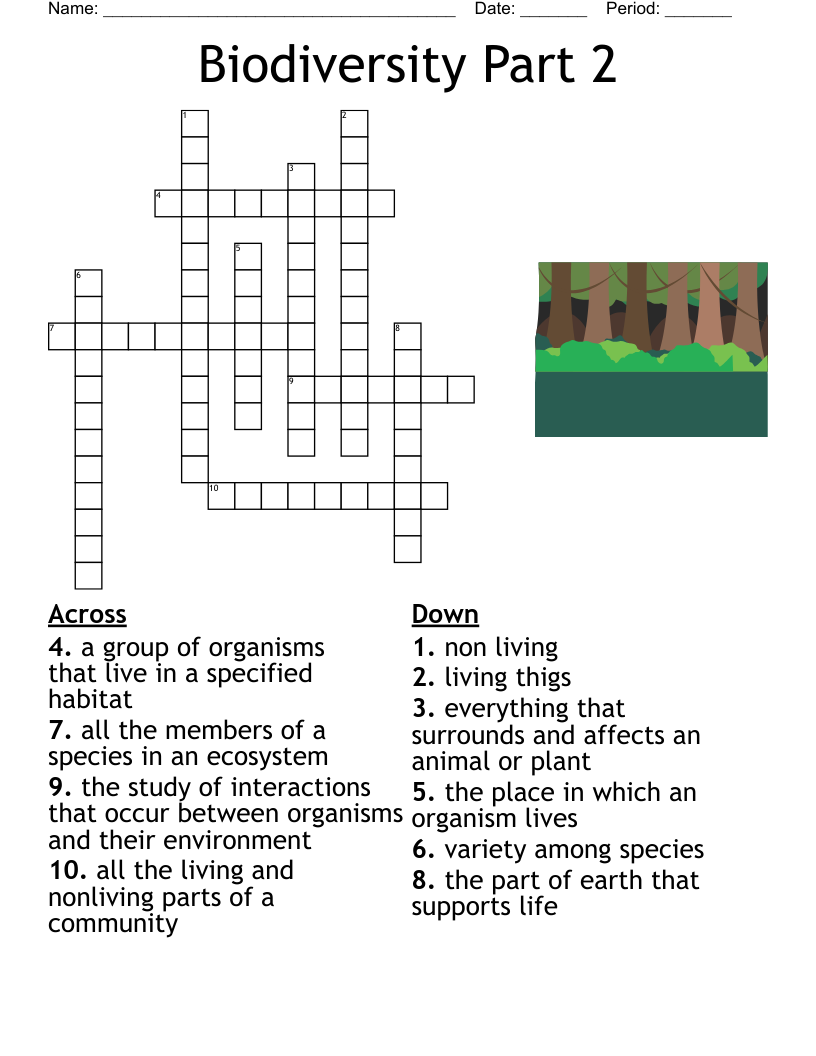
the part of the Earth that is populated by organisms
a community of the living and non-living environmental factors of an area, and their interactions with one another and the environment
the degree of variation between life forms on the Earth, or in a given habitat, ecosystem
the degree of variation between life forms on the Earth, or in a given habitat, ecosystem
a water-saturated land area, such as a marsh or swamp
a type of science concerned primarily with the Earth and its atmosphere
the design, development and engineering of sustainable and self-sufficient agricultural ecosystems and architecturePermaculture the design, development and engineering of sustainable and self-sufficient agricultural ecosystems and architecture
the practice of creating and using environmentally responsible, sustainable and efficient processes throughout a building’s lifecycle, from planning and design to construction
architecture and design that primarily deals with the planning, use and organisation of urban spaces, such as those in land developments, settlements and public transport networks
a design strategy that considers the full potential environmental impact of a new product during its lifecycle
a three-tiered approach to waste management that aims to reduce landfill and save water and energy
a substance or object with toxic or harmful effects that is present or introduced into an environment and causes adverse changes
control government programs aimed at controlling growth in a population, whether plant, animal or human
the use of a resource
when all people in a given society are considered to have the same status in various ways, usually including fair and equal treatment under the law, freedom of speech, the right to vote, the right to own property, and so on
the impact and effect of human activity on the environment and resources; such as pollution and extinction of other species
the practice of buying products that the consumer believes are produced and distributed ethically; usually this includes the purchase of items that are considered fair-trade, cruelty-free, vegan, recycled, locally made or organic
significant and long-term changes to the Earth’s climate, more specifically its weather patterns, over decades and millennia; types of changes include volcanic activity and global warming
the total carbon emitted by a particular individual, organisation or group due to their consumption of fossil fuels
development and use of resources that fulfils human needs responsibly, so that the environment is preserved and such needs can be met both now and in the future