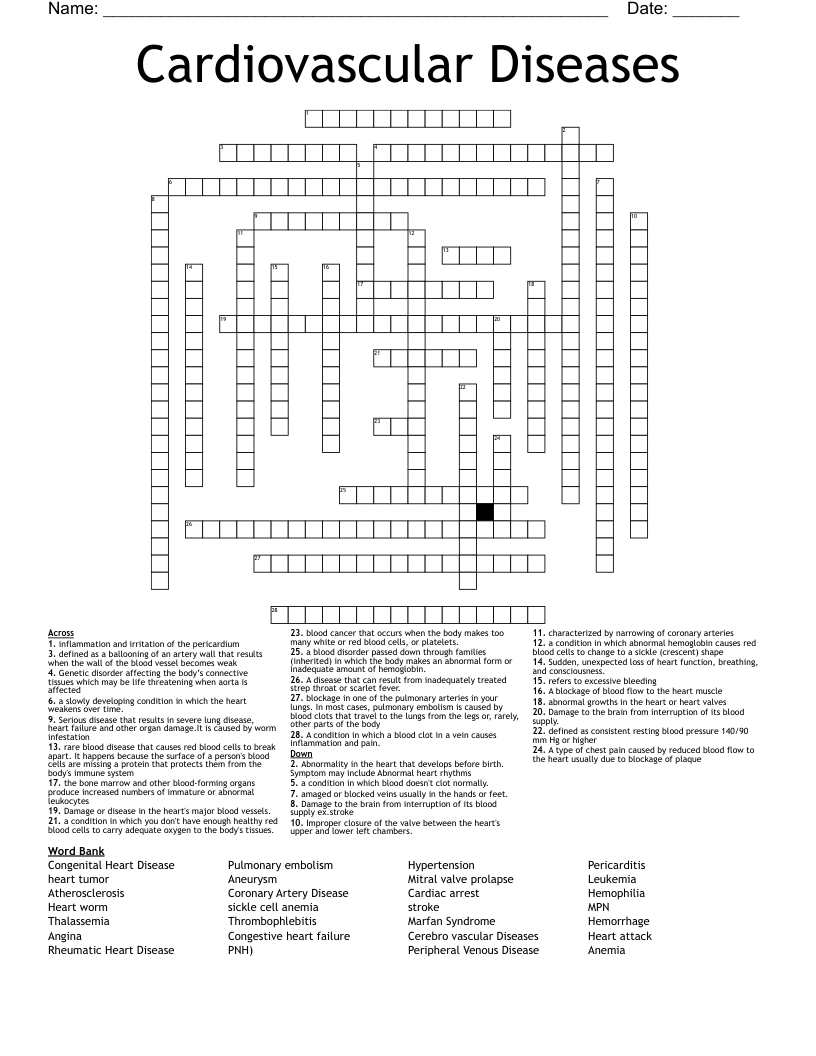
Cardiovascular Diseases Crossword
This printable crossword puzzle on the topic of Medical Terminology has 28 clues. Answers range from 3 to 23 letters long. This crossword is also available to download as a Microsoft Word document or a PDF.
Description
a condition in which abnormal hemoglobin causes red blood cells to change to a sickle (crescent) shape
inflammation and irritation of the pericardium
refers to excessive bleeding
a condition in which blood doesn't clot normally.
defined as consistent resting blood pressure 140/90 mm Hg or higher
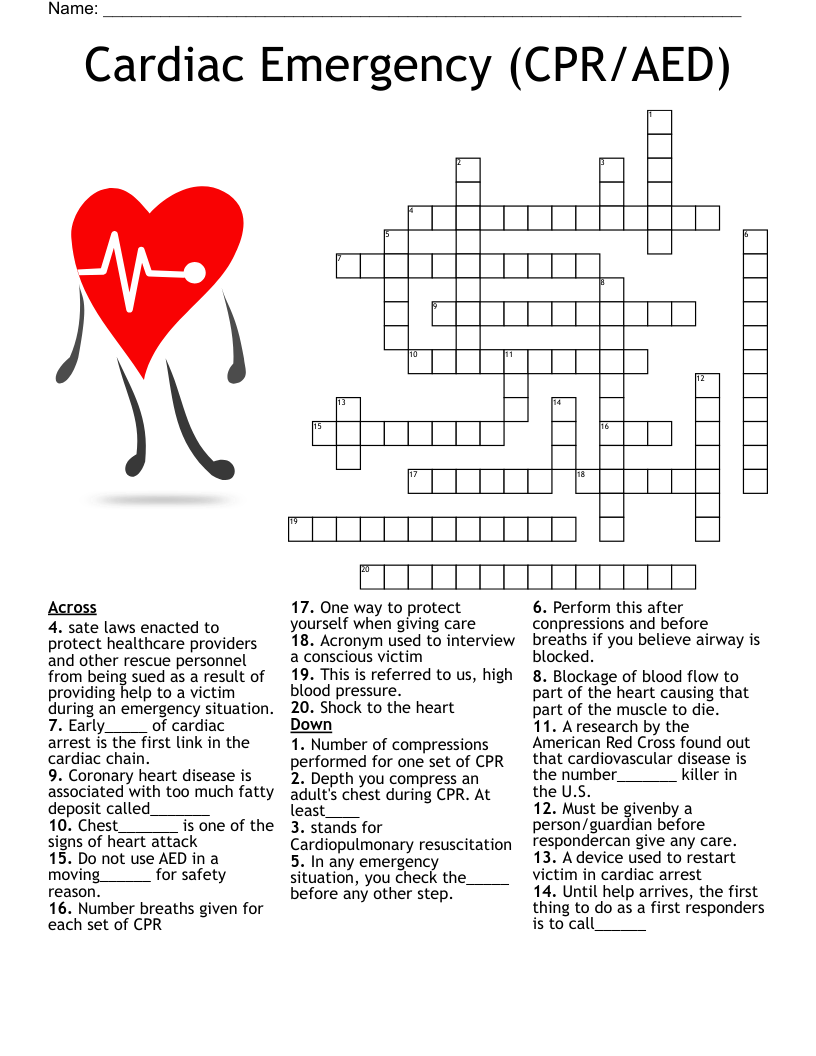
A blockage of blood flow to the heart muscle
characterized by narrowing of coronary arteries
a slowly developing condition in which the heart weakens over time.
defined as a ballooning of an artery wall that results when the wall of the blood vessel becomes weak
amaged or blocked veins usually in the hands or feet.
Improper closure of the valve between the heart's upper and lower left chambers.
Genetic disorder affecting the body’s connective tissues which may be life threatening when aorta is affected
the bone marrow and other blood-forming organs produce increased numbers of immature or abnormal leukocytes
A disease that can result from inadequately treated strep throat or scarlet fever.
Damage to the brain from interruption of its blood supply ex.stroke
Abnormality in the heart that develops before birth. Symptom may include Abnormal heart rhythms
Damage or disease in the heart's major blood vessels.
A type of chest pain caused by reduced blood flow to the heart usually due to blockage of plaque
Serious disease that results in severe lung disease, heart failure and other organ damage.It is caused by worm infestation
Sudden, unexpected loss of heart function, breathing, and consciousness.
blood cancer that occurs when the body makes too many white or red blood cells, or platelets.
rare blood disease that causes red blood cells to break apart. It happens because the surface of a person's blood cells are missing a protein that protects them from the body's immune system
blockage in one of the pulmonary arteries in your lungs. In most cases, pulmonary embolism is caused by blood clots that travel to the lungs from the legs or, rarely, other parts of the body
a condition in which you don't have enough healthy red blood cells to carry adequate oxygen to the body's tissues.
a blood disorder passed down through families (inherited) in which the body makes an abnormal form or inadequate amount of hemoglobin.
Damage to the brain from interruption of its blood supply.
abnormal growths in the heart or heart valves
A condition in which a blood clot in a vein causes inflammation and pain.