Biomoclecule cross word
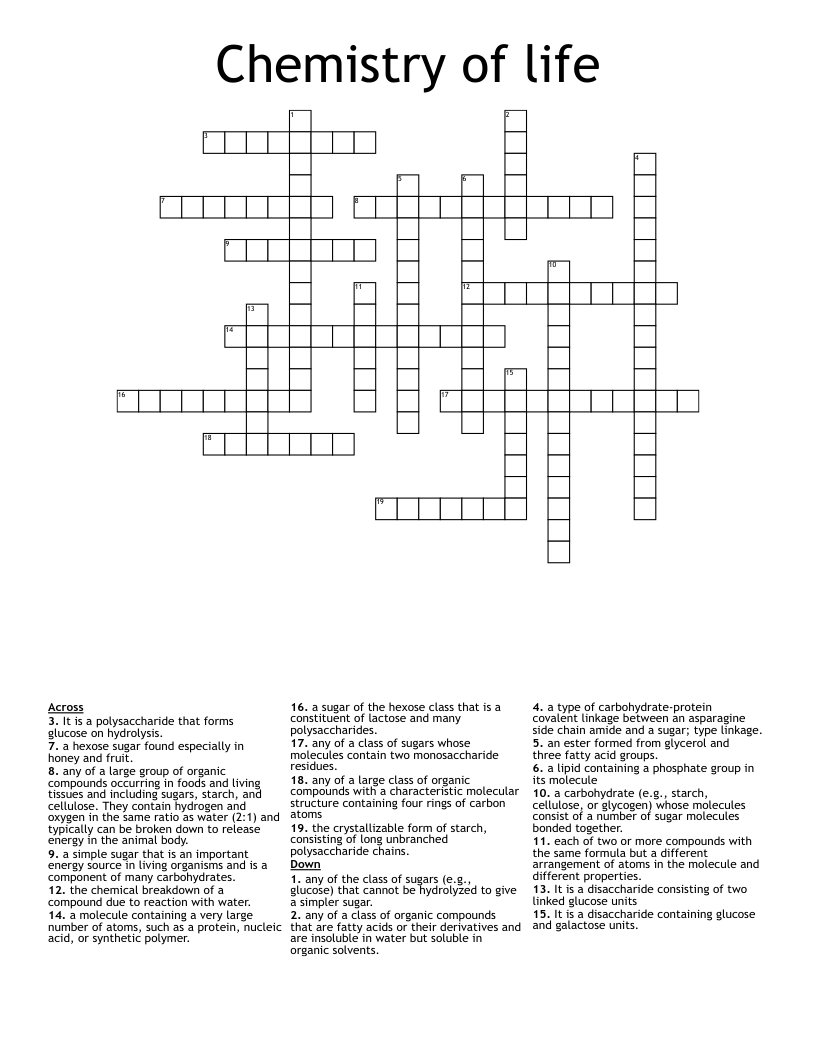
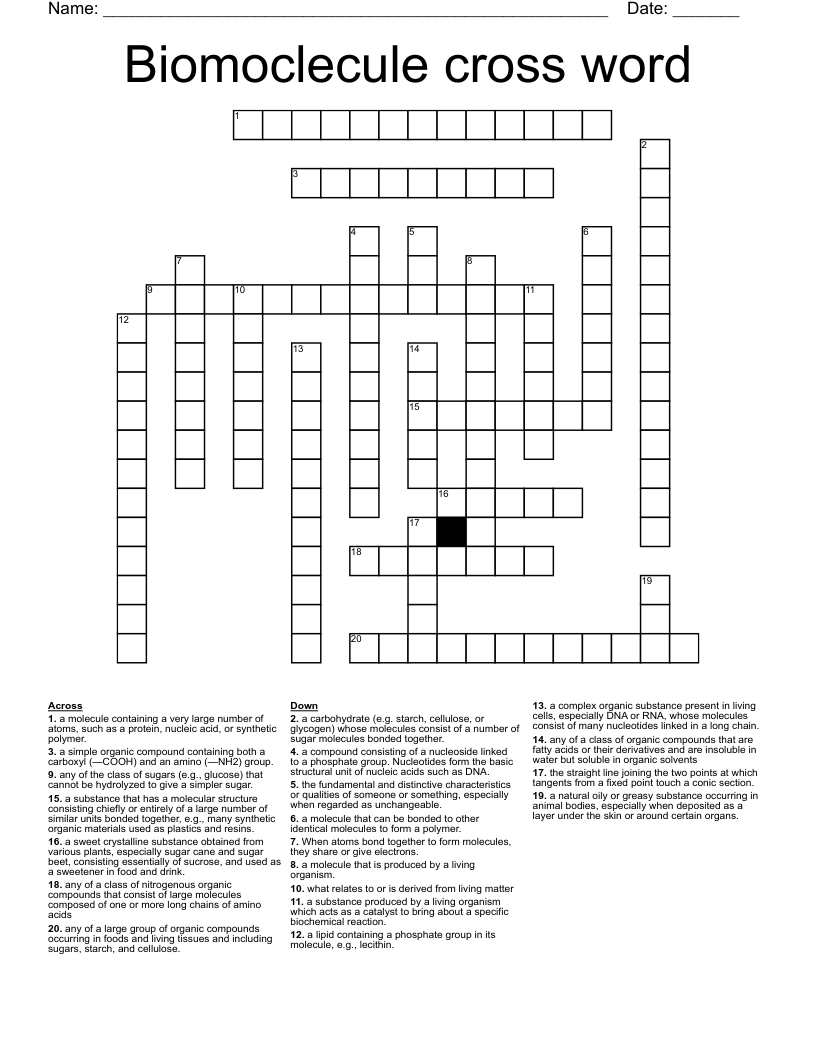
This printable crossword puzzle on the topic of Organic Chemistry & Biochemistry has 20 clues. Answers range from 3 to 14 letters long. This crossword is also available to download as a Microsoft Word document or a PDF.
Description
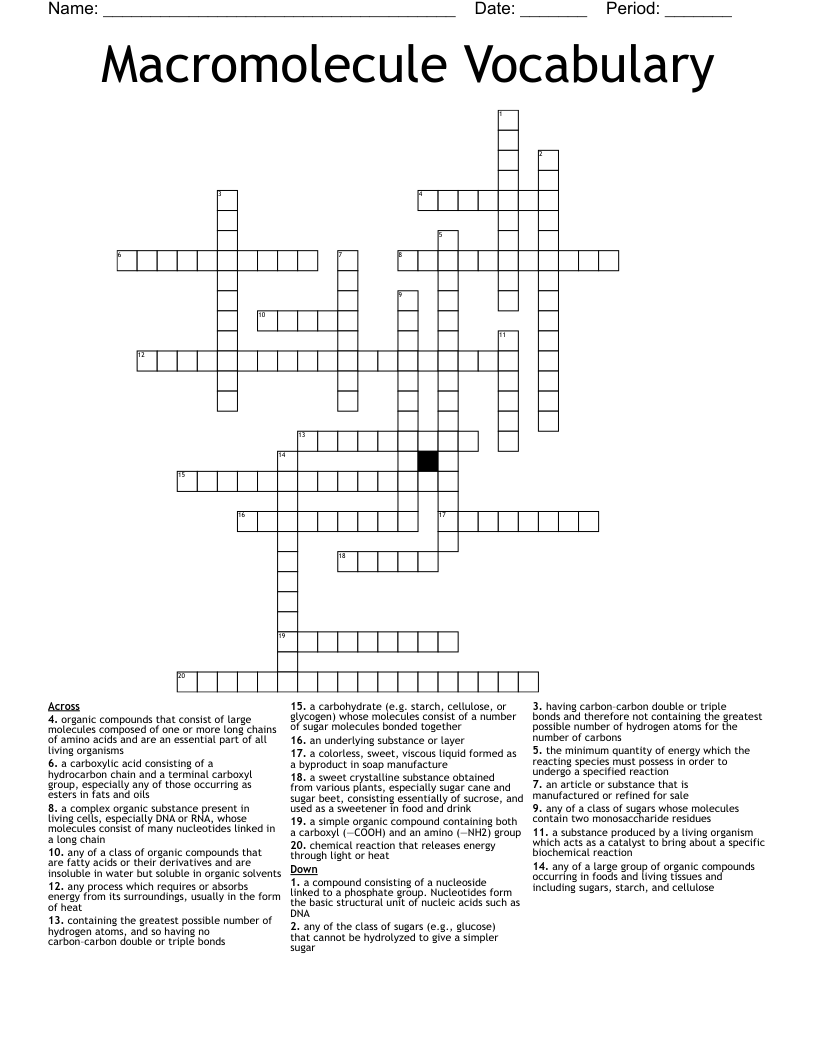
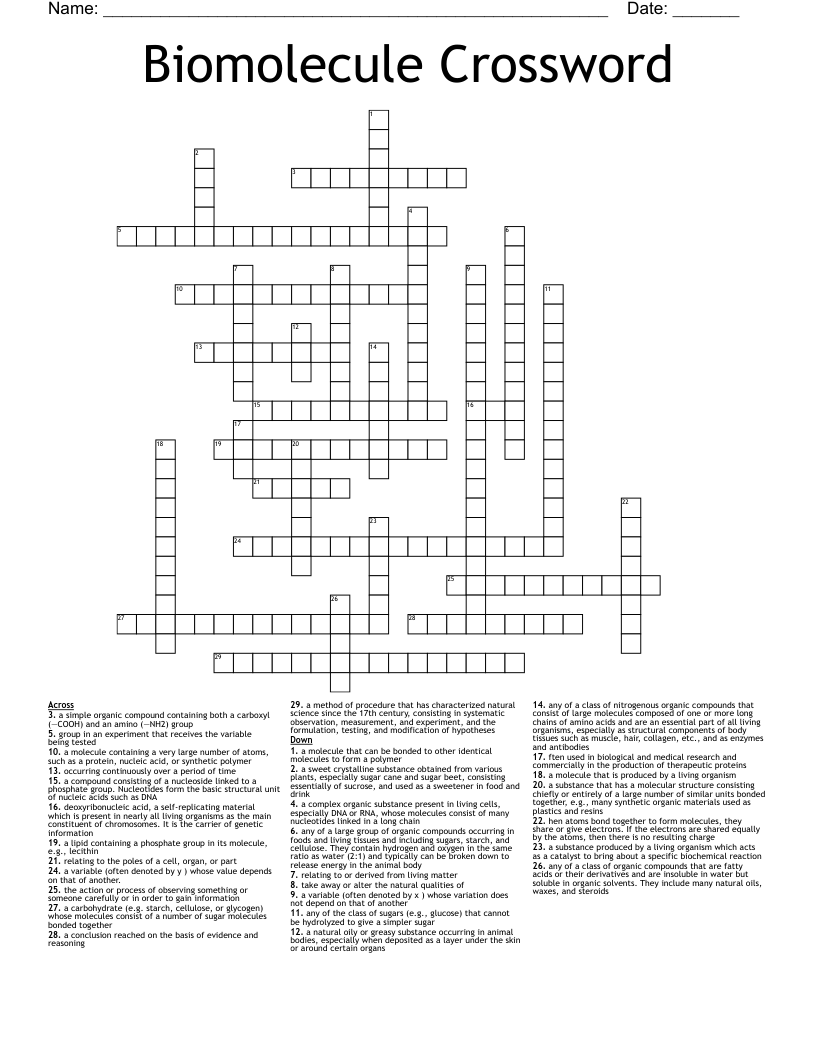
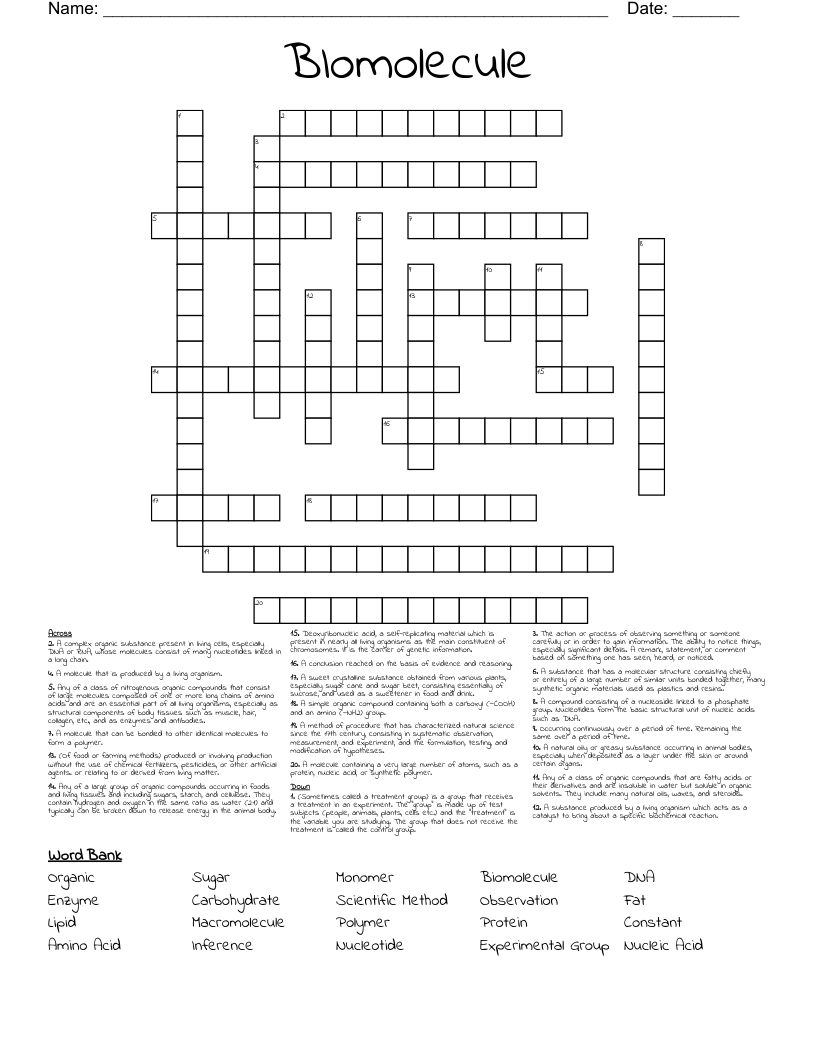
what relates to or is derived from living matter
a molecule containing a very large number of atoms, such as a protein, nucleic acid, or synthetic polymer.
a molecule that is produced by a living organism.
any of the class of sugars (e.g., glucose) that cannot be hydrolyzed to give a simpler sugar.
a carbohydrate (e.g. starch, cellulose, or glycogen) whose molecules consist of a number of sugar molecules bonded together.
a molecule that can be bonded to other identical molecules to form a polymer.
a substance that has a molecular structure consisting chiefly or entirely of a large number of similar units bonded together, e.g., many synthetic organic materials used as plastics and resins.
a simple organic compound containing both a carboxyl (—COOH) and an amino (—NH2) group.
a compound consisting of a nucleoside linked to a phosphate group. Nucleotides form the basic structural unit of nucleic acids such as DNA.
any of a class of nitrogenous organic compounds that consist of large molecules composed of one or more long chains of amino acids
any of a class of organic compounds that are fatty acids or their derivatives and are insoluble in water but soluble in organic solvents
any of a large group of organic compounds occurring in foods and living tissues and including sugars, starch, and cellulose.
a complex organic substance present in living cells, especially DNA or RNA, whose molecules consist of many nucleotides linked in a long chain.
a substance produced by a living organism which acts as a catalyst to bring about a specific biochemical reaction.
the fundamental and distinctive characteristics or qualities of someone or something, especially when regarded as unchangeable.
a sweet crystalline substance obtained from various plants, especially sugar cane and sugar beet, consisting essentially of sucrose, and used as a sweetener in food and drink.
a natural oily or greasy substance occurring in animal bodies, especially when deposited as a layer under the skin or around certain organs.
the straight line joining the two points at which tangents from a fixed point touch a conic section.
When atoms bond together to form molecules, they share or give electrons.
a lipid containing a phosphate group in its molecule, e.g., lecithin.