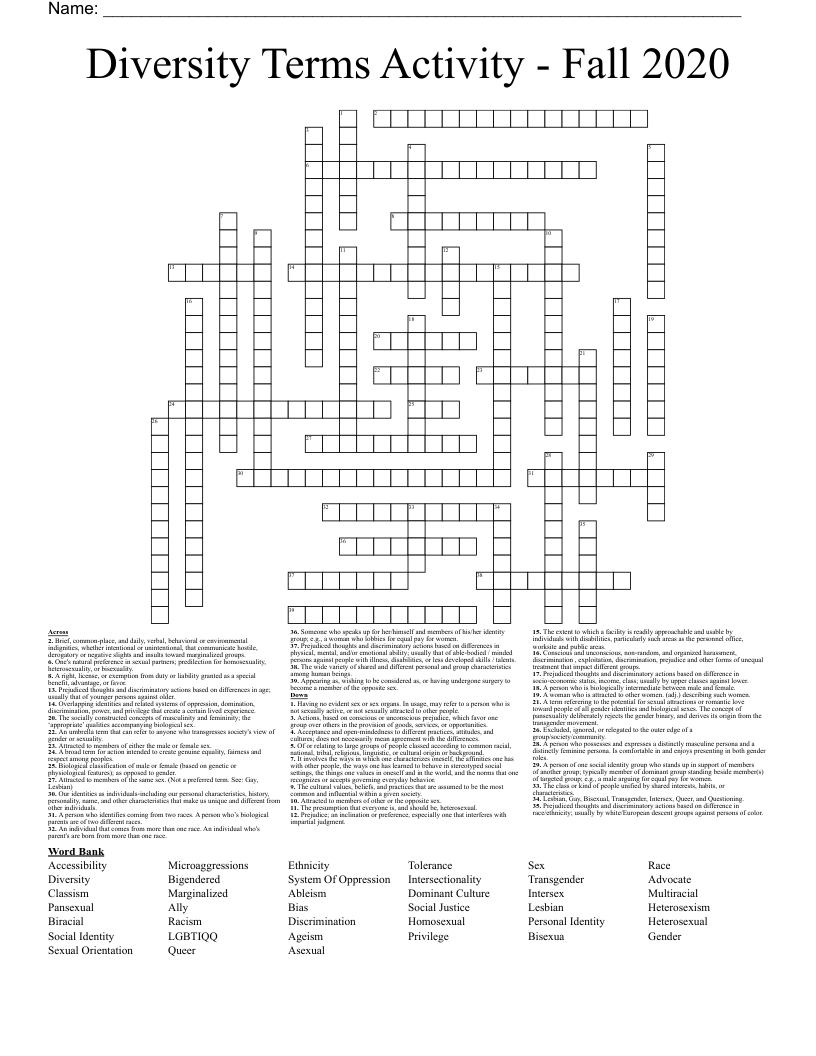
Diversity Terms Activity - Fall 2020 Crossword
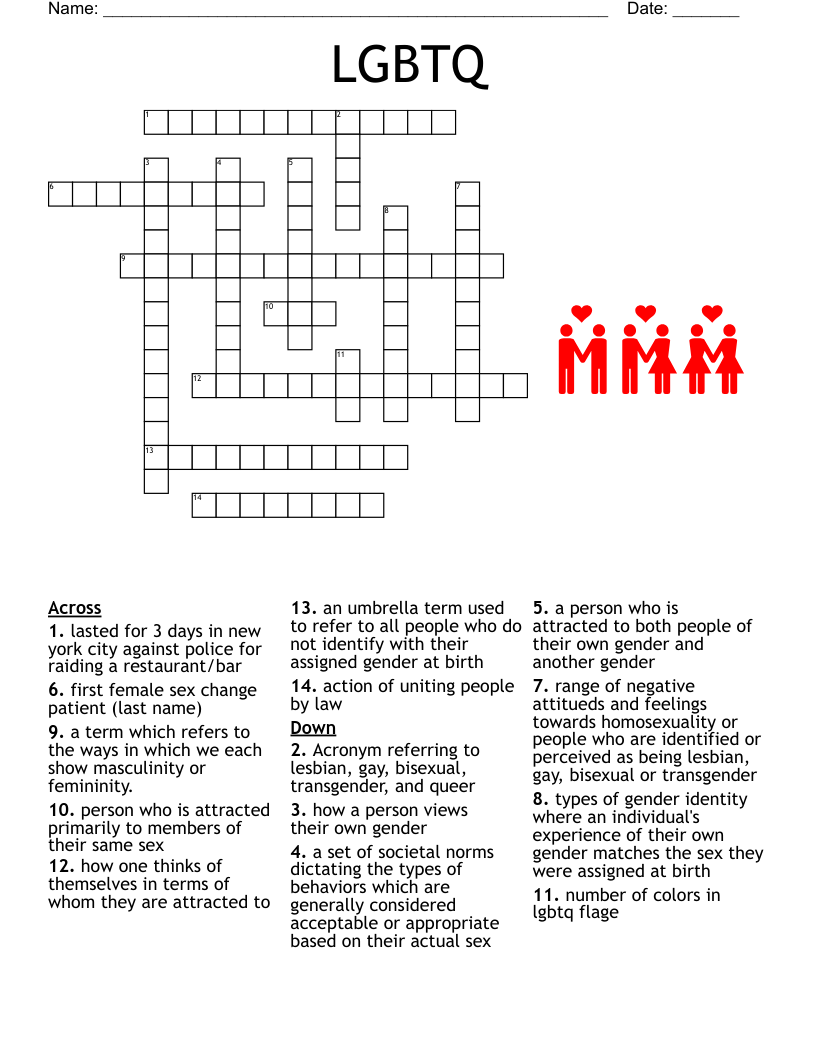
This printable crossword puzzle on the topic of Social Issues has 39 clues. Answers range from 3 to 18 letters long. This crossword is also available to download as a Microsoft Word document or a PDF.
Description
Prejudiced thoughts and discriminatory actions based on differences in physical, mental, and/or emotional ability; usually that of able‐bodied / minded persons against people with illness, disabilities, or less developed skills / talents.
The extent to which a facility is readily approachable and usable by individuals with disabilities, particularly such areas as the personnel office, worksite and public areas.
Someone who speaks up for her/himself and members of his/her identity group; e.g., a woman who lobbies for equal pay for women.
Prejudiced thoughts and discriminatory actions based on differences in age; usually that of younger persons against older.
A person of one social identity group who stands up in support of members of another group; typically member of dominant group standing beside member(s) of targeted group; e.g., a male arguing for equal pay for women.
Having no evident sex or sex organs. In usage, may refer to a person who is not sexually active, or not sexually attracted to other people.
Prejudice; an inclination or preference, especially one that interferes with impartial judgment.
A person who identifies coming from two races. A person who’s biological parents are of two different races.
A person who possesses and expresses a distinctly masculine persona and a distinctly feminine persona. Is comfortable in and enjoys presenting in both gender roles.
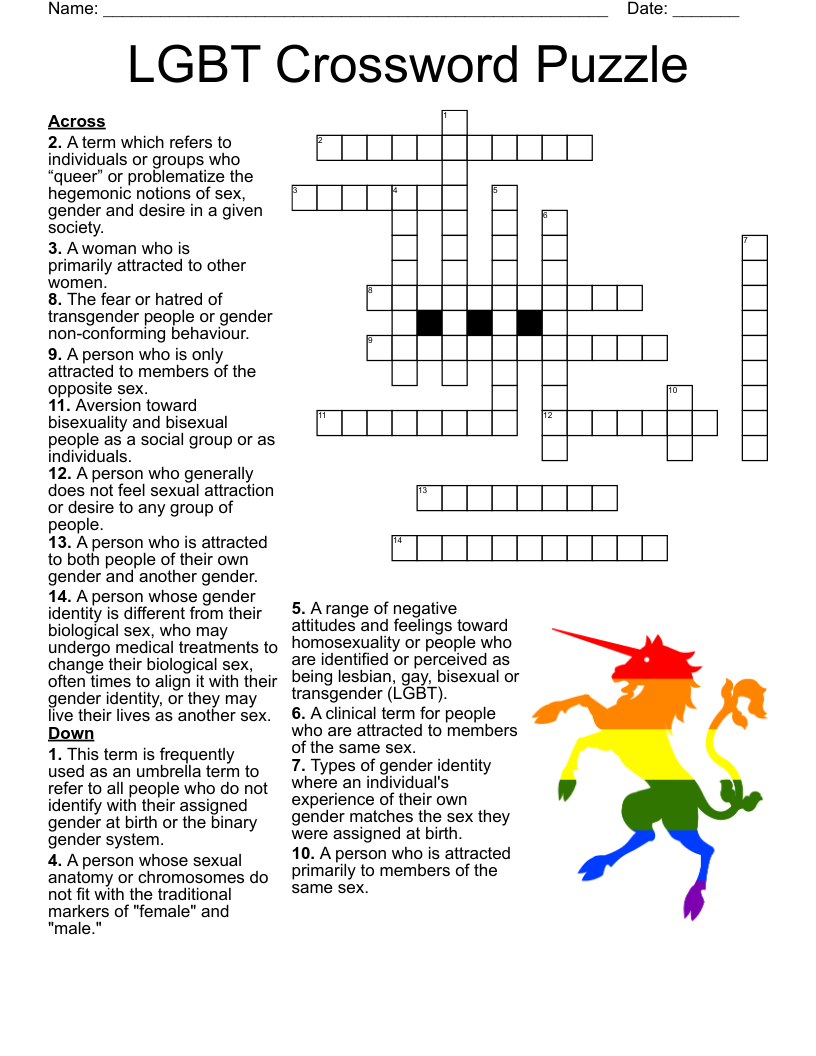
Attracted to members of either the male or female sex.
Prejudiced thoughts and discriminatory actions based on difference in socio‐economic status, income, class; usually by upper classes against lower.
Actions, based on conscious or unconscious prejudice, which favor one group over others in the provision of goods, services, or opportunities.
The wide variety of shared and different personal and group characteristics among human beings.
The cultural values, beliefs, and practices that are assumed to be the most common and influential within a given society.
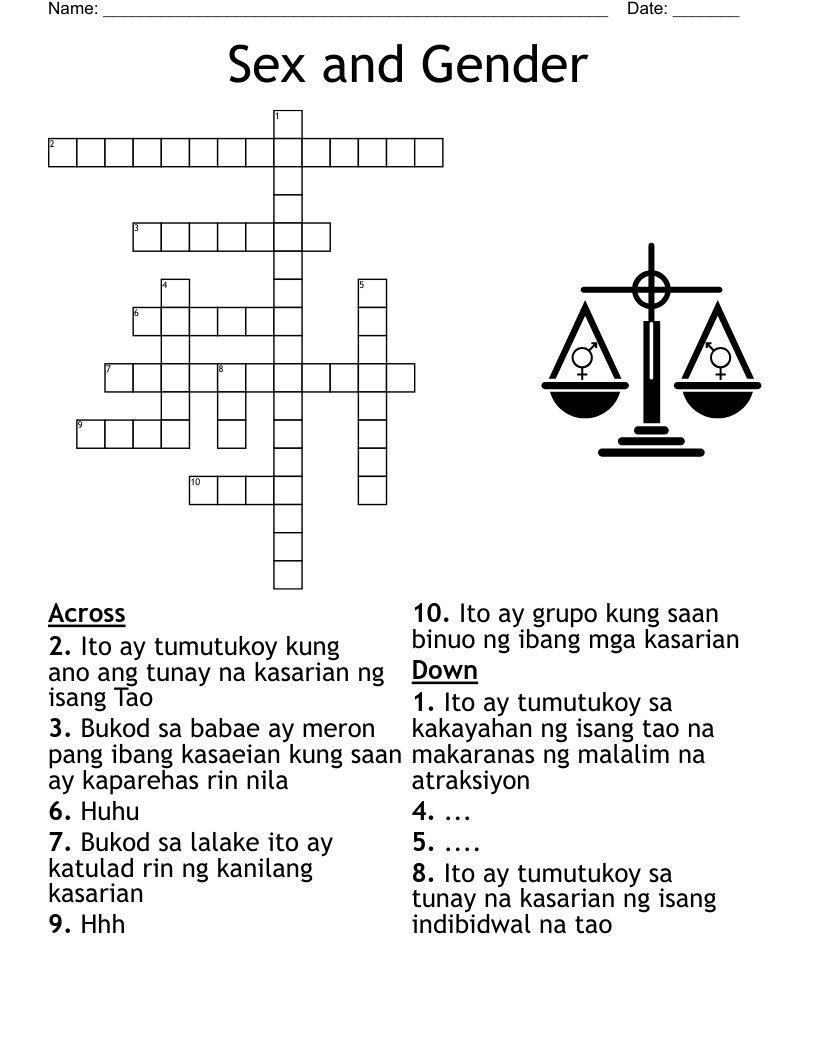
The socially constructed concepts of masculinity and femininity; the ‘appropriate’ qualities accompanying biological sex.
The presumption that everyone is, and should be, heterosexual.
Attracted to members of other or the opposite sex.
Attracted to members of the same sex. (Not a preferred term. See: Gay, Lesbian)
A person who is biologically intermediate between male and female.
A woman who is attracted to other women. (adj.) describing such women.
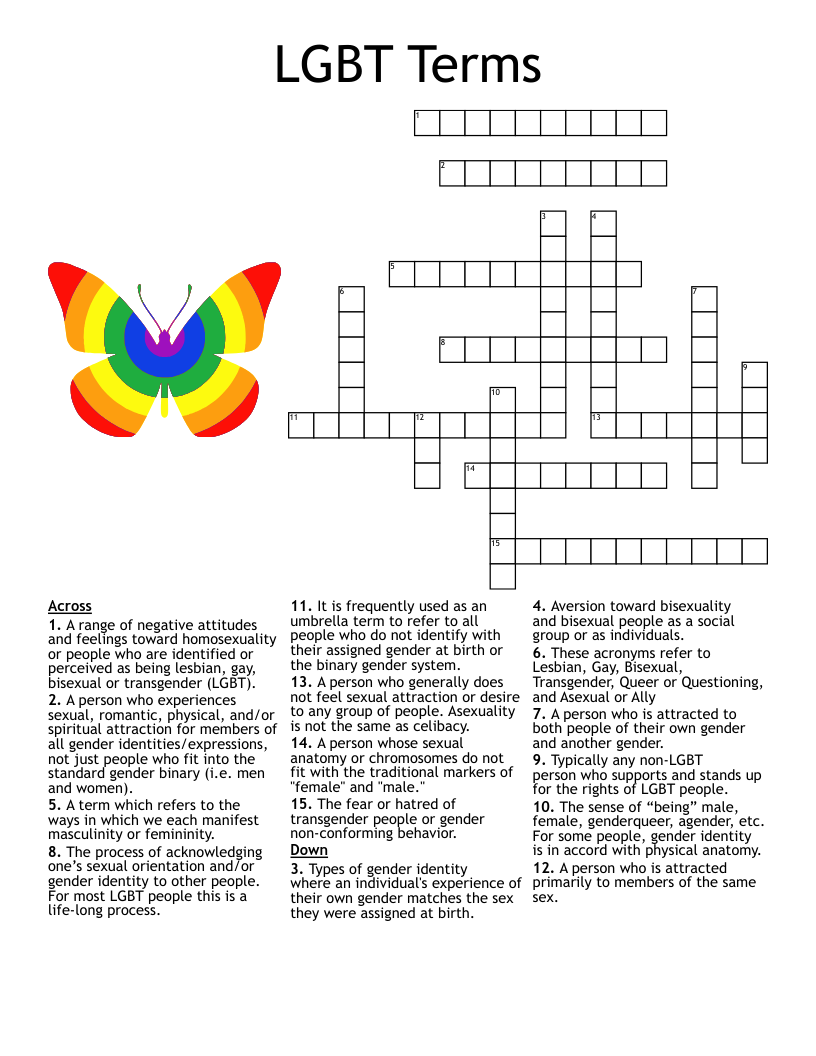
Lesbian, Gay, Bisexual, Transgender, Intersex, Queer, and Questioning.
Excluded, ignored, or relegated to the outer edge of a group/society/community.
An individual that comes from more than one race. An individual who's parent's are born from more than one race.
A term referering to the potential for sexual attractions or romantic love toward people of all gender identities and biological sexes. The concept of pansexuality deliberately rejects the gender binary, and derives its origin from the transgender movement.
Our identities as individuals‐including our personal characteristics, history, personality, name, and other characteristics that make us unique and different from other individuals.
A right, license, or exemption from duty or liability granted as a special benefit, advantage, or favor.
An umbrella term that can refer to anyone who transgresses society's view of gender or sexuality.
Prejudiced thoughts and discriminatory actions based on difference in race/ethnicity; usually by white/European descent groups against persons of color.
Biological classification of male or female (based on genetic or physiological features); as opposed to gender.
One's natural preference in sexual partners; predilection for homosexuality, heterosexuality, or bisexuality.
It involves the ways in which one characterizes oneself, the affinities one has with other people, the ways one has learned to behave in stereotyped social settings, the things one values in oneself and in the world, and the norms that one recognizes or accepts governing everyday behavior.
A broad term for action intended to create genuine equality, fairness and respect among peoples.
Conscious and unconscious, non‐random, and organized harassment, discrimination , exploitation, discrimination, prejudice and other forms of unequal treatment that impact different groups.
Acceptance and open‐mindedness to different practices, attitudes, and cultures; does not necessarily mean agreement with the differences.
Appearing as, wishing to be considered as, or having undergone surgery to become a member of the opposite sex.
Overlapping identities and related systems of oppression, domination, discrimination, power, and privilege that create a certain lived experience.
Of or relating to large groups of people classed according to common racial, national, tribal, religious, linguistic, or cultural origin or background.
The class or kind of people unified by shared interests, habits, or characteristics.
Brief, common-place, and daily, verbal, behavioral or environmental indignities, whether intentional or unintentional, that communicate hostile, derogatory or negative slights and insults toward marginalized groups.