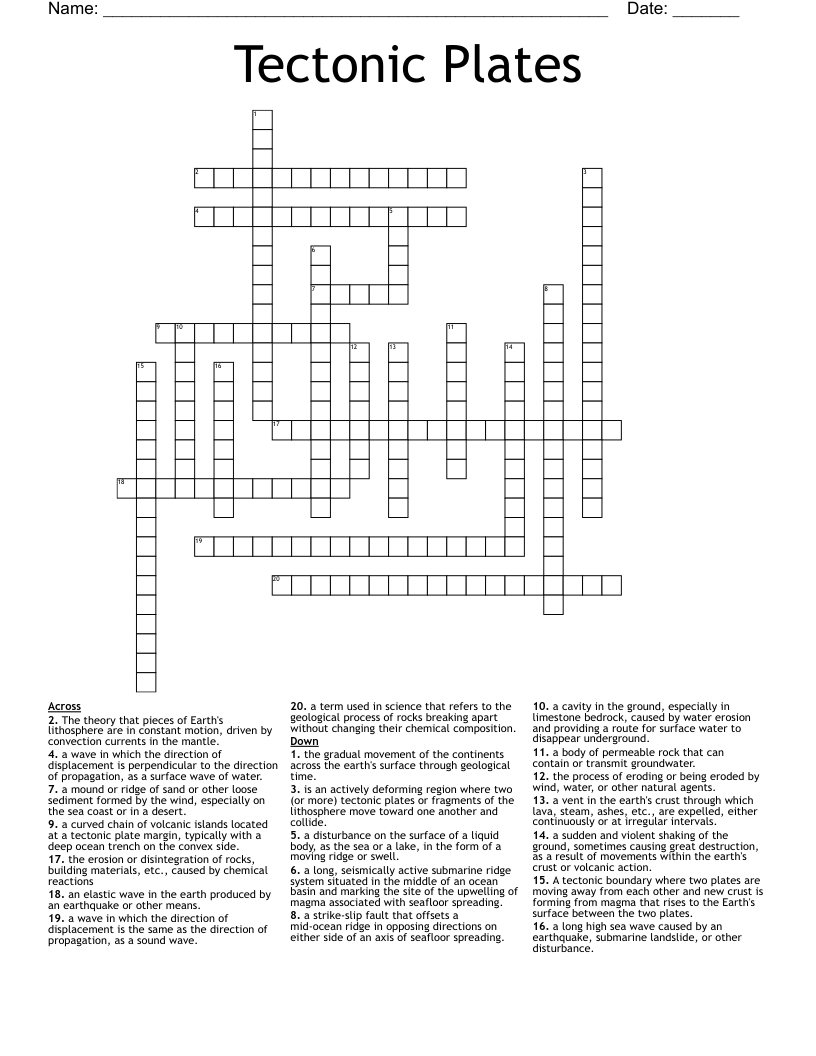
Tectonic Plates Crossword
This printable crossword puzzle on the topic of Plate Tectonics & Volcanoes has 20 clues. Answers range from 5 to 18 letters long. This crossword is also available to download as a Microsoft Word document or a PDF.
Description
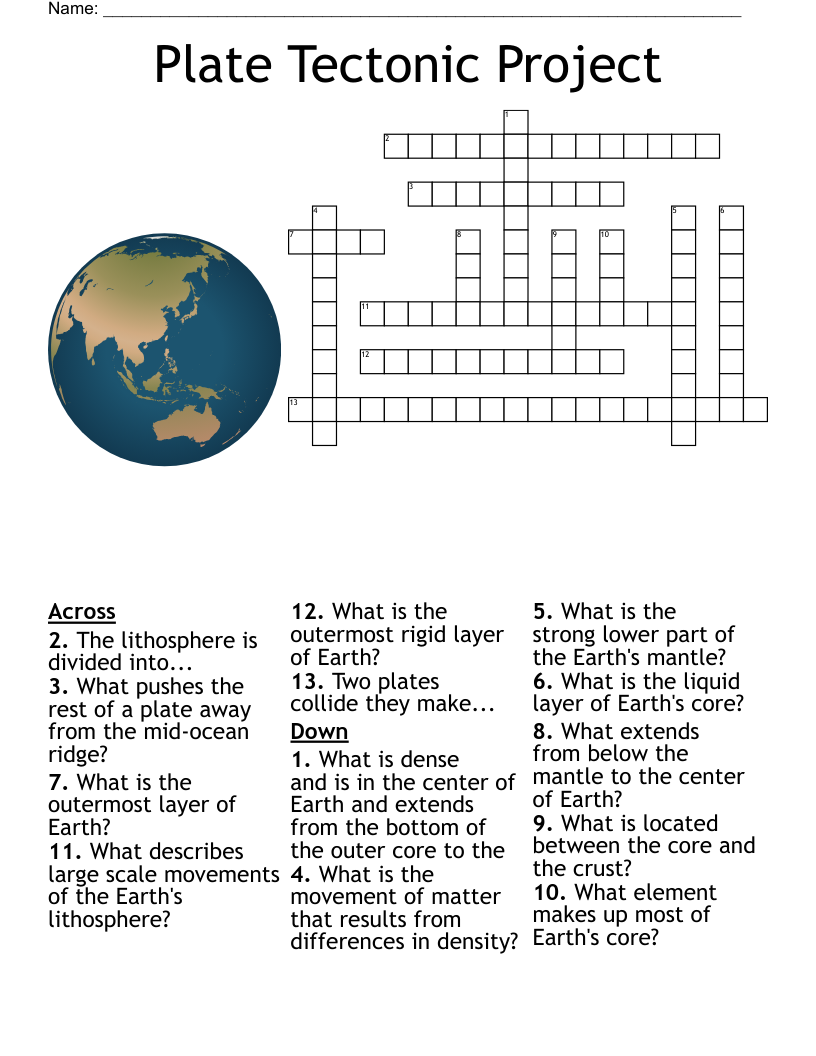
The theory that pieces of Earth's lithosphere are in constant motion, driven by convection currents in the mantle.
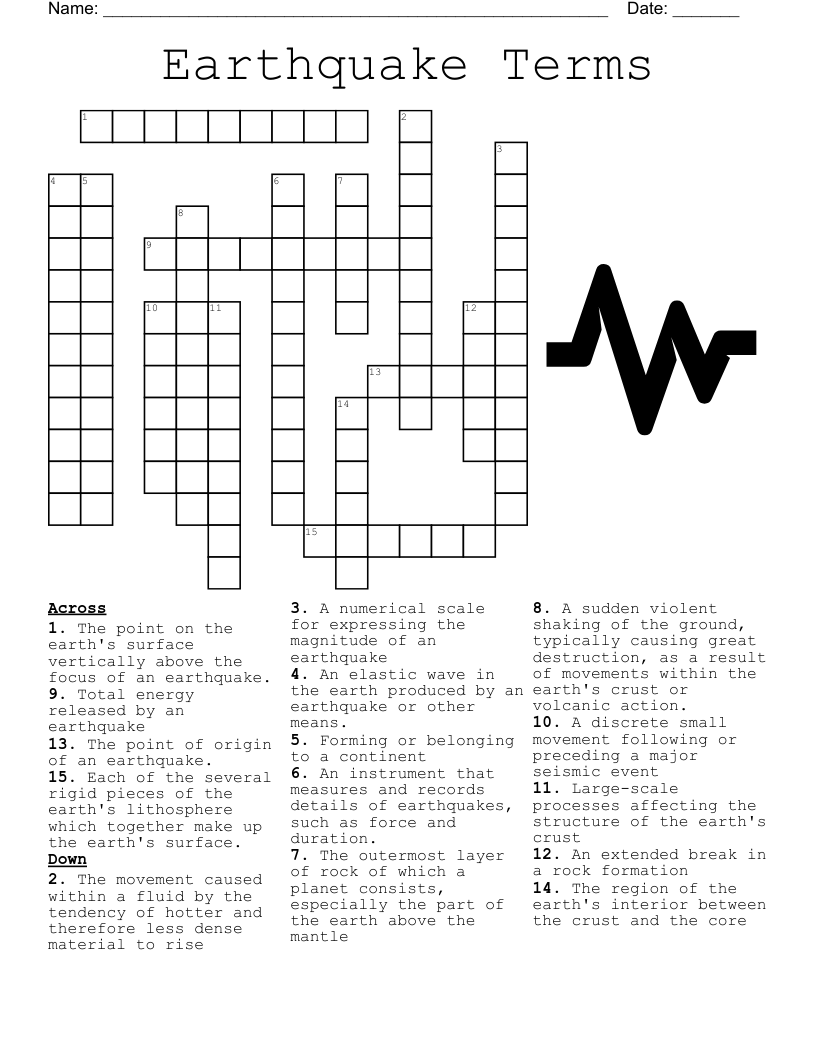
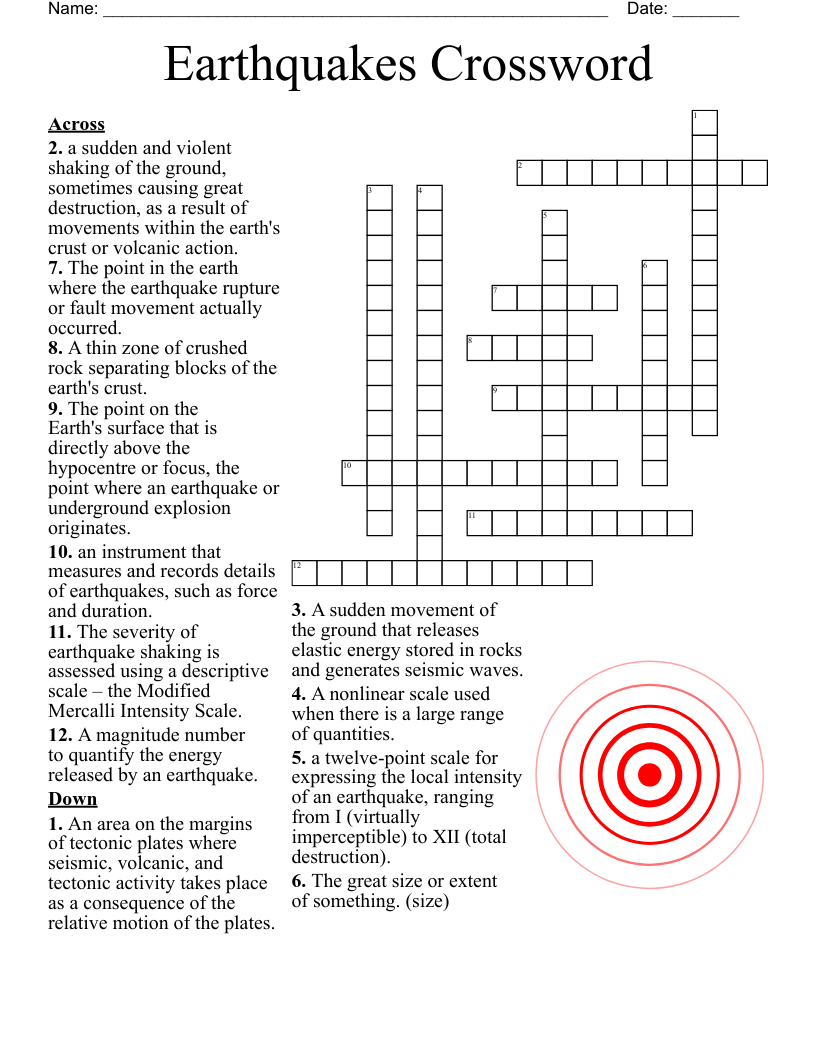
a sudden and violent shaking of the ground, sometimes causing great destruction, as a result of movements within the earth's crust or volcanic action.
a vent in the earth's crust through which lava, steam, ashes, etc., are expelled, either continuously or at irregular intervals.
a long high sea wave caused by an earthquake, submarine landslide, or other disturbance.
a cavity in the ground, especially in limestone bedrock, caused by water erosion and providing a route for surface water to disappear underground.
the gradual movement of the continents across the earth's surface through geological time.
is an actively deforming region where two (or more) tectonic plates or fragments of the lithosphere move toward one another and collide.
A tectonic boundary where two plates are moving away from each other and new crust is forming from magma that rises to the Earth's surface between the two plates.
a strike-slip fault that offsets a mid-ocean ridge in opposing directions on either side of an axis of seafloor spreading.
an elastic wave in the earth produced by an earthquake or other means.
a disturbance on the surface of a liquid body, as the sea or a lake, in the form of a moving ridge or swell.
a term used in science that refers to the geological process of rocks breaking apart without changing their chemical composition.
the erosion or disintegration of rocks, building materials, etc., caused by chemical reactions
a wave in which the direction of displacement is perpendicular to the direction of propagation, as a surface wave of water.
a wave in which the direction of displacement is the same as the direction of propagation, as a sound wave.
the process of eroding or being eroded by wind, water, or other natural agents.
a body of permeable rock that can contain or transmit groundwater.
a mound or ridge of sand or other loose sediment formed by the wind, especially on the sea coast or in a desert.
a long, seismically active submarine ridge system situated in the middle of an ocean basin and marking the site of the upwelling of magma associated with seafloor spreading.
a curved chain of volcanic islands located at a tectonic plate margin, typically with a deep ocean trench on the convex side.