Insurance Vocabulary Crossword
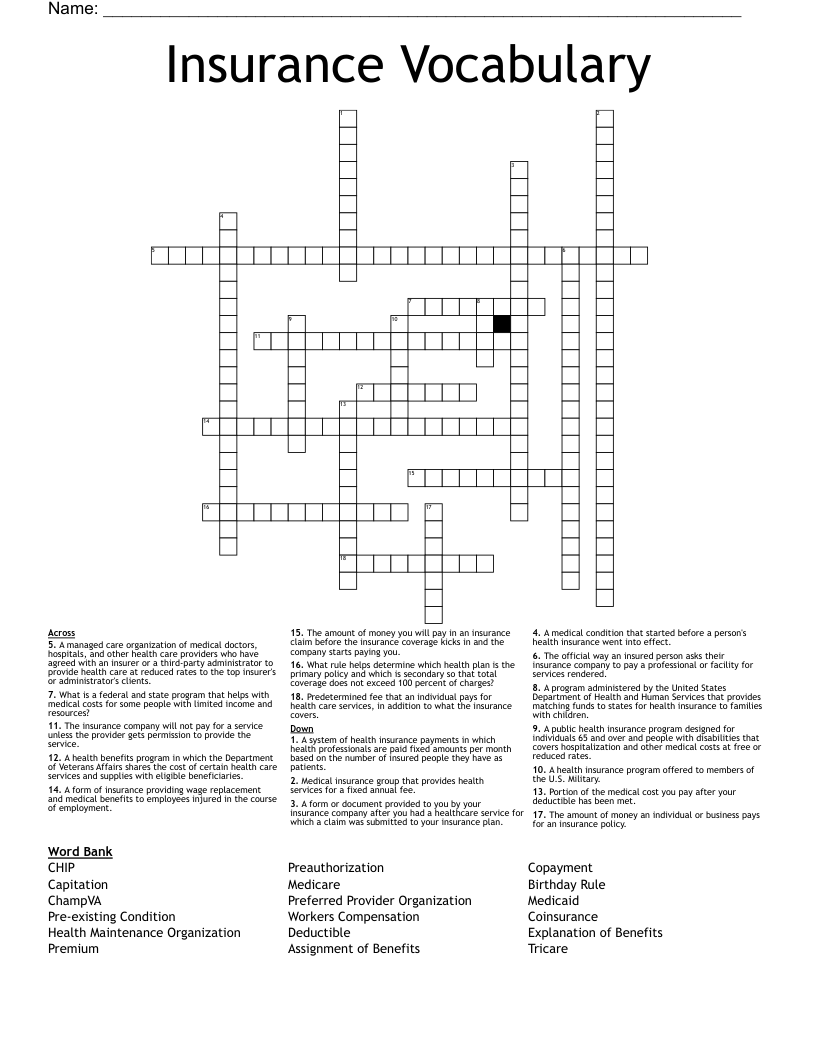
This printable crossword puzzle on the topic of Money & Personal Finance has 18 clues. Answers range from 4 to 29 letters long. This crossword is also available to download as a Microsoft Word document or a PDF.
Description
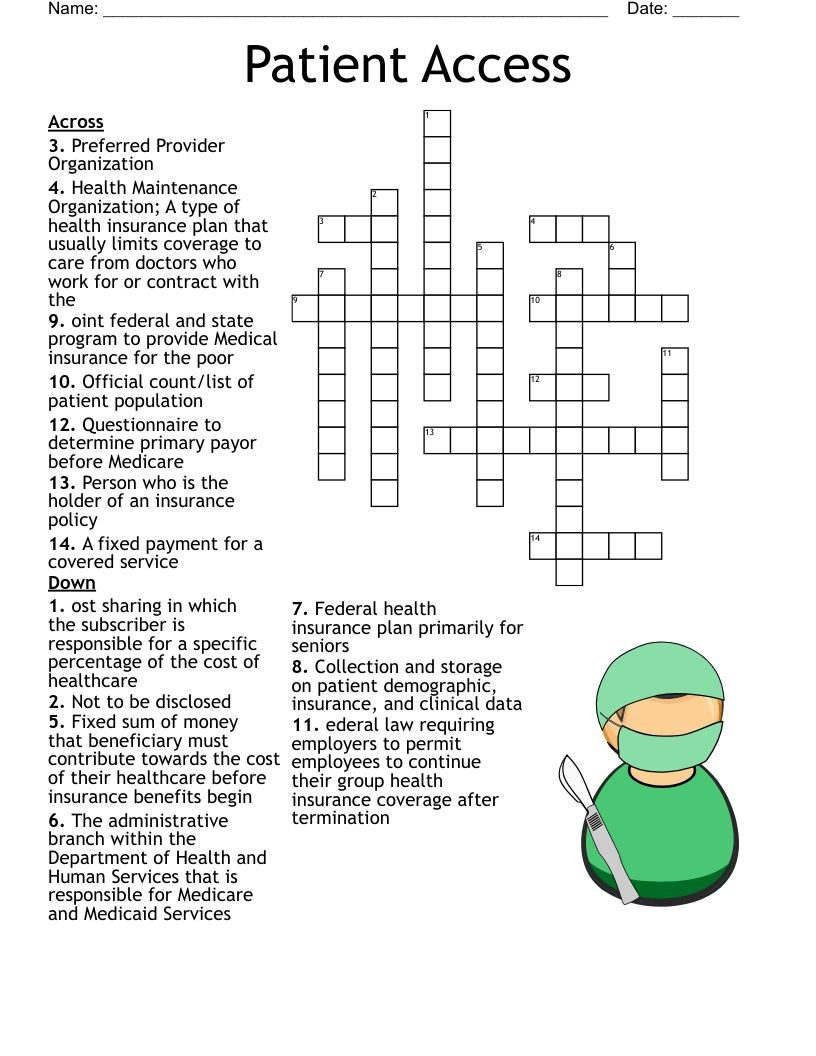
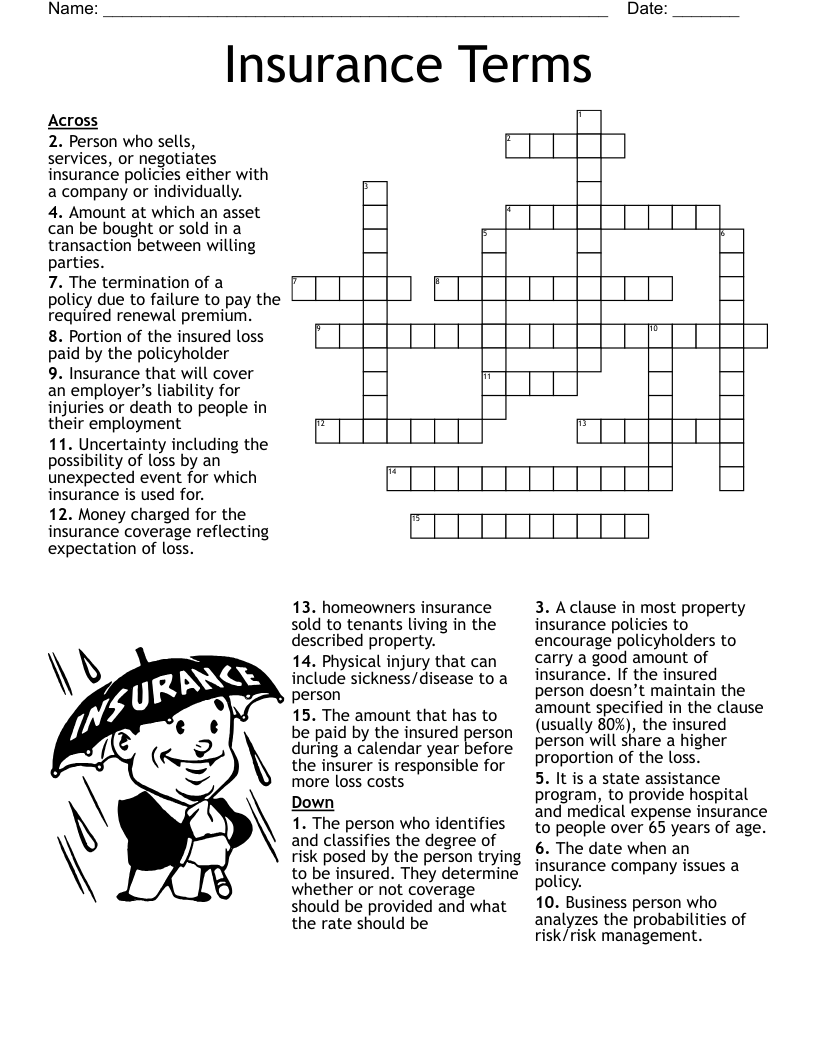
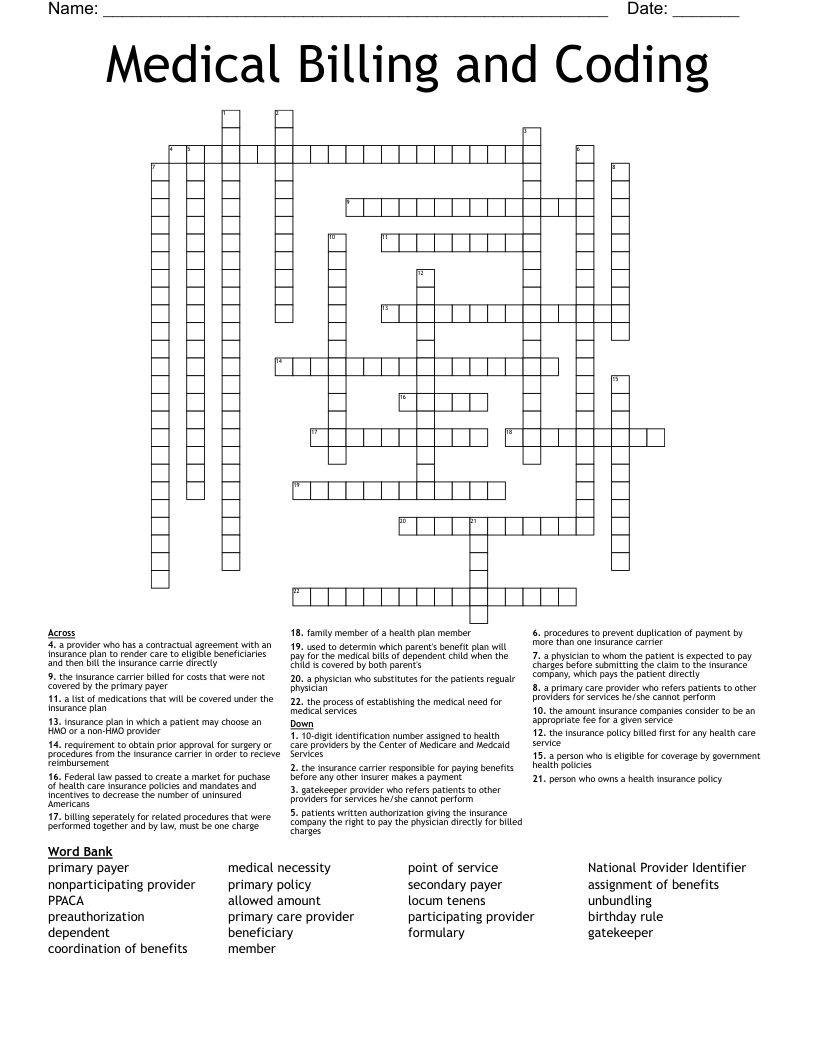
What rule helps determine which health plan is the primary policy and which is secondary so that total coverage does not exceed 100 percent of charges?
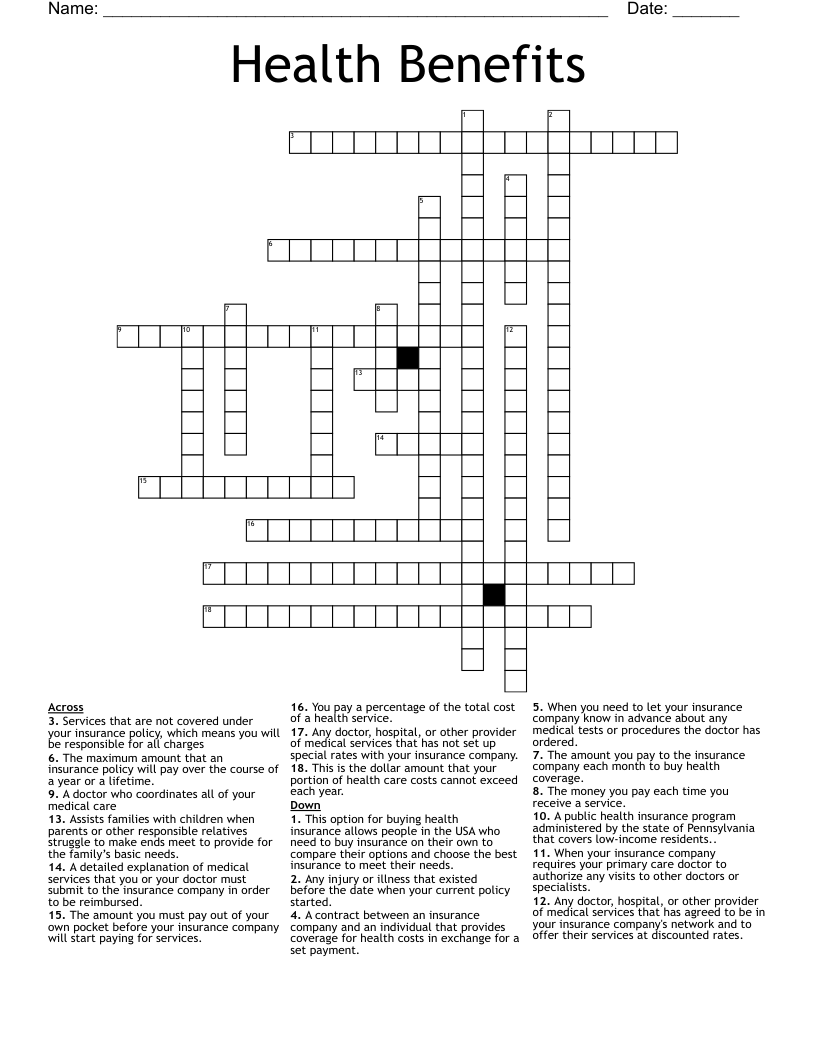
The insurance company will not pay for a service unless the provider gets permission to provide the service.
The amount of money an individual or business pays for an insurance policy.
Predetermined fee that an individual pays for health care services, in addition to what the insurance covers.
Portion of the medical cost you pay after your deductible has been met.
The amount of money you will pay in an insurance claim before the insurance coverage kicks in and the company starts paying you.
A form or document provided to you by your insurance company after you had a healthcare service for which a claim was submitted to your insurance plan.
The official way an insured person asks their insurance company to pay a professional or facility for services rendered.
Medical insurance group that provides health services for a fixed annual fee.
A managed care organization of medical doctors, hospitals, and other health care providers who have agreed with an insurer or a third-party administrator to provide health care at reduced rates to the top insurer's or administrator's clients.
A public health insurance program designed for individuals 65 and over and people with disabilities that covers hospitalization and other medical costs at free or reduced rates.
What is a federal and state program that helps with medical costs for some people with limited income and resources?
A system of health insurance payments in which health professionals are paid fixed amounts per month based on the number of insured people they have as patients.
A health insurance program offered to members of the U.S. Military.
A health benefits program in which the Department of Veterans Affairs shares the cost of certain health care services and supplies with eligible beneficiaries.
A form of insurance providing wage replacement and medical benefits to employees injured in the course of employment.
A program administered by the United States Department of Health and Human Services that provides matching funds to states for health insurance to families with children.
A medical condition that started before a person's health insurance went into effect.