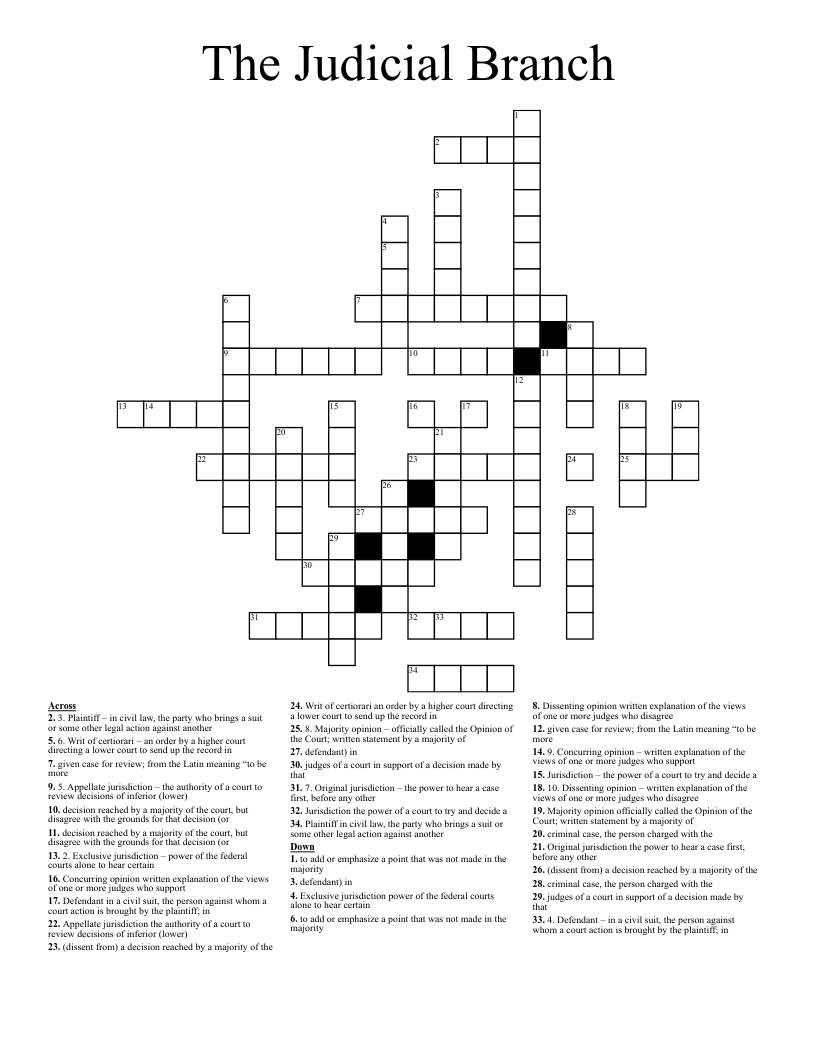
The Judicial Branch Crossword
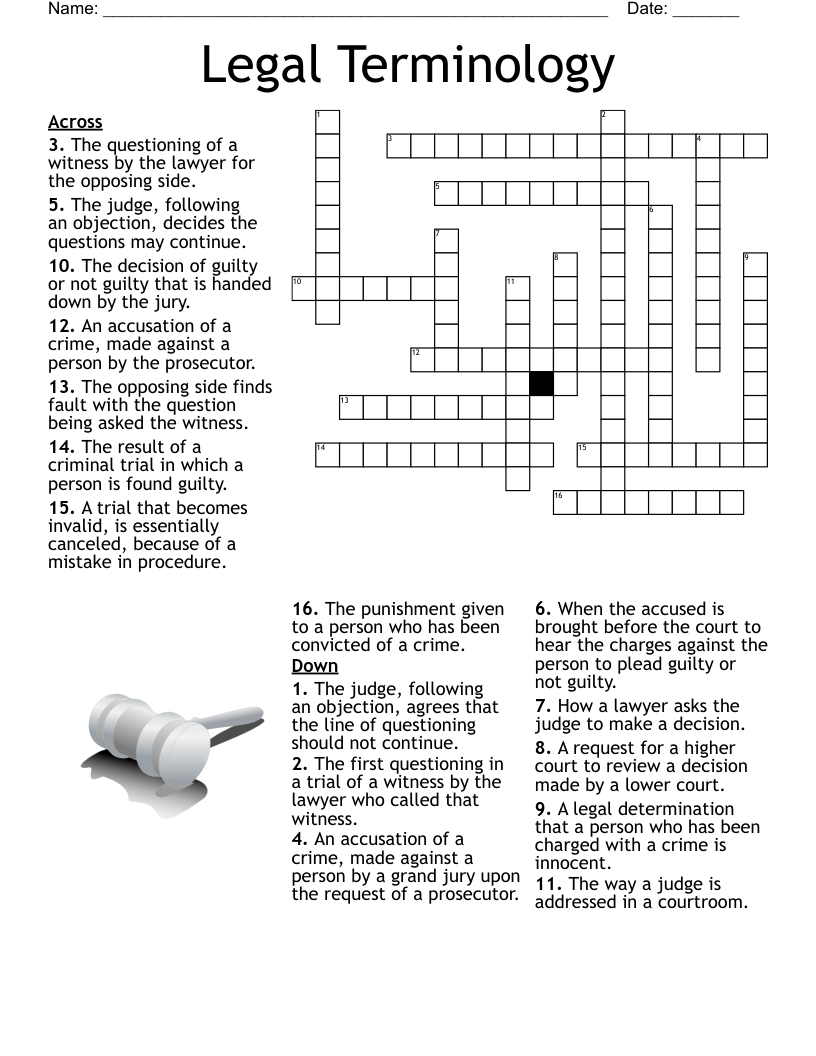
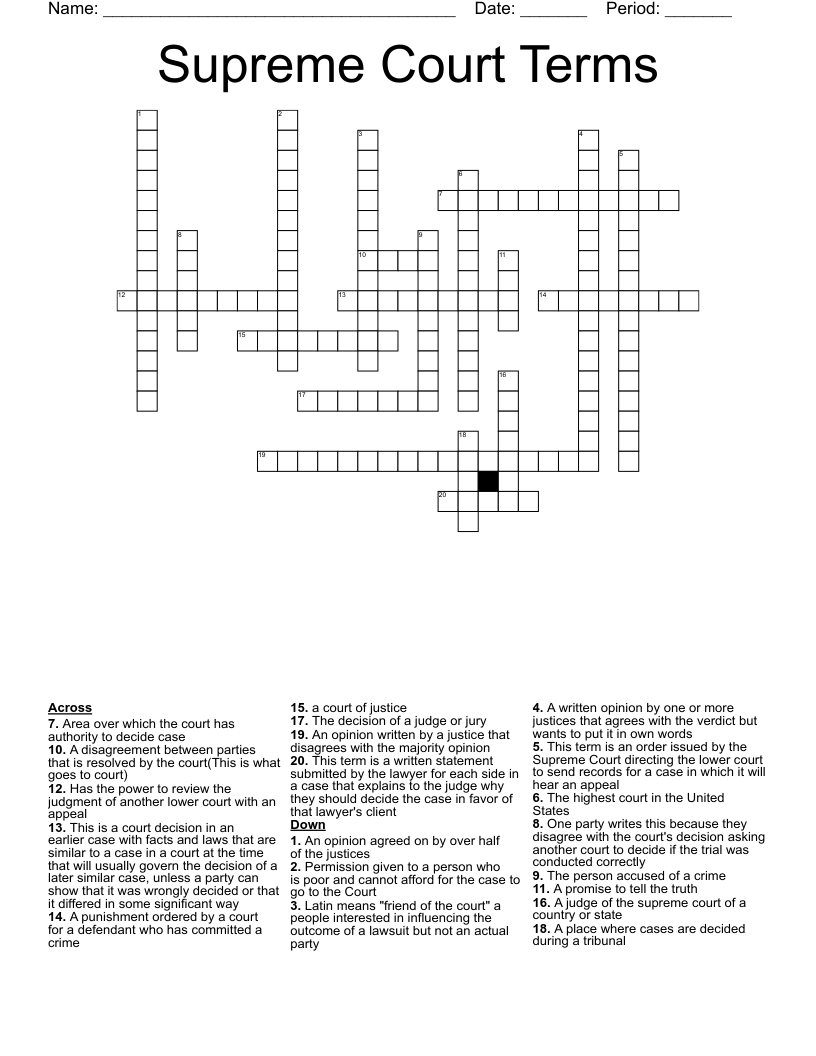
This printable crossword puzzle on the topic of Law & Legal has 34 clues. Answers range from 1 to 9 letters long. This crossword is also available to download as a Microsoft Word document or a PDF.
Description
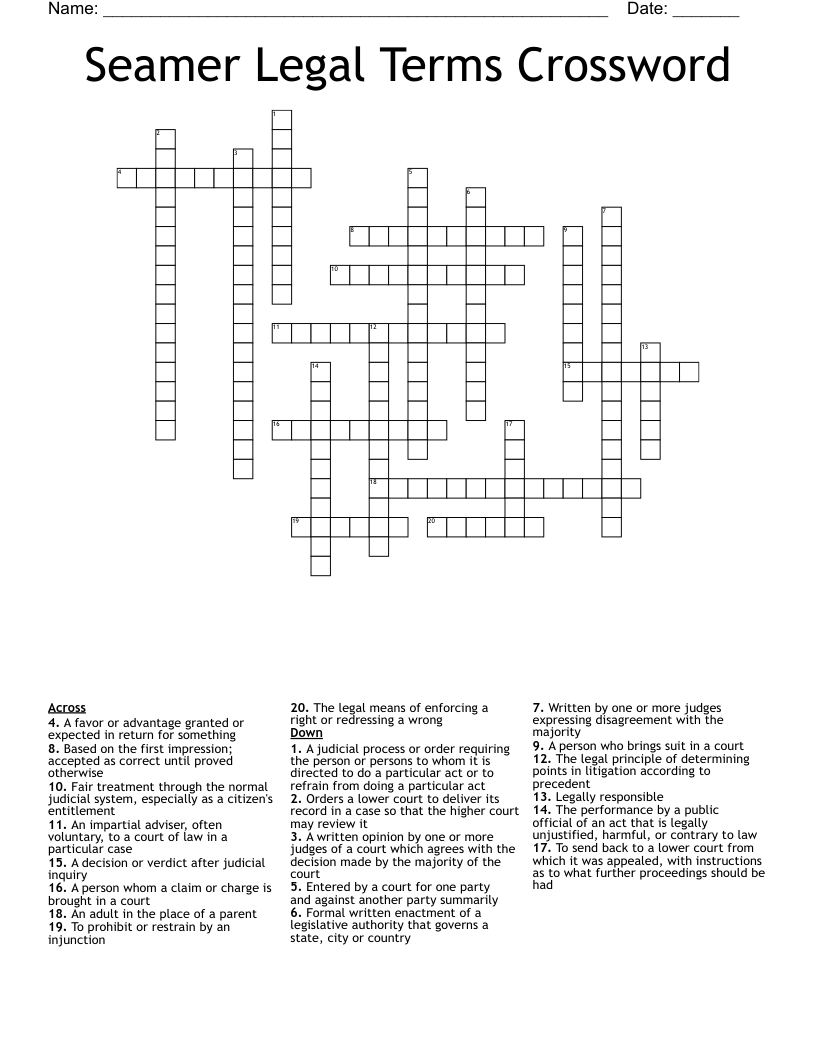
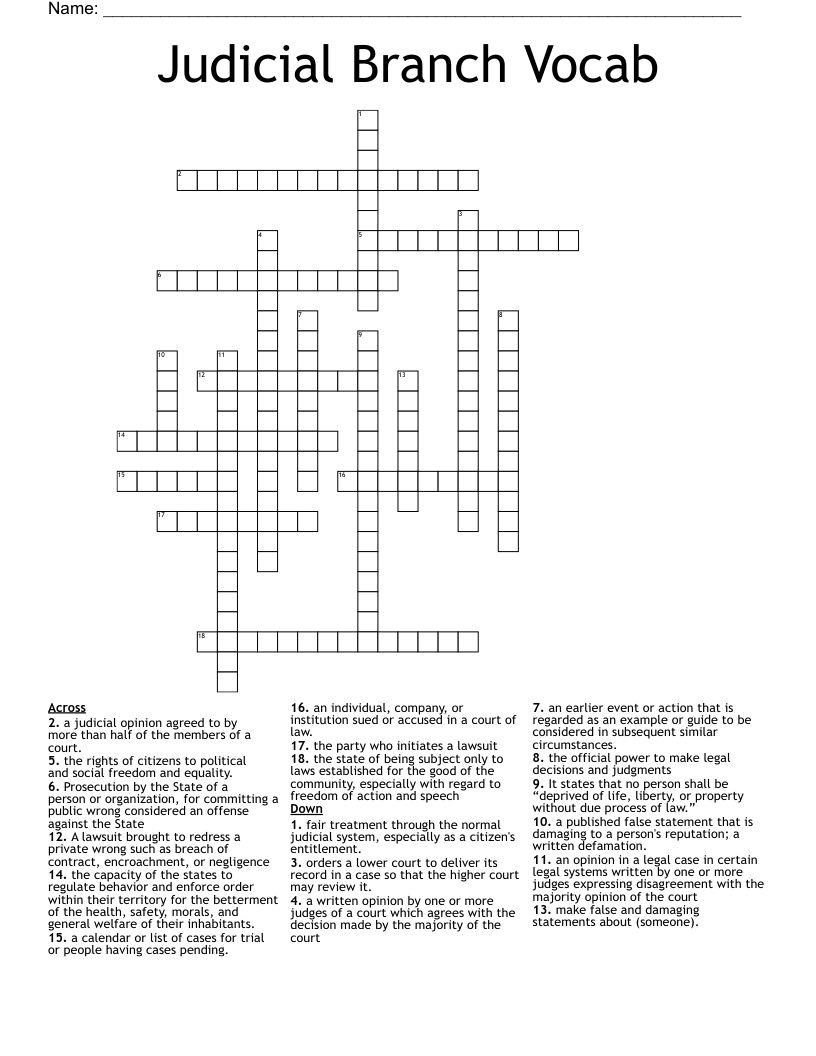
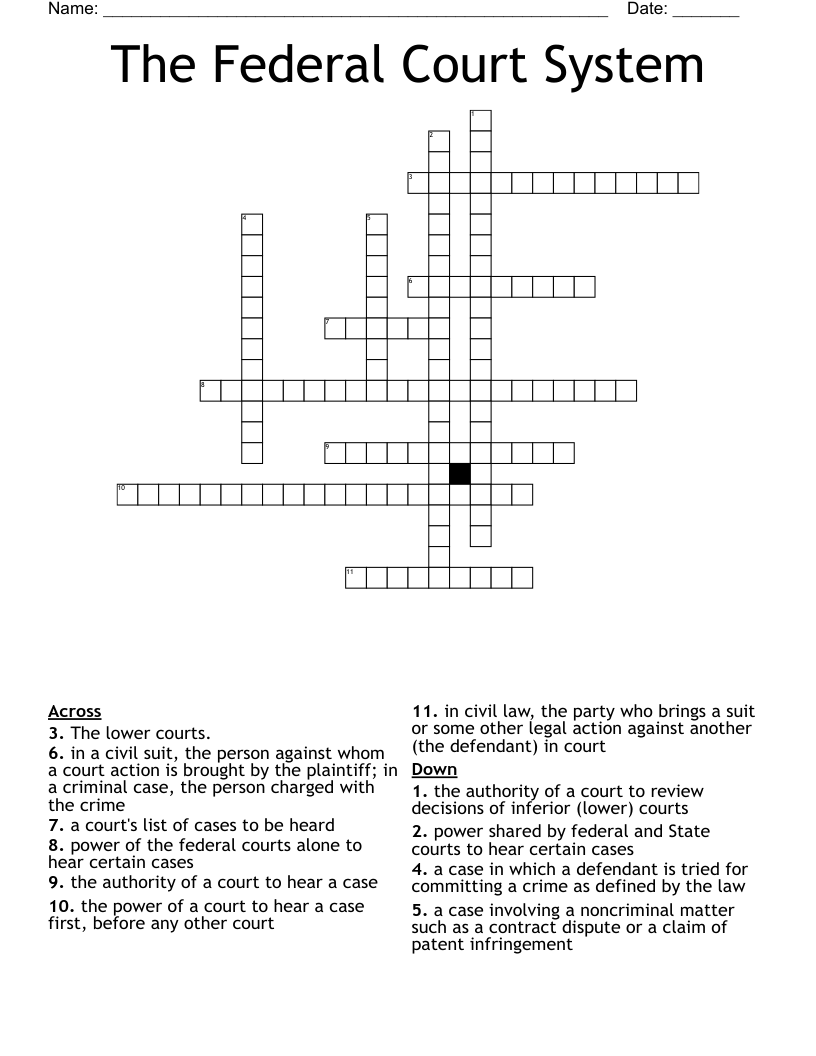
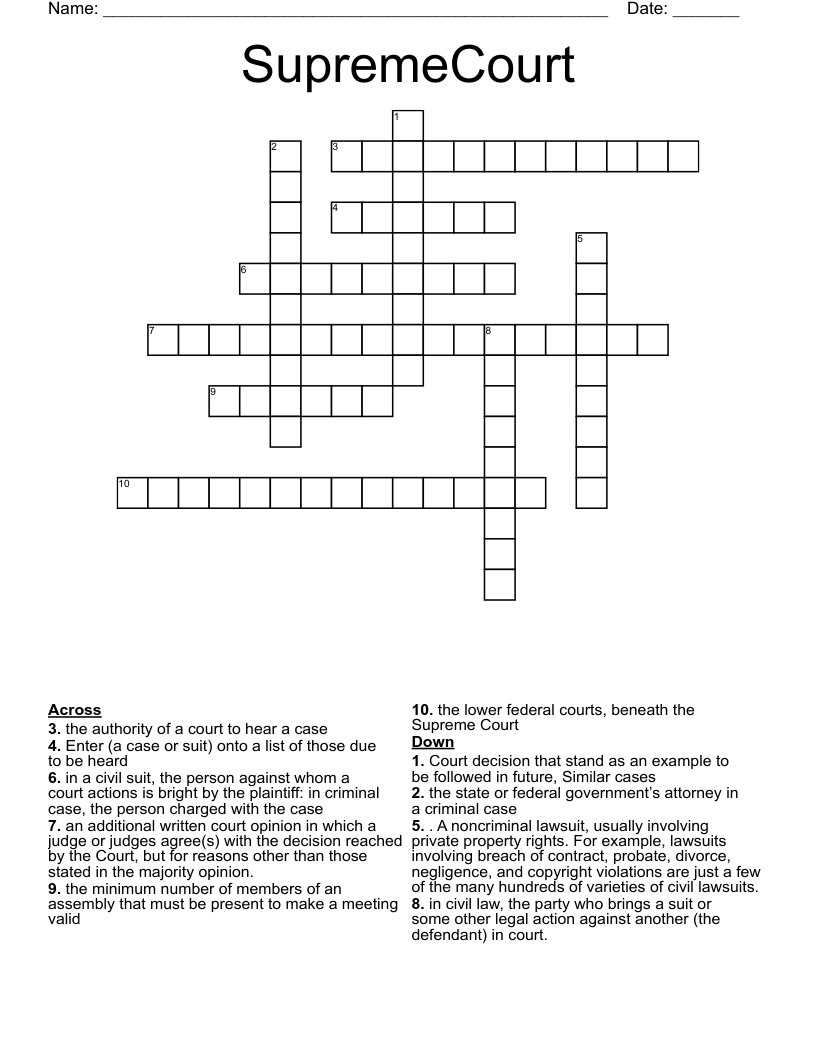
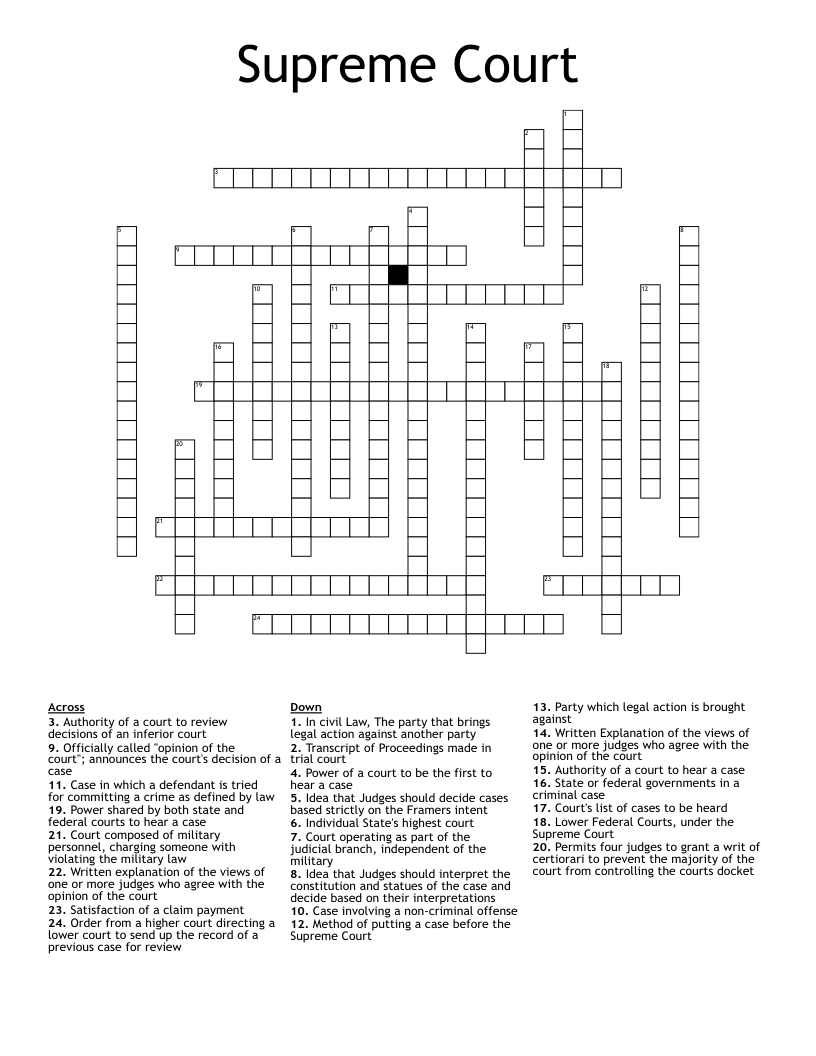
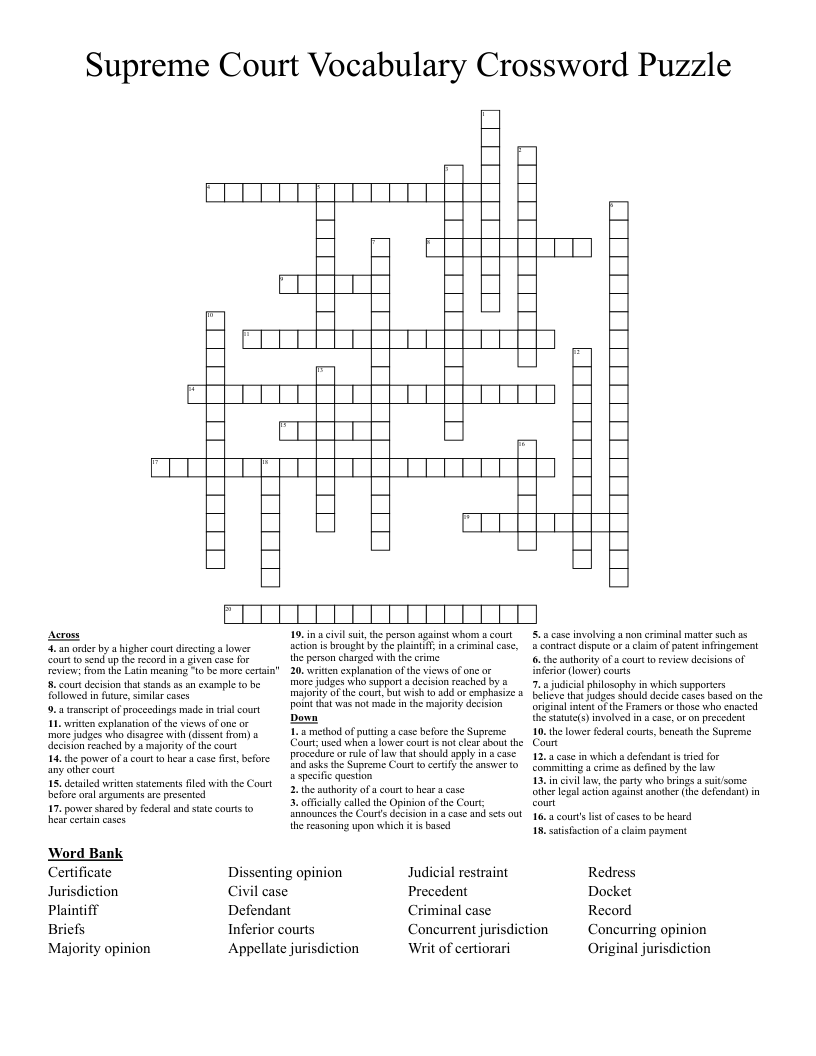
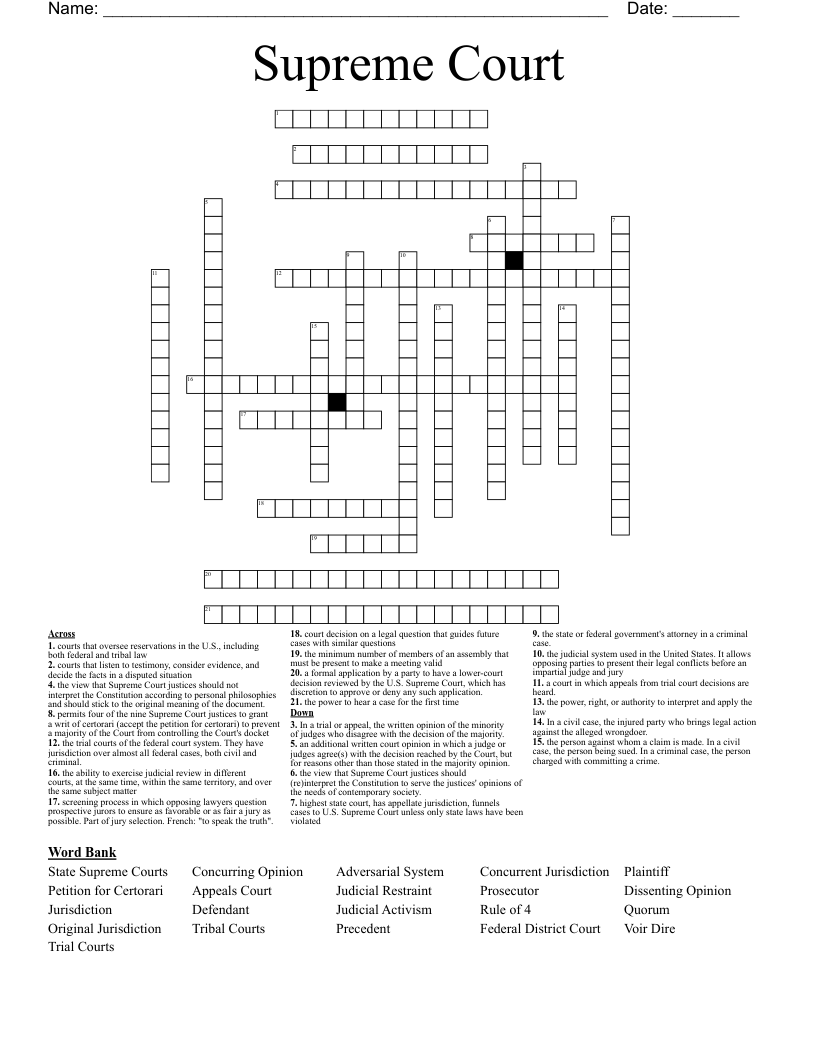
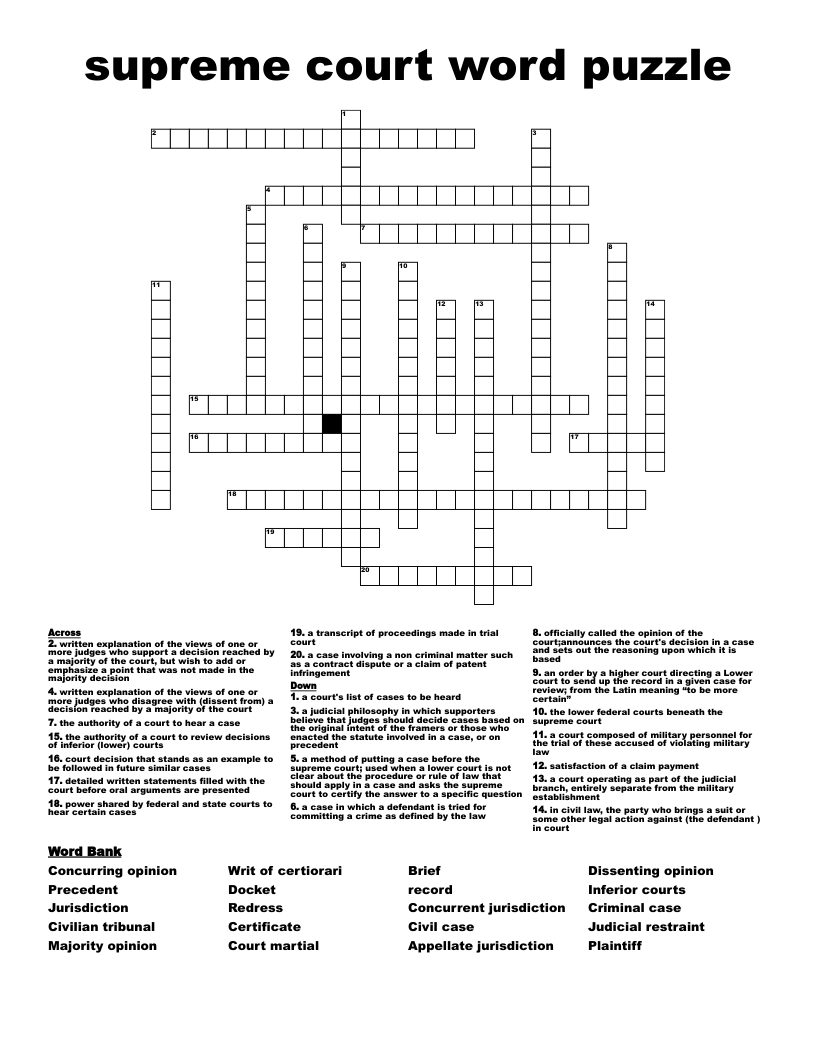
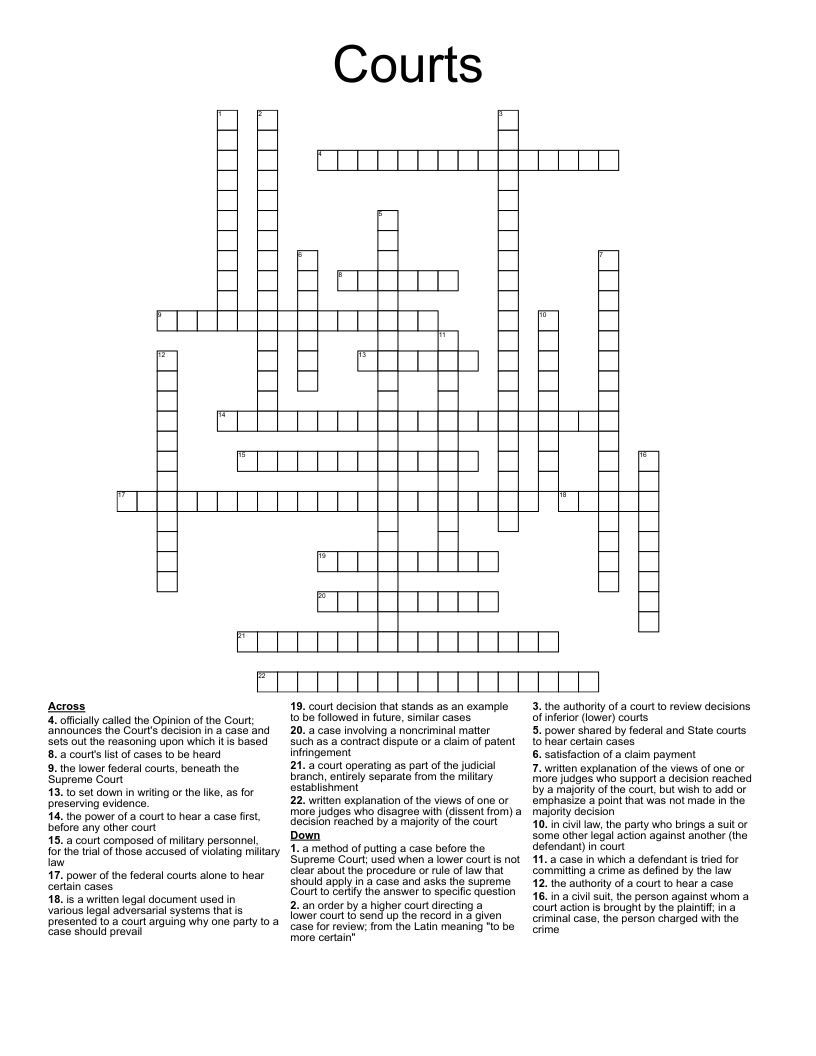
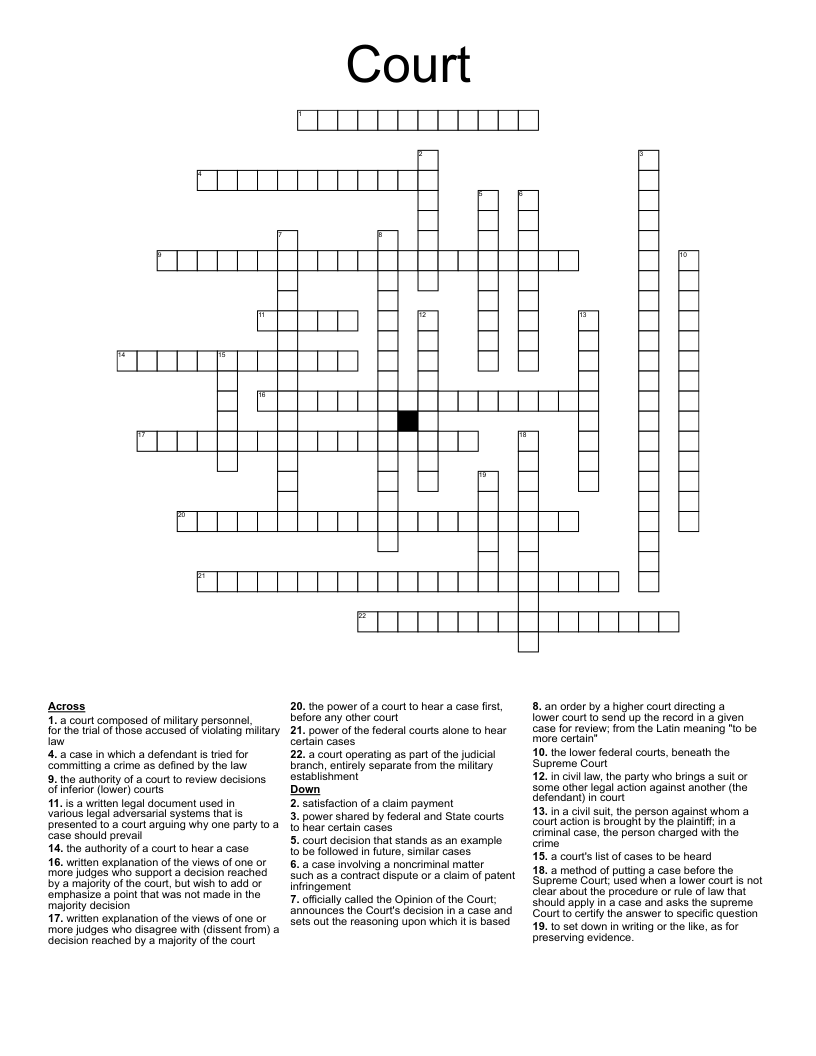
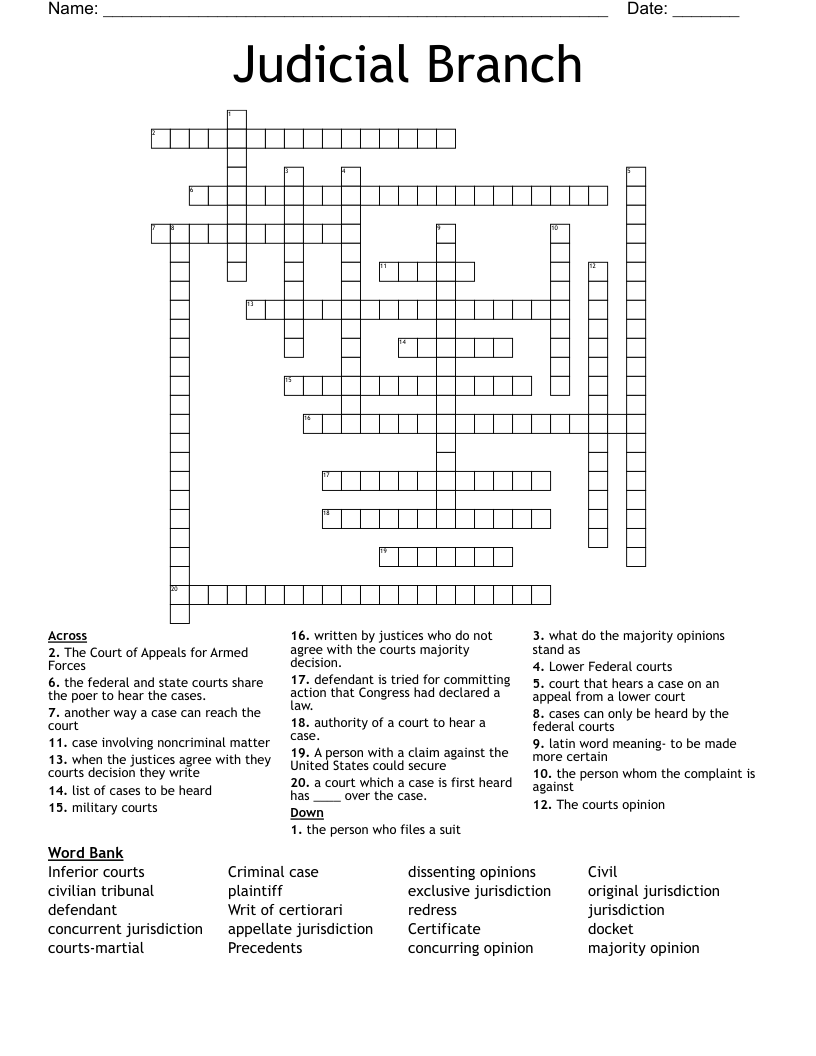
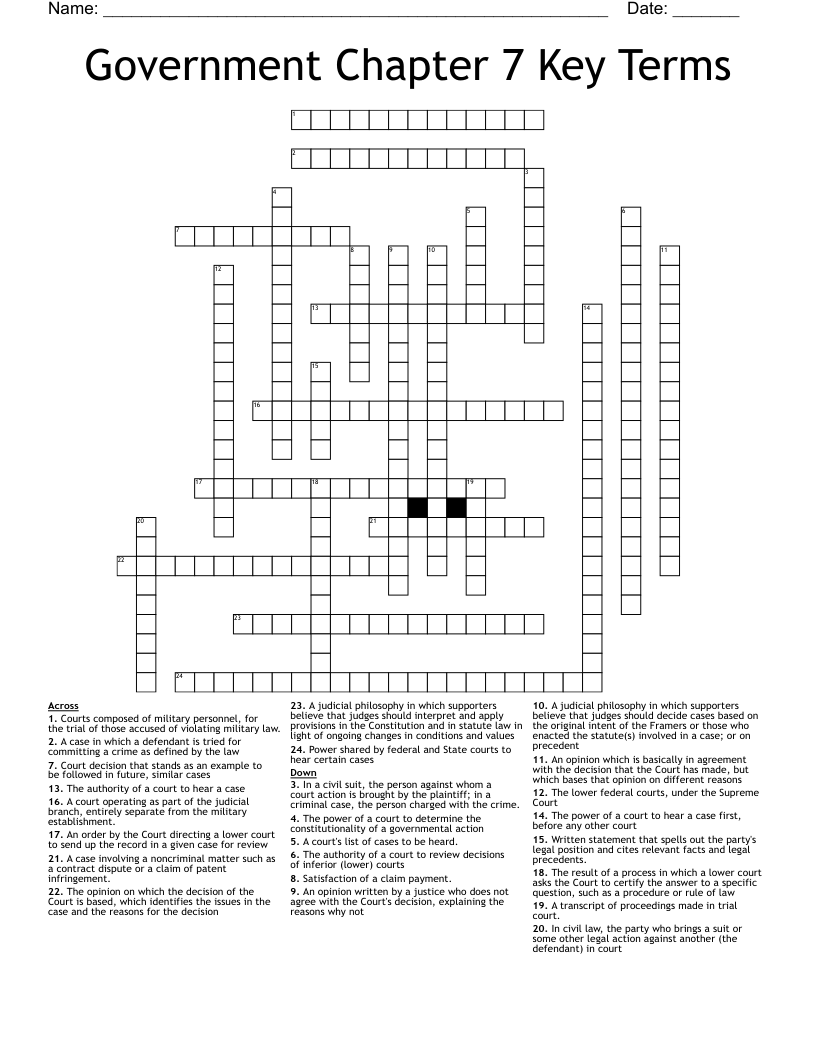
Jurisdiction – the power of a court to try and decide a
2. Exclusive jurisdiction – power of the federal courts alone to hear certain
3. Plaintiff – in civil law, the party who brings a suit or some other legal action against another
defendant) in
4. Defendant – in a civil suit, the person against whom a court action is brought by the plaintiff; in
criminal case, the person charged with the
5. Appellate jurisdiction – the authority of a court to review decisions of inferior (lower)
6. Writ of certiorari – an order by a higher court directing a lower court to send up the record in
given case for review; from the Latin meaning “to be more
7. Original jurisdiction – the power to hear a case first, before any other
8. Majority opinion – officially called the Opinion of the Court; written statement by a majority of
judges of a court in support of a decision made by that
9. Concurring opinion – written explanation of the views of one or more judges who support
decision reached by a majority of the court, but disagree with the grounds for that decision (or
to add or emphasize a point that was not made in the majority
10. Dissenting opinion – written explanation of the views of one or more judges who disagree
(dissent from) a decision reached by a majority of the
Jurisdiction the power of a court to try and decide a
Exclusive jurisdiction power of the federal courts alone to hear certain
Plaintiff in civil law, the party who brings a suit or some other legal action against another
defendant) in
Defendant in a civil suit, the person against whom a court action is brought by the plaintiff; in
criminal case, the person charged with the
Appellate jurisdiction the authority of a court to review decisions of inferior (lower)
Writ of certiorari an order by a higher court directing a lower court to send up the record in
given case for review; from the Latin meaning “to be more
Original jurisdiction the power to hear a case first, before any other
Majority opinion officially called the Opinion of the Court; written statement by a majority of
judges of a court in support of a decision made by that
Concurring opinion written explanation of the views of one or more judges who support
decision reached by a majority of the court, but disagree with the grounds for that decision (or
to add or emphasize a point that was not made in the majority
Dissenting opinion written explanation of the views of one or more judges who disagree
(dissent from) a decision reached by a majority of the