Feed and Nutrition Worksheet
This printable matching worksheet on the topic of Nutrition & Food Safety has 26 questions and answers to match. This matching worksheet is also available to download as a Microsoft Word document or a PDF.
Description
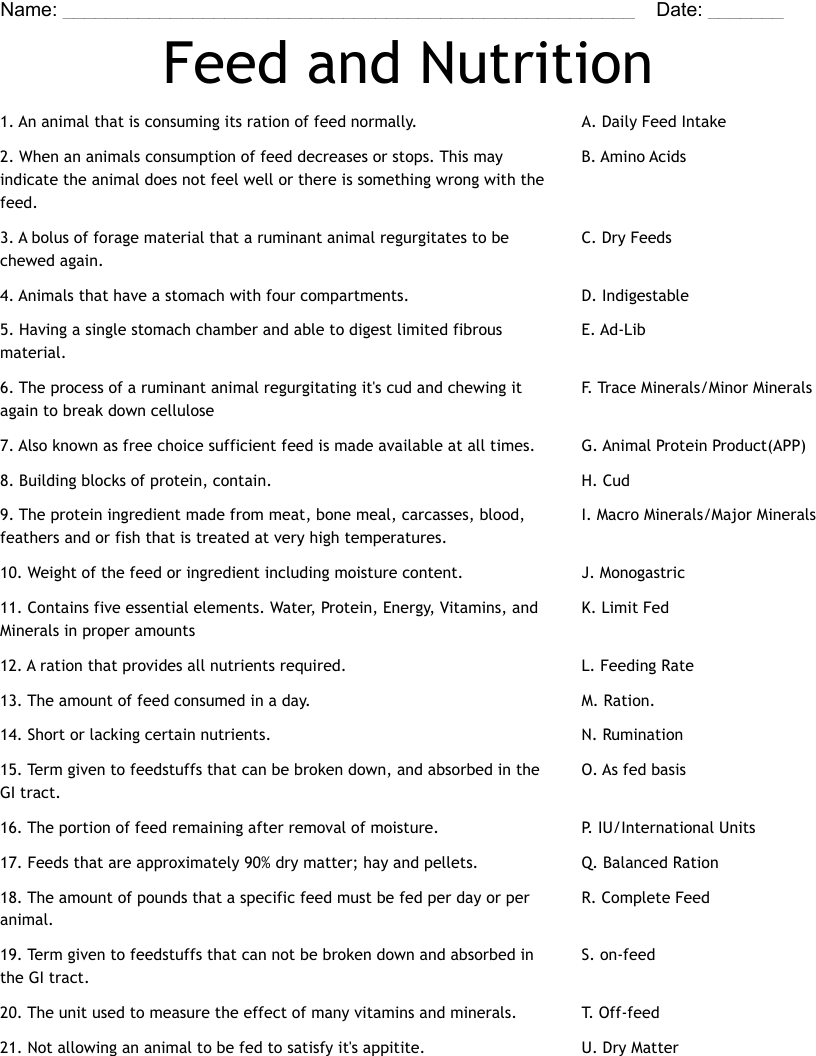
An animal that is consuming its ration of feed normally.
When an animals consumption of feed decreases or stops. This may indicate the animal does not feel well or there is something wrong with the feed.
A bolus of forage material that a ruminant animal regurgitates to be chewed again.
Animals that have a stomach with four compartments.
Having a single stomach chamber and able to digest limited fibrous material.
The process of a ruminant animal regurgitating it's cud and chewing it again to break down cellulose
Also known as free choice sufficient feed is made available at all times.
Building blocks of protein, contain.
The protein ingredient made from meat, bone meal, carcasses, blood, feathers and or fish that is treated at very high temperatures.
Weight of the feed or ingredient including moisture content.
Contains five essential elements. Water, Protein, Energy, Vitamins, and Minerals in proper amounts
A ration that provides all nutrients required.
The amount of feed consumed in a day.
Short or lacking certain nutrients.
Term given to feedstuffs that can be broken down, and absorbed in the GI tract.
The portion of feed remaining after removal of moisture.
Feeds that are approximately 90% dry matter; hay and pellets.
The amount of pounds that a specific feed must be fed per day or per animal.
Term given to feedstuffs that can not be broken down and absorbed in the GI tract.
The unit used to measure the effect of many vitamins and minerals.
Not allowing an animal to be fed to satisfy it's appitite.
Minerals such as calcium and phosphorous that are included in a ration in relatively large amounts.
Minerals such as copper and zinc that are included in a ration in very small amounts.
Items such as protein, fat ,fiber, energy, minerals, trace minerals, and vitamins.
The amount of feed given to an animal in a 24 hour period, based on weight, age, and nutritional need.
Coarse, dense plant-based material; hay.