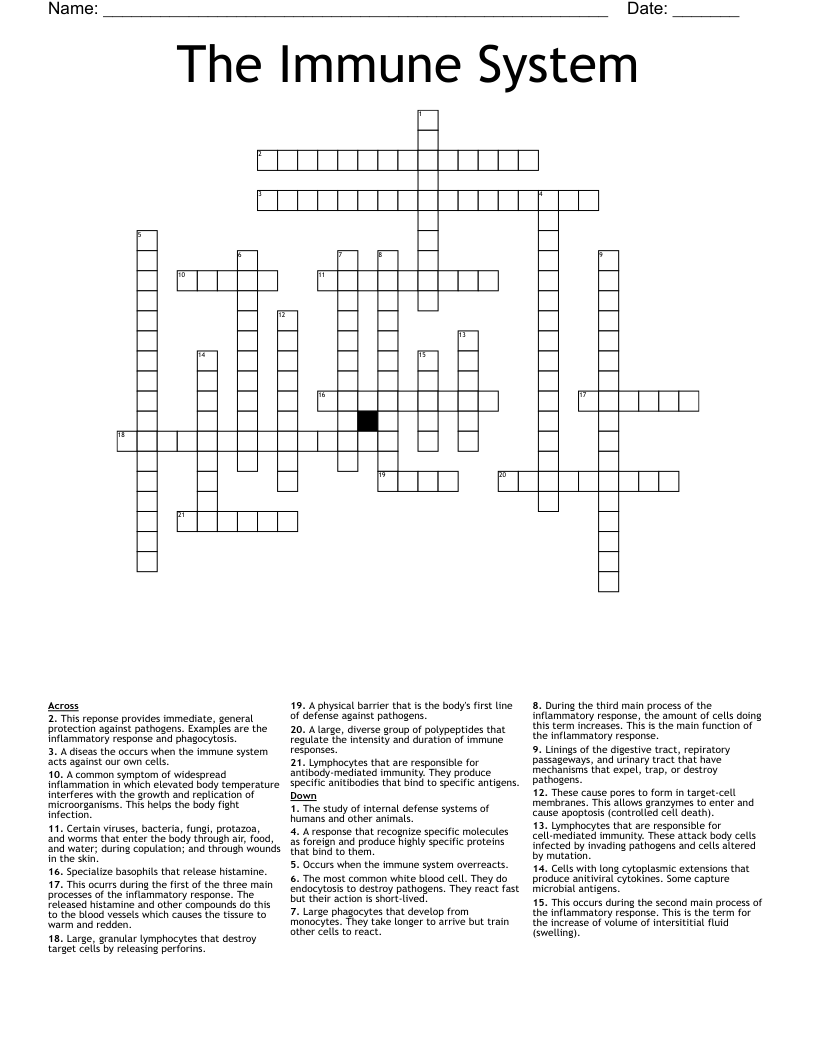
The Immune System Crossword
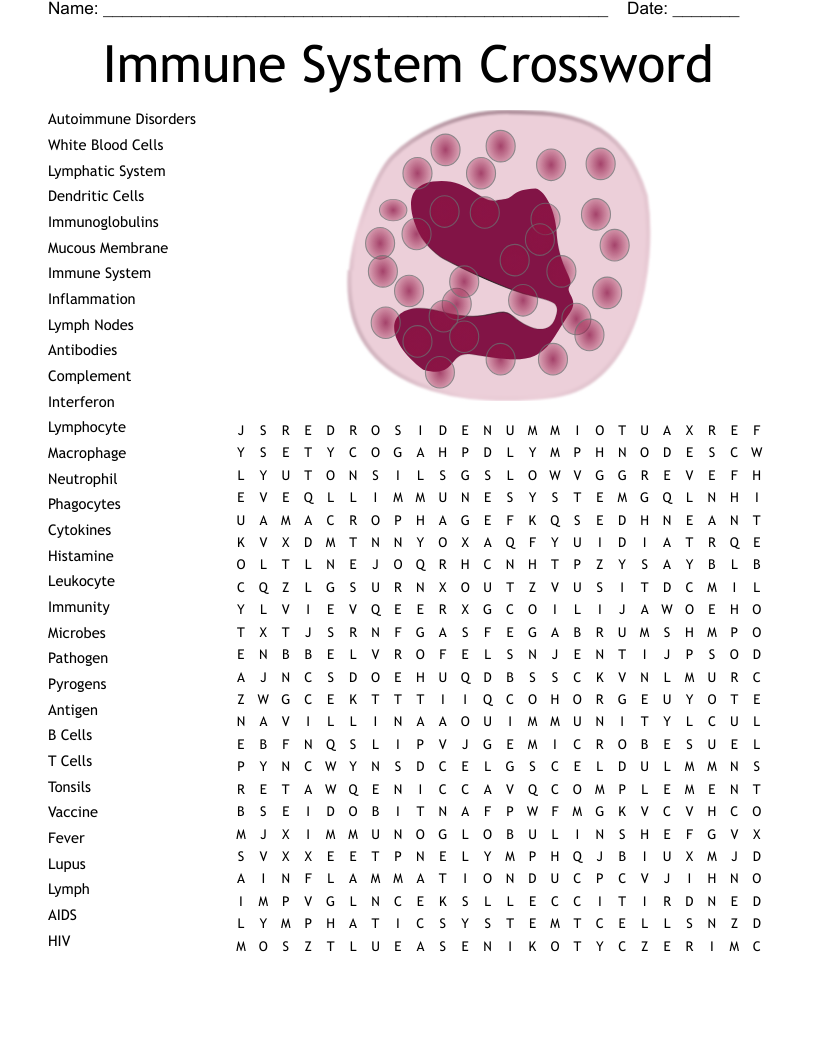
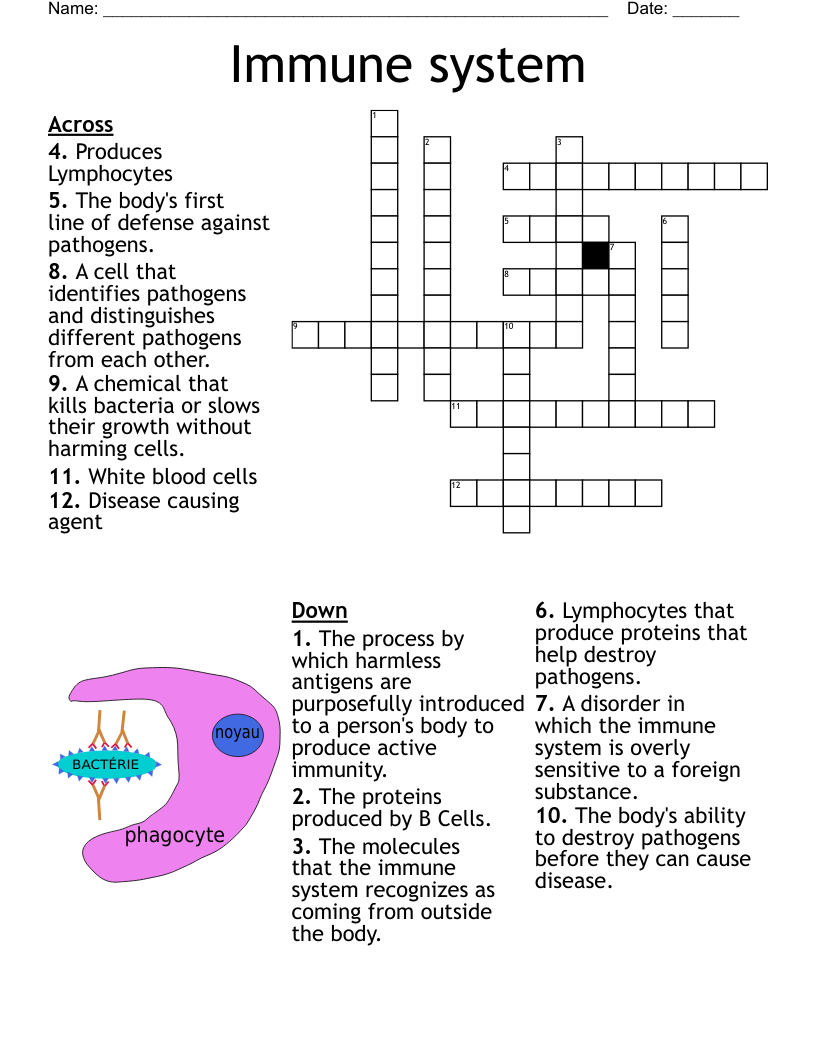
This printable crossword puzzle on the topic of Human Body Systems has 21 clues. Answers range from 4 to 17 letters long. This crossword is also available to download as a Microsoft Word document or a PDF.
Description
Certain viruses, bacteria, fungi, protazoa, and worms that enter the body through air, food, and water; during copulation; and through wounds in the skin.
Occurs when the immune system overreacts.
A diseas the occurs when the immune system acts against our own cells.
The study of internal defense systems of humans and other animals.
This reponse provides immediate, general protection against pathogens. Examples are the inflammatory response and phagocytosis.
A response that recognize specific molecules as foreign and produce highly specific proteins that bind to them.
A physical barrier that is the body's first line of defense against pathogens.
Linings of the digestive tract, repiratory passageways, and urinary tract that have mechanisms that expel, trap, or destroy pathogens.
The most common white blood cell. They do endocytosis to destroy pathogens. They react fast but their action is short-lived.
Large phagocytes that develop from monocytes. They take longer to arrive but train other cells to react.
Large, granular lymphocytes that destroy target cells by releasing perforins.
These cause pores to form in target-cell membranes. This allows granzymes to enter and cause apoptosis (controlled cell death).
Cells with long cytoplasmic extensions that produce anitiviral cytokines. Some capture microbial antigens.
A large, diverse group of polypeptides that regulate the intensity and duration of immune responses.
Specialize basophils that release histamine.
This ocurrs during the first of the three main processes of the inflammatory response. The released histamine and other compounds do this to the blood vessels which causes the tissure to warm and redden.
This occurs during the second main process of the inflammatory response. This is the term for the increase of volume of intersititial fluid (swelling).
During the third main process of the inflammatory response, the amount of cells doing this term increases. This is the main function of the inflammatory response.
A common symptom of widespread inflammation in which elevated body temperature interferes with the growth and replication of microorganisms. This helps the body fight infection.
Lymphocytes that are responsible for antibody-mediated immunity. They produce specific anitibodies that bind to specific antigens.
Lymphocytes that are responsible for cell-mediated immunity. These attack body cells infected by invading pathogens and cells altered by mutation.