Earth Science Cross Word Puzzle
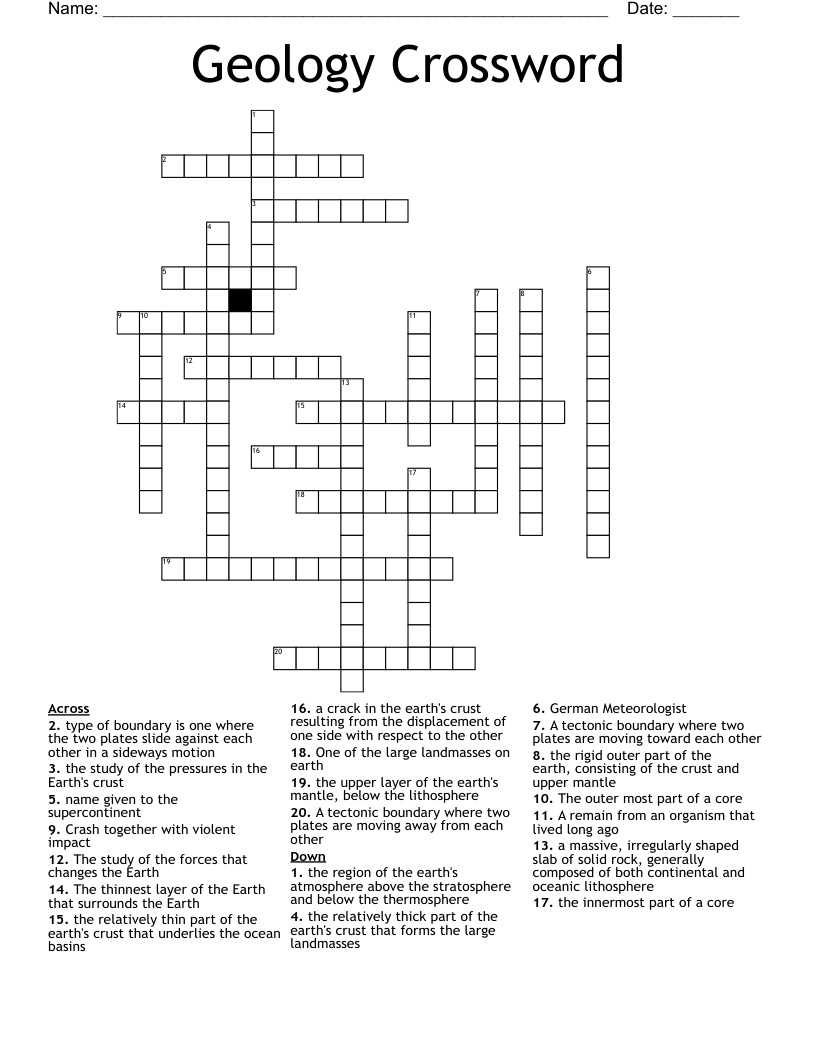
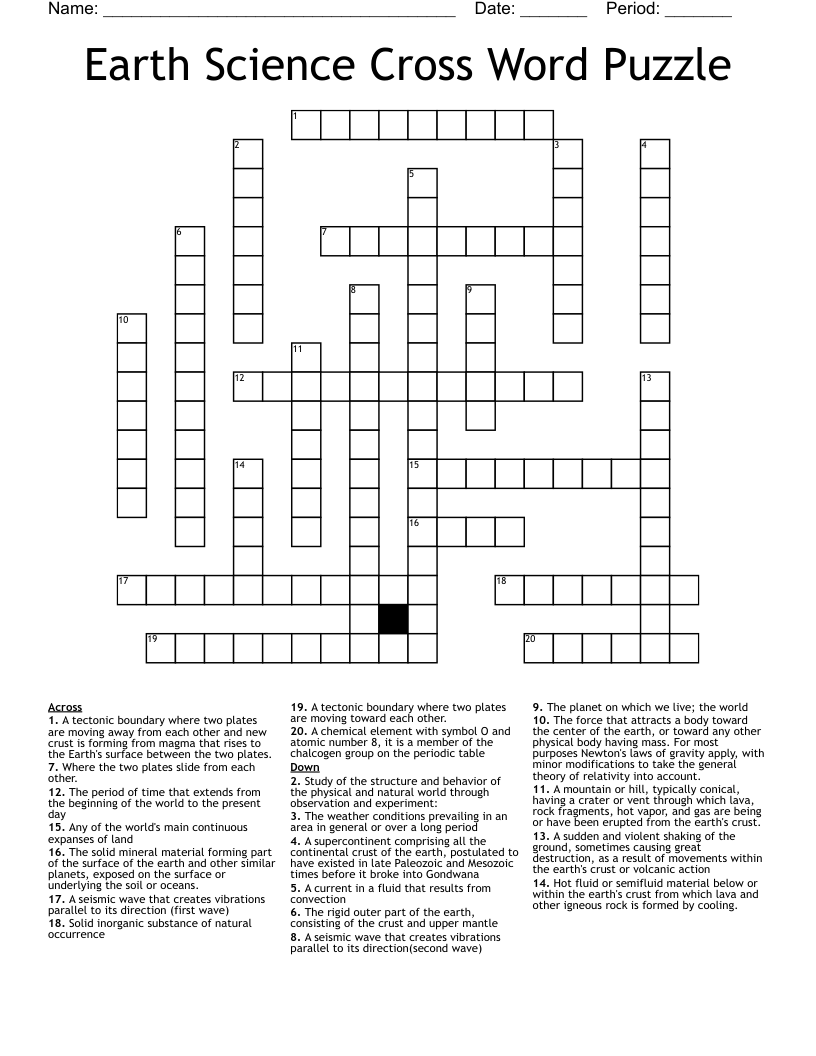
This printable crossword puzzle on the topic of Plate Tectonics & Volcanoes has 20 clues. Answers range from 4 to 17 letters long. This crossword is also available to download as a Microsoft Word document or a PDF.
Description
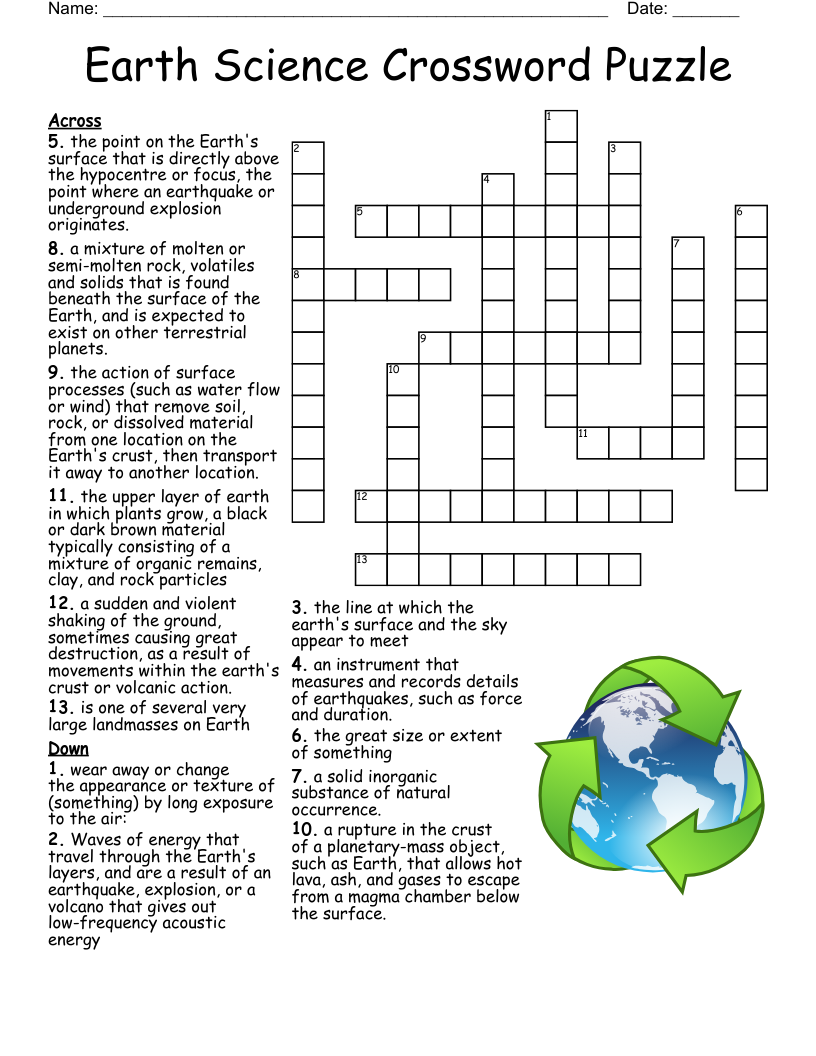
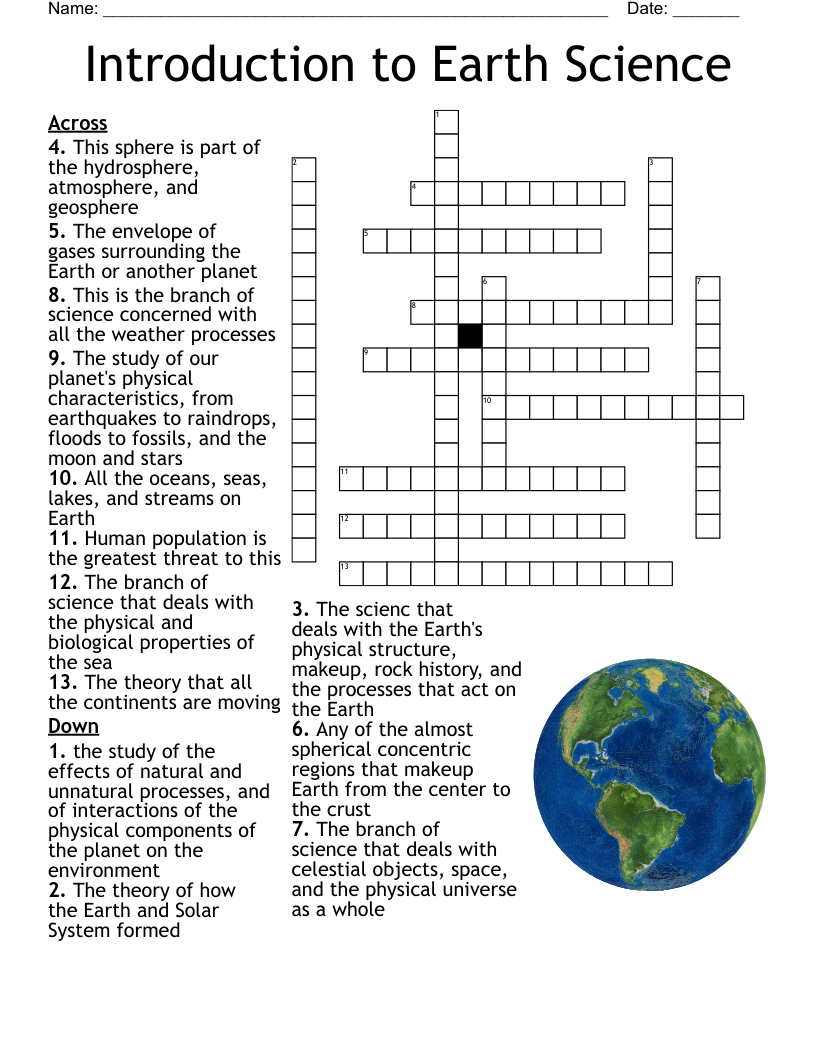
Study of the structure and behavior of the physical and natural world through observation and experiment:
The planet on which we live; the world
The solid mineral material forming part of the surface of the earth and other similar planets, exposed on the surface or underlying the soil or oceans.
The force that attracts a body toward the center of the earth, or toward any other physical body having mass. For most purposes Newton's laws of gravity apply, with minor modifications to take the general theory of relativity into account.
A supercontinent comprising all the continental crust of the earth, postulated to have existed in late Paleozoic and Mesozoic times before it broke into Gondwana
A chemical element with symbol O and atomic number 8, it is a member of the chalcogen group on the periodic table
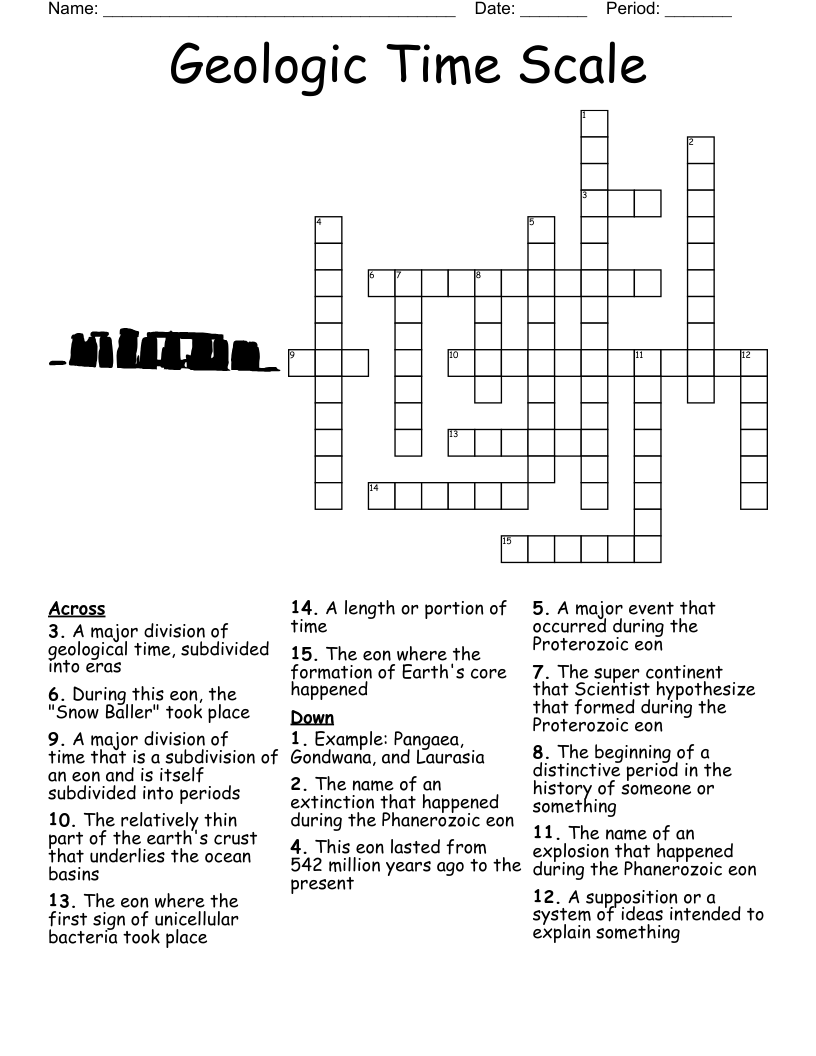
The period of time that extends from the beginning of the world to the present day
Solid inorganic substance of natural occurrence
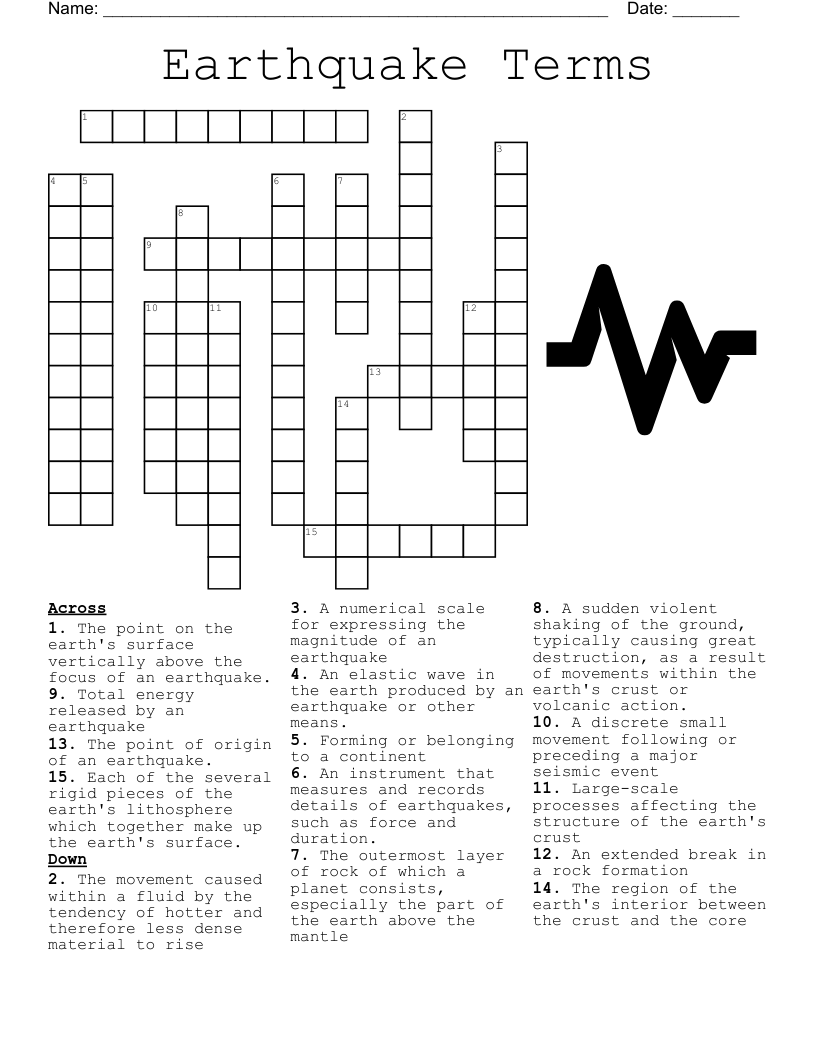
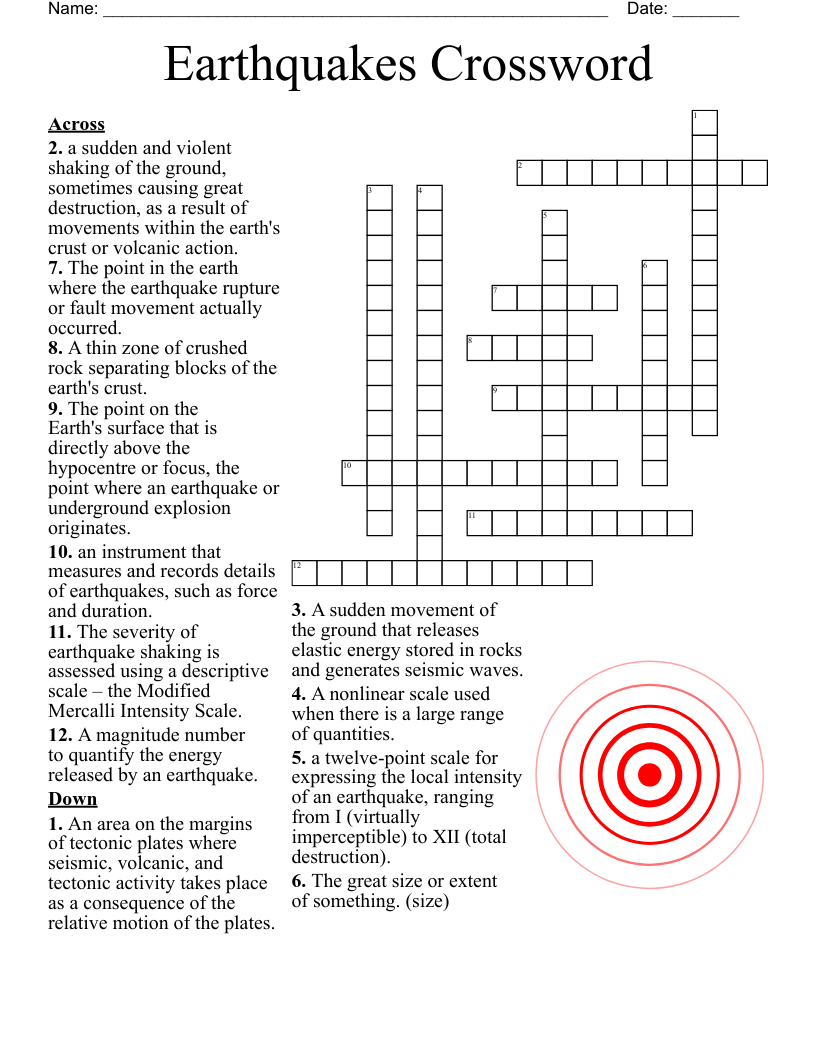
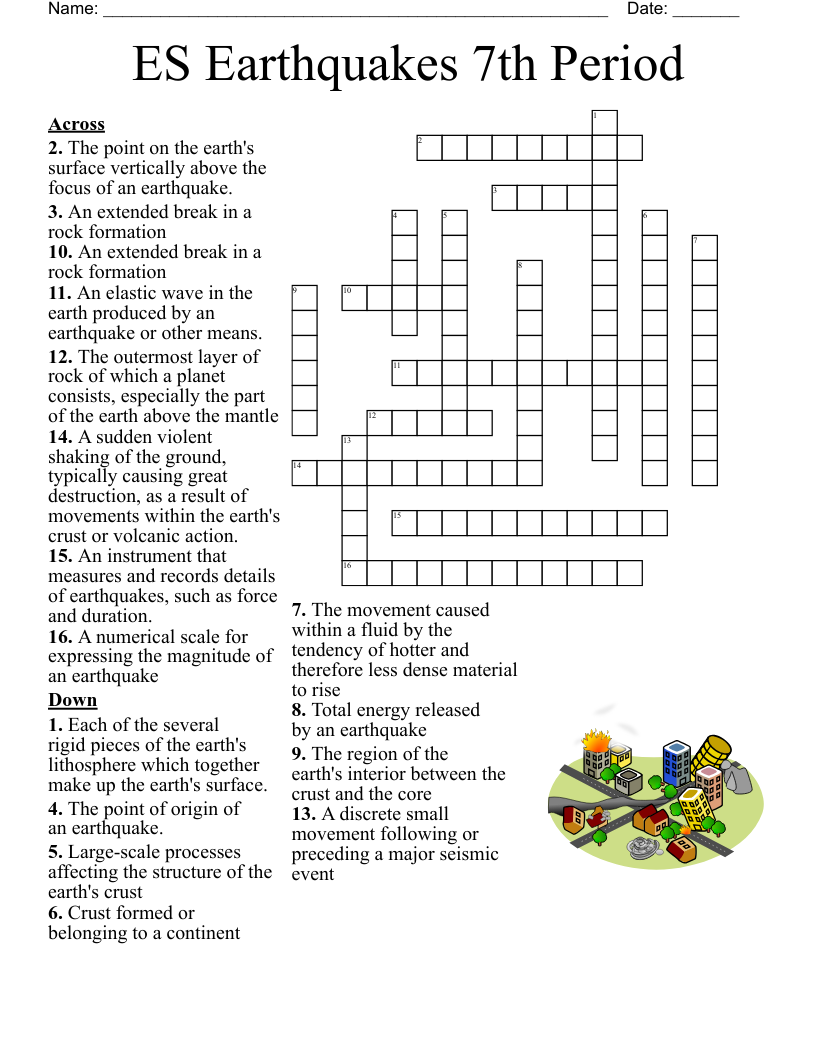
A sudden and violent shaking of the ground, sometimes causing great destruction, as a result of movements within the earth's crust or volcanic action
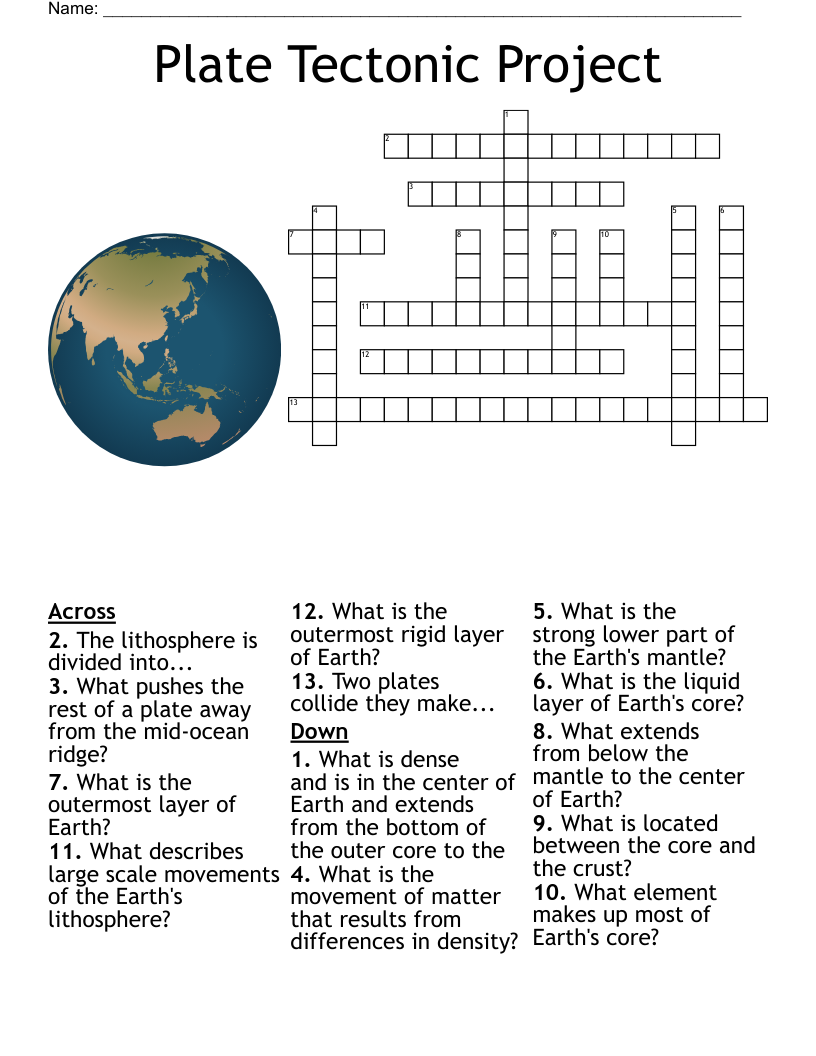
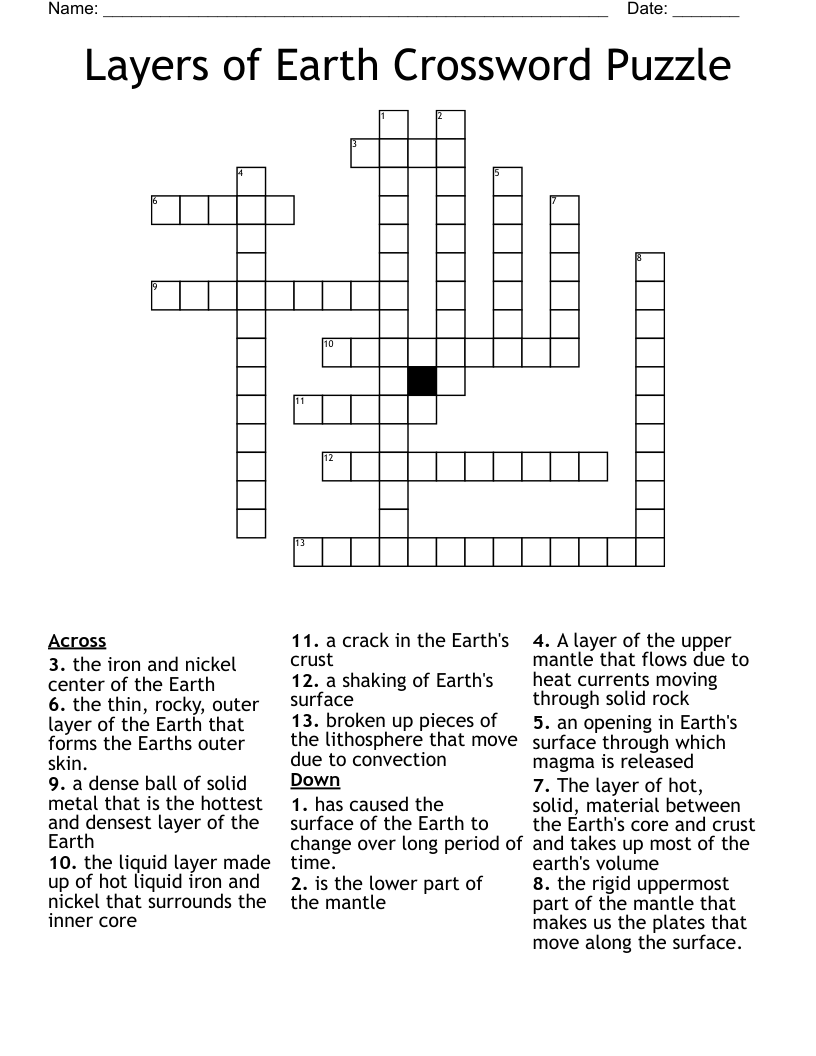
The rigid outer part of the earth, consisting of the crust and upper mantle
A tectonic boundary where two plates are moving away from each other and new crust is forming from magma that rises to the Earth's surface between the two plates.
A tectonic boundary where two plates are moving toward each other.
Where the two plates slide from each other.
Hot fluid or semifluid material below or within the earth's crust from which lava and other igneous rock is formed by cooling.
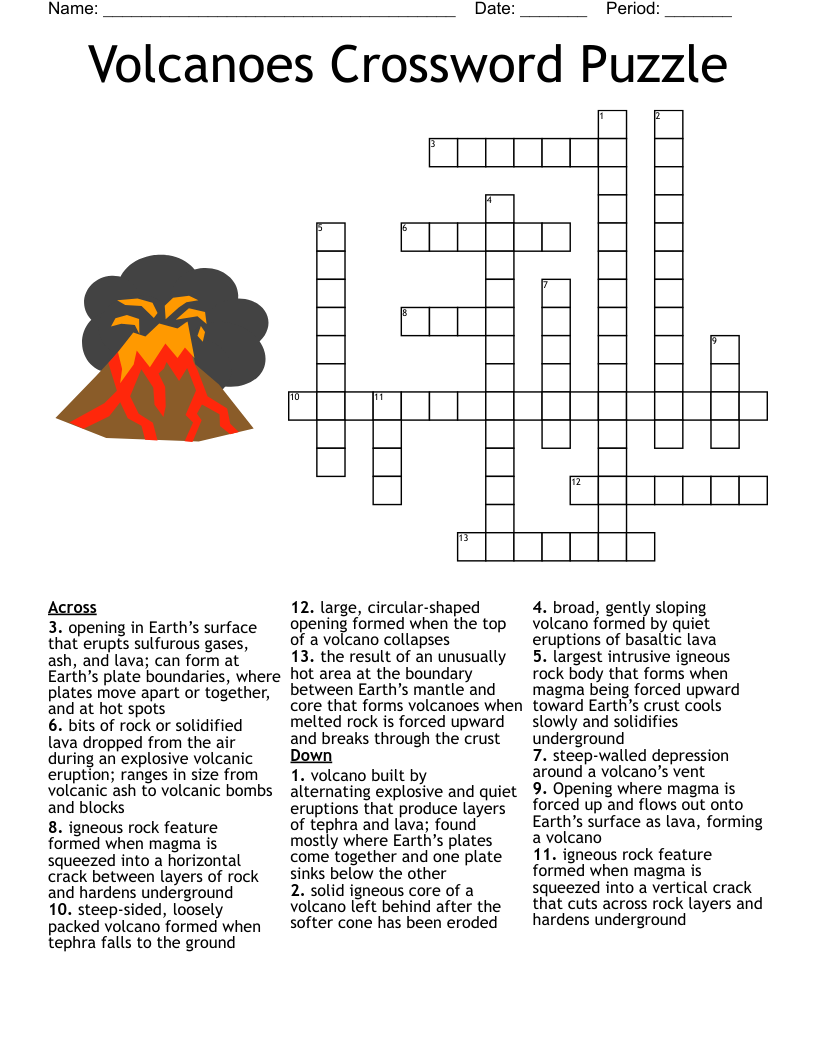
A mountain or hill, typically conical, having a crater or vent through which lava, rock fragments, hot vapor, and gas are being or have been erupted from the earth's crust.
The weather conditions prevailing in an area in general or over a long period
Any of the world's main continuous expanses of land
A current in a fluid that results from convection
A seismic wave that creates vibrations parallel to its direction (first wave)
A seismic wave that creates vibrations parallel to its direction(second wave)