chapter 5 esthetics vocabulary Worksheet
This printable matching worksheet on the topic of Microbiology has 25 questions and answers to match. This matching worksheet is also available to download as a Microsoft Word document or a PDF.
Description
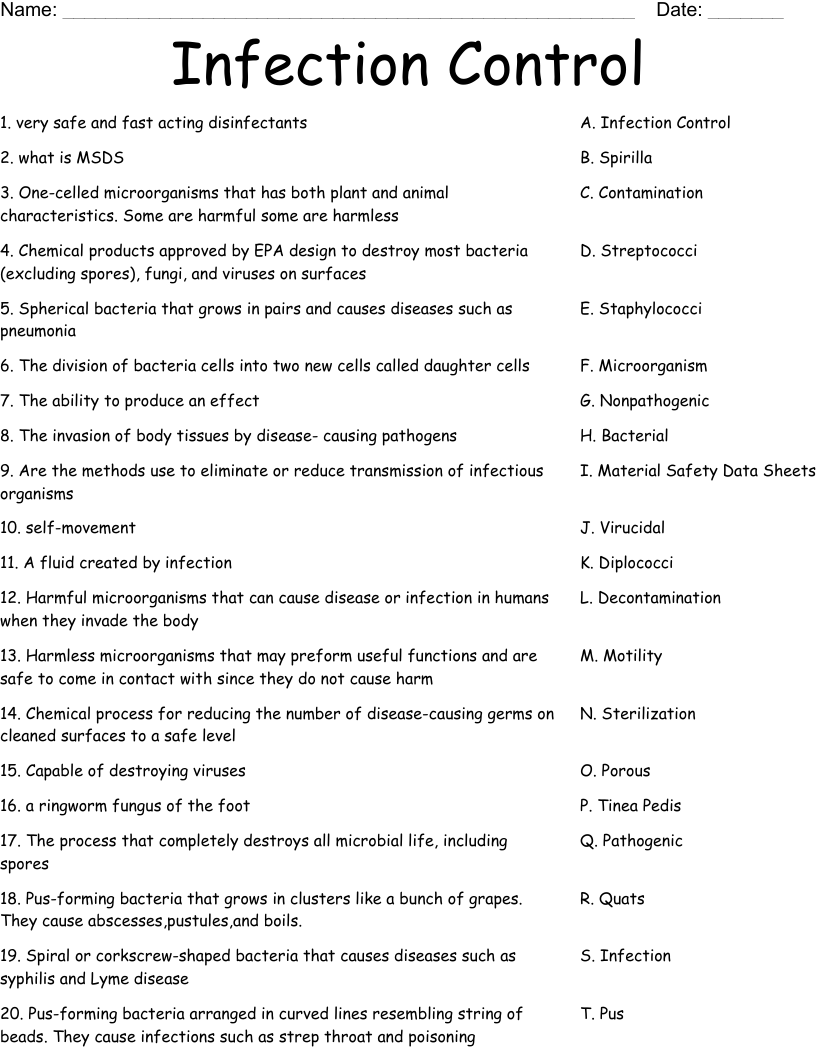
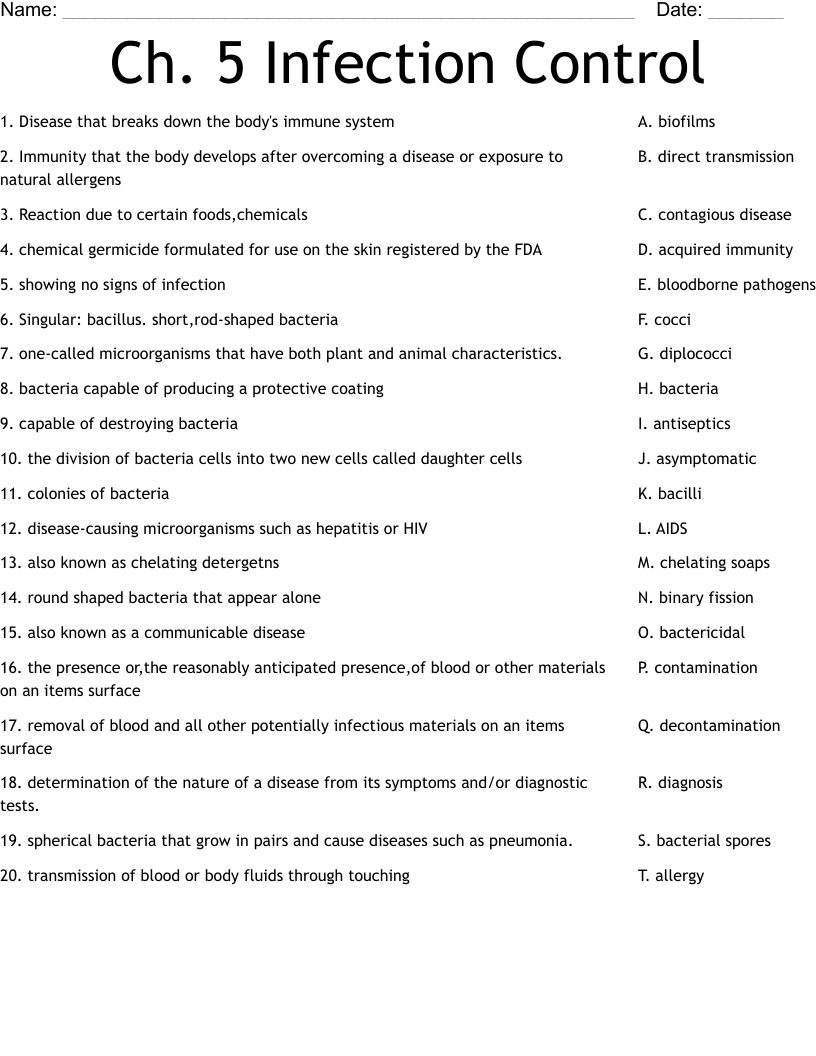
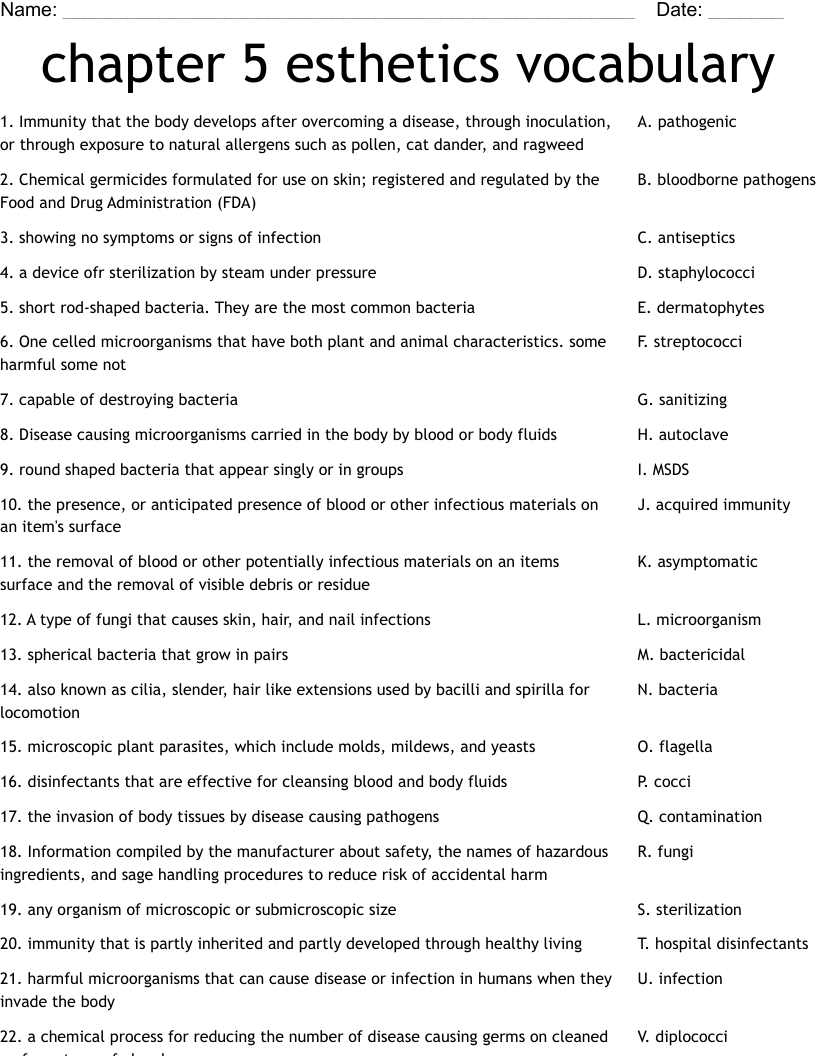
Immunity that the body develops after overcoming a disease, through inoculation, or through exposure to natural allergens such as pollen, cat dander, and ragweed
Chemical germicides formulated for use on skin; registered and regulated by the Food and Drug Administration (FDA)
showing no symptoms or signs of infection
a device ofr sterilization by steam under pressure
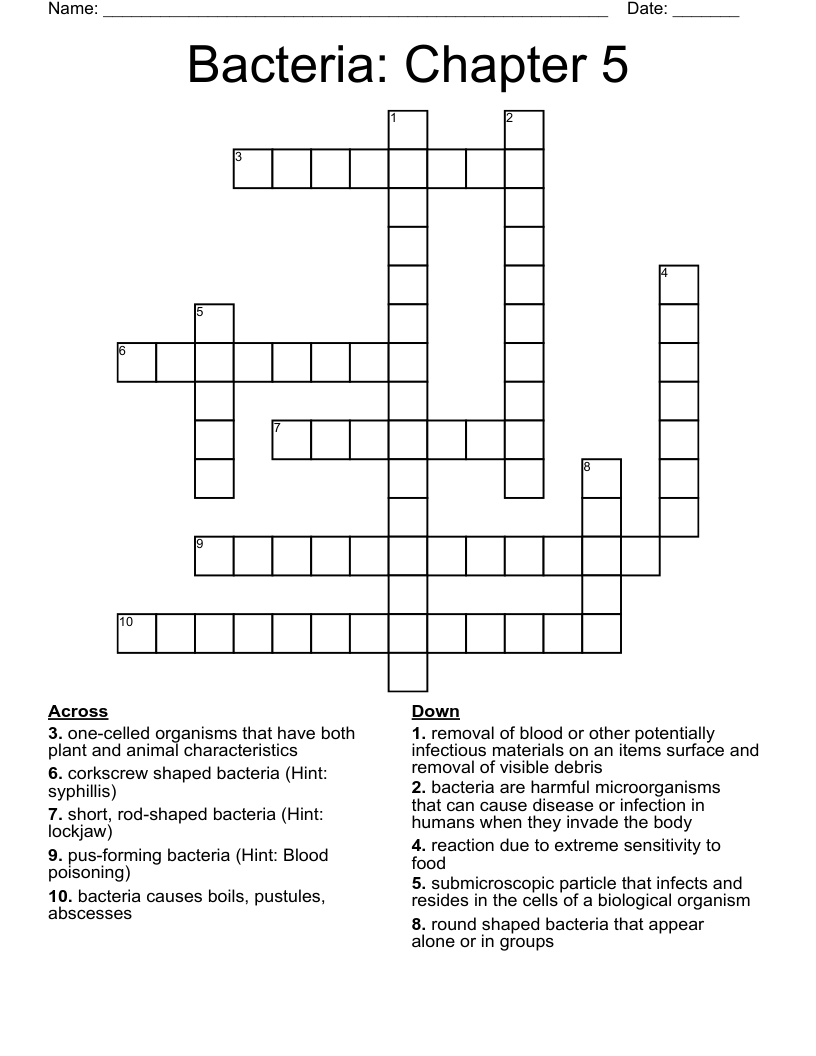
short rod-shaped bacteria. They are the most common bacteria
One celled microorganisms that have both plant and animal characteristics. some harmful some not
capable of destroying bacteria
Disease causing microorganisms carried in the body by blood or body fluids
round shaped bacteria that appear singly or in groups
the presence, or anticipated presence of blood or other infectious materials on an item's surface
the removal of blood or other potentially infectious materials on an items surface and the removal of visible debris or residue
A type of fungi that causes skin, hair, and nail infections
spherical bacteria that grow in pairs
also known as cilia, slender, hair like extensions used by bacilli and spirilla for locomotion
microscopic plant parasites, which include molds, mildews, and yeasts
disinfectants that are effective for cleansing blood and body fluids
the invasion of body tissues by disease causing pathogens
Information compiled by the manufacturer about safety, the names of hazardous ingredients, and sage handling procedures to reduce risk of accidental harm
any organism of microscopic or submicroscopic size
immunity that is partly inherited and partly developed through healthy living
harmful microorganisms that can cause disease or infection in humans when they invade the body
a chemical process for reducing the number of disease causing germs on cleaned surfaces to a safe level
pus forming bacteria that grow in clusters like a bunch of grapes; cause abscesses, pustules, and boils
pus forming bacteria arranged in curved lines resembling a string of beads. they cause strep throat and blood poisoning
the process that completely destroys all microbial life, including spores